


Clay Soil Orchard Guild
- Current Stock:
- 0
- Example of a Native Plant Guild:
- ***For Reference Only - Not For Purchase***
A native orchard for heavy clay and damp soils: a Pacific crabapple surrounded by highbush cranberry, salmonberry, currant, and a spring meadow of camas.
What Is a Guild?
A guild is an idea borrowed from nature and from permaculture: a community of plants chosen to support one another. Instead of a lonely row of a single crop, a guild layers a central tree or shrub with companions that feed the soil, draw in pollinators, cover bare ground, and yield food — each sharing light, water, and nutrients the way a small patch of wild woodland or meadow does. Plant one, and you're not just gardening; you're starting a little ecosystem.
The Clay Soil Orchard Guild
Most fruit trees sulk in heavy, wet clay. Pacific Crabapple doesn't — it grows naturally along streams, wetland edges, and coastal bottomlands. This guild builds a small orchard around it. Highbush cranberry and salmonberry like the same damp ground, red-flowering currant brings early bloom, great camas makes a blue spring meadow, waterleaf covers the shady ground, and lupine fixes nitrogen on the driest edge.
Plants in This Guild
- Pacific Crabapple — centerpiece tree with small, tart apples
- Highbush Cranberry — tart red berries for sauce and jelly; plant two for better fruit
- Salmonberry — the earliest berries of summer, for the dampest spot
- Red-flowering Currant — early bloom for hummingbirds and bees
- Great Camas — edible bulb and blue spring flowers
- Pacific Waterleaf — shady groundcover green
- Lupine — nitrogen fixer for the dry, sunny edge — not for eating
These are the plants we'd reach for — mix, match, and add your own. See each plant's own page for full details, and the Planting Guide tab for how to lay the guild out.
Printable Planting Plan
Want the layout on paper? Download and print the Clay Soil Orchard Guild planting plan (PDF). It is one letter-size page with the bird's-eye layout, side view, and plant key, so you can keep it handy at planting time.
Ecology & Design
This guild fits ground that stays wet in winter and dries out in summer — the kind of site that drowns most orchard trees. The crabapple's tart fruit is rich in pectin, so it pairs naturally with highbush cranberry in jellies and sauces. Camas and waterleaf follow the wet-spring, dry-summer rhythm of a native meadow, and the shrubs give birds and pollinators food from early spring through winter.
Planting Guide: Clay Soil Orchard Guild
Tip: This is the guild for heavy clay and damp soil. Save the driest, sunniest edge for the lupine.
Design & Layout
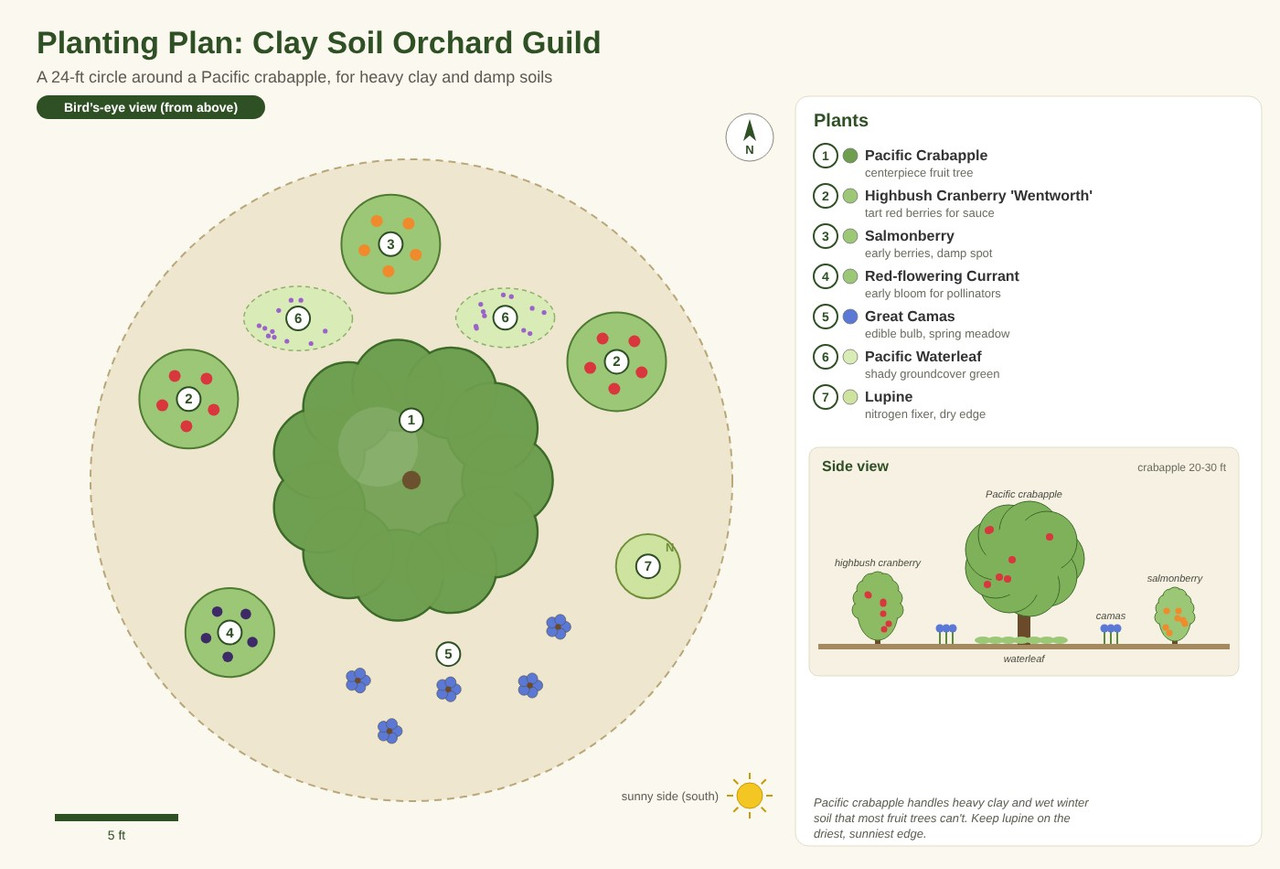
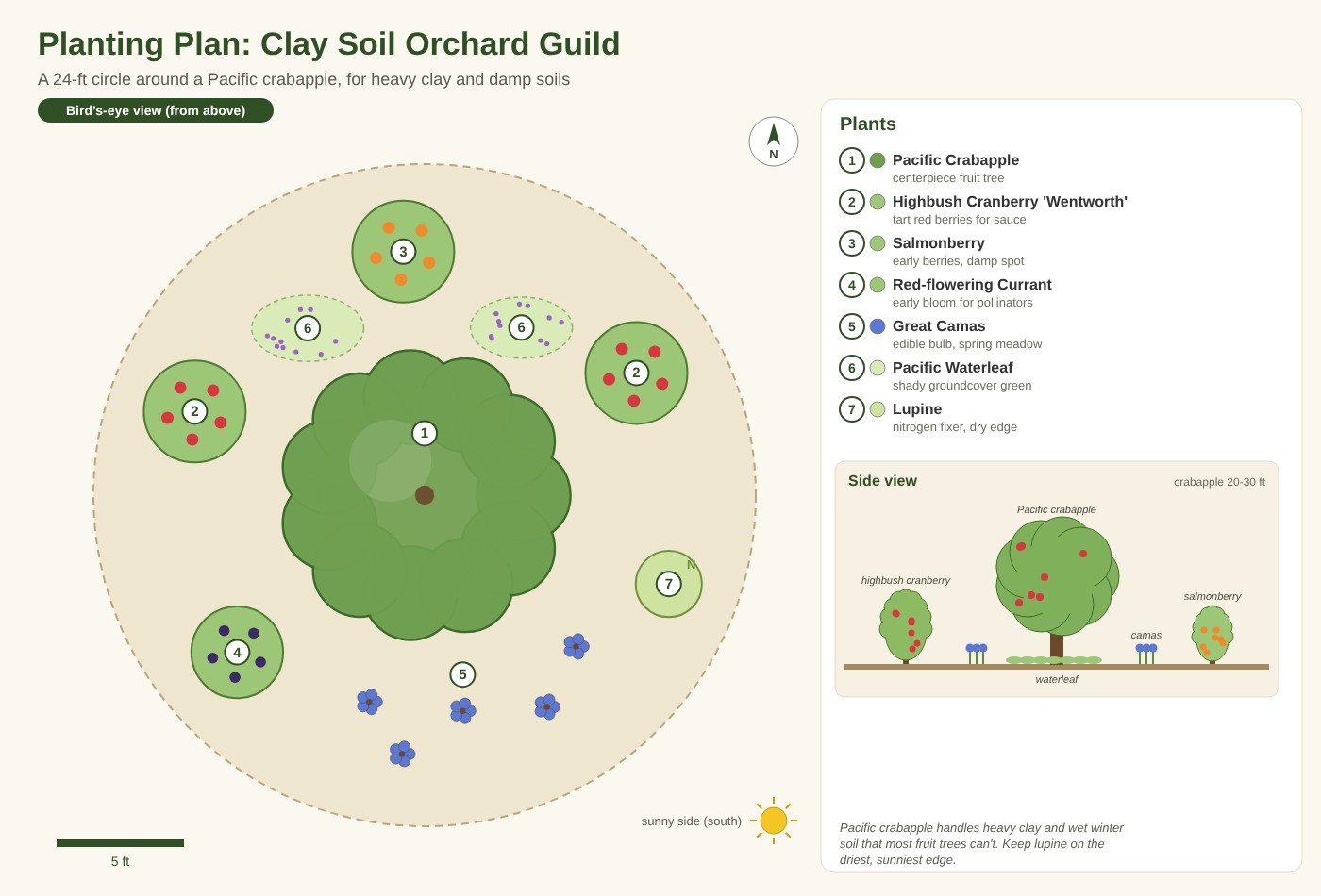
Center: Pacific Crabapple in the middle of a circle about 24 ft across.
Shrub ring: Two Highbush Cranberries, Salmonberry in the dampest spot, and Red-flowering Currant on the sunniest side, about 9–10 ft from the trunk.
Meadow: Great Camas in a drift on the sunny, south side.
Ground: Pacific Waterleaf in the shade of the shrubs, and Lupine on the driest edge.
Choosing a Site
Light: Full sun to part shade.
Soil: Heavy or clay soil is fine, including ground that stays wet in winter.
Water: Plenty in spring; the camas and waterleaf go dormant in summer, but the shrubs still want water through dry spells.
Planting Steps
Plant the crabapple first, in fall or early spring, then the shrub ring around it.
Plant camas bulbs in fall in a loose drift; plant waterleaf under the shrubs.
Put the lupine on the driest edge, then water in and mulch around the woody plants.
Care & Establishment
Year one: Water through the first summer while roots settle.
Mulch: Mulch the tree and shrubs, but leave the camas meadow open so the bulbs can spread.
Pruning: Shape the crabapple lightly in winter; thin old salmonberry canes after fruiting.
Patience: Salmonberry and currant fruit in a year or two; the crabapple takes a few more.
Guild Notes
Crabapples: The fruit is small and tart. Pick after the first frost, or cook it into jelly, sauce, or juice.
Highbush cranberry: Best cooked. Eat the raw berries only in small amounts.
Camas: Buy camas from a nursery, not the wild — death camas looks similar when it isn't blooming.
