



Great Camas
- Current Stock:
- 0
- Other Names:
- Leichtlin's Camas, Giant Camas, Large Camas
- Latin Name:
- Camassia leichtlinii
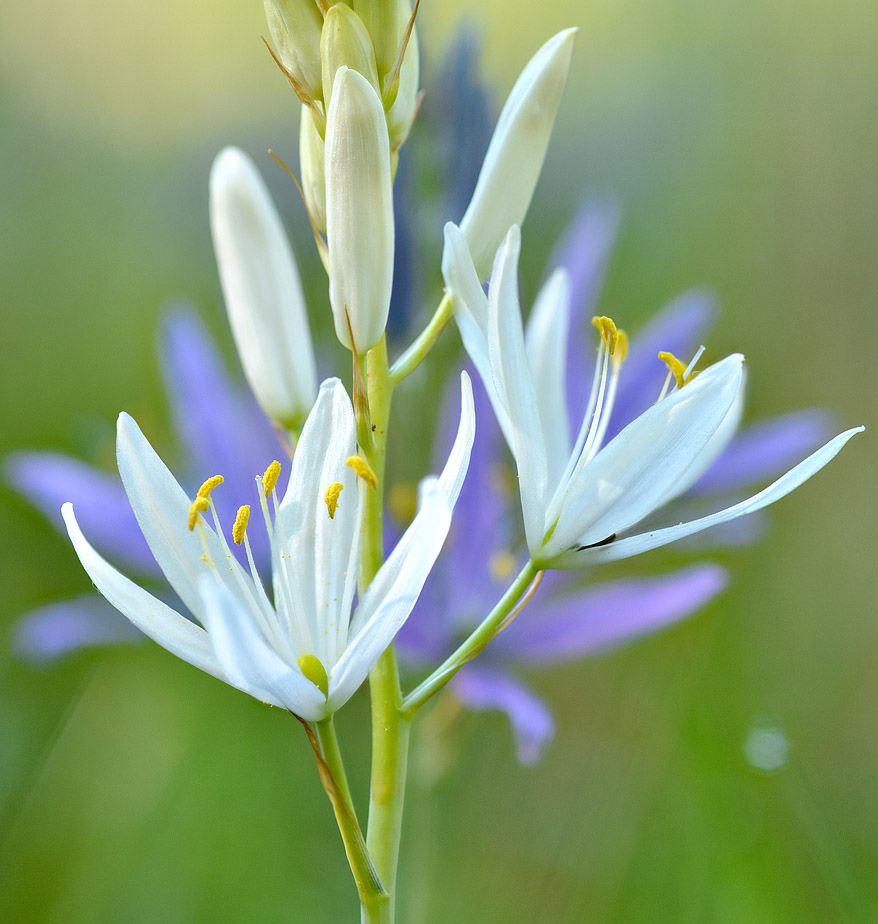
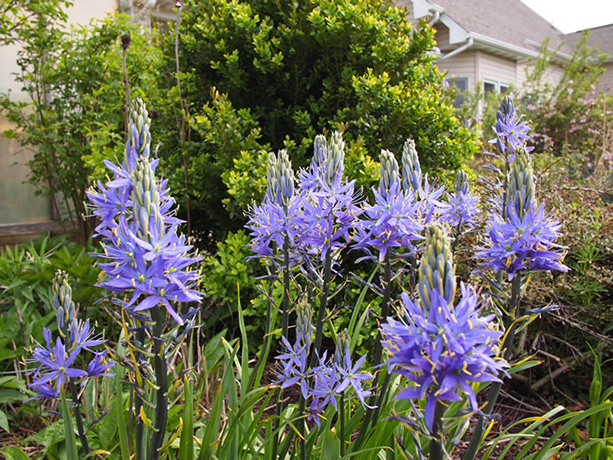
The Great Camas (Camassia leichtlinii) is the tall, stately cousin of common camas — spires of large, star-shaped blue-violet flowers rising 2–4 ft over grassy meadows in late spring, from one of the Northwest's most cherished traditional root foods.2, 4
NOTE: Native wildflowers are dormant (no leaves/flowers) Summer–Fall.
Edible & Medicinal Uses
Camas bulbs are prized for their sweetness — but that sweetness has to be coaxed out by long, slow cooking. Raw, the bulbs are hard and largely indigestible; cooked slowly for many hours (traditionally pit-steamed for 24–48 hours), their inulin converts to fructose and they turn soft, dark, and richly sweet, tasting of baked pear, fig, or sweet potato — and the longer they cook, the sweeter they get. Great camas offers larger bulbs than common camas and was harvested, pit-cooked, and often pressed into cakes for winter and trade.1, 4
Ornamental Qualities
Simply spectacular in bloom, Great Camas sends up bold spikes of large blue to blue-violet (occasionally creamy) flowers, taller and later than common camas, lighting up a spring meadow, border, or pond edge. It naturalizes into breathtaking drifts and pairs classically with Oregon White Oak, Common Camas, and native wildflowers.4
Environment & Culture
Ecology: Native from British Columbia to California, Great Camas grows in moist meadows, prairies, and oak savannas that are wet in spring and dry by summer. Its flowers are a rich nectar source for native bees, and camas meadows are a signature habitat of the region's oak country.1, 4
Culture: Camas prairies are among the most important tended food landscapes of the Northwest and Plateau — cultivated with controlled burning, weeding, and selective harvest, the bulbs pit-cooked into a staple and a major trade good. We offer camas with deep respect for that living knowledge and invite support for Indigenous-led restoration through our Charitable Giving page.4
In the Kitchen
Plan for patience: camas rewards slow cooking. After the plant is done flowering and the bulbs are dug, roast or steam them low and slow for many hours (even a day or more) until they turn amber and sweet — a modern oven or slow cooker can stand in for the traditional pit. Enjoy them like a sweet, caramelized root, or mash them to sweeten other dishes.5 A note of respect and caution: a toxic look-alike called death camas can grow in the same meadows; the two differ in their flowers and bulbs on close inspection, but the resemblance is real — so never gather camas from the wild without expert guidance. (Growing and harvest details are on the Planting Guide tab.)
Attributes
- Native Range: British Columbia to California; moist meadows & oak savanna1
- USDA Zones: ~4–83
- Light: Full sun to part shade4
- Water: Moist in spring, dry in summer (summer-dormant)4
- Soil: Rich, seasonally moist; tolerates clay4
- Habit: Bulb perennial, 2–4 ft; blue-violet flower spikes, late spring2
- Edible: Bulbs — sweet only after long, slow cooking (never raw)1
References
- USDA NRCS Plant Guide; Wikipedia, Camassia.
- Pojar, J. & MacKinnon, A., Plants of the Pacific Northwest Coast, 2014.
- USDA PLANTS Database, Camassia leichtlinii.
- Confluence Project, "The Profound Role of Camas"; Turner & Bell ethnobotany.
- "Cooking Great Camas," The Backyard Larder.
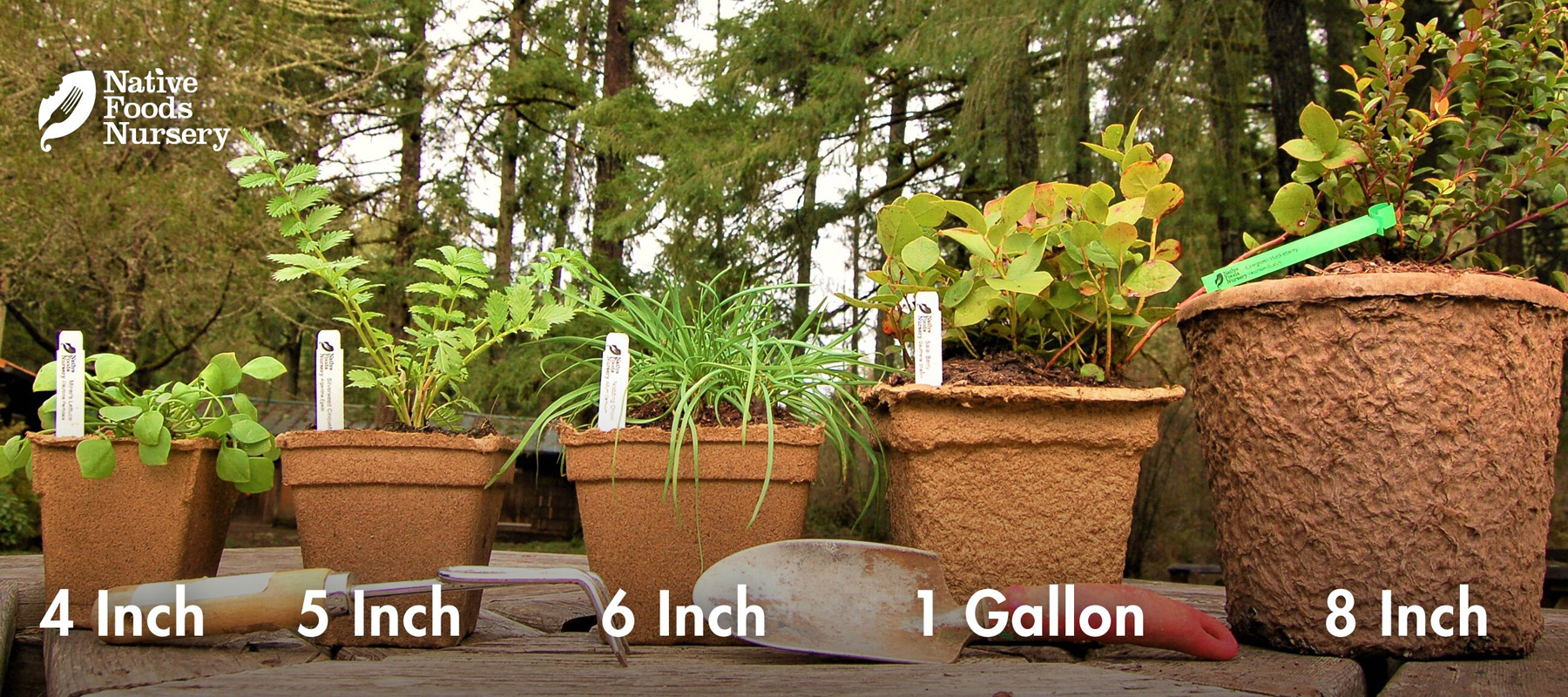
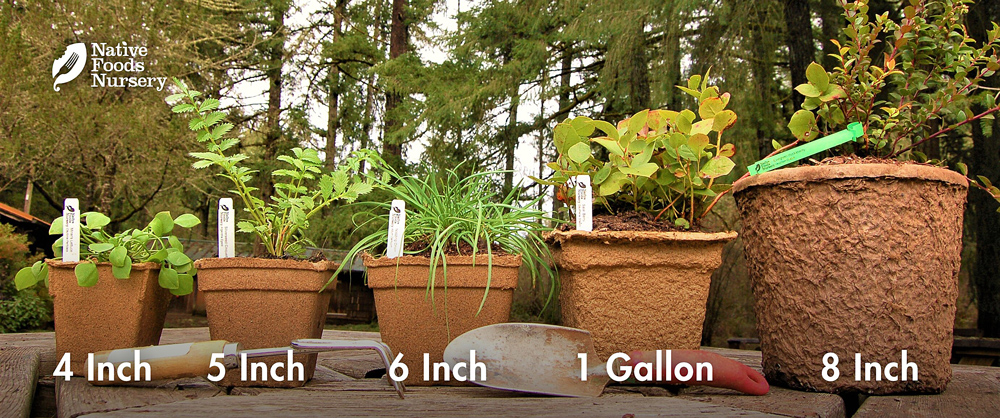
Pot Sizing Guide
Planting Guide: Great Camas (Camassia leichtlinii)
Tip: Plant it where the ground is moist in spring and dries out in summer — a meadow, border, or pond edge — and let it naturalize into tall blue drifts.
When Your Plant Arrives
Open the box promptly and lift your plant out gently, holding the pot rather than the stem. Leave it in its biodegradable eco-pot for now — the roots are settled and don’t need disturbing yet. Give it a slow, thorough drink until water runs through the bottom, then set it somewhere bright but sheltered, out of harsh afternoon sun, drying wind, and frost. Let it rest and acclimate there for a few days before planting, so the move from our greenhouse to your garden is a gentle one. If anything doesn’t look right, please contact customer service within 7 days of delivery and we’ll take care of you.
Choosing a Site
Light: Full sun to part shade.
Soil: Rich, seasonally moist (spring-wet, summer-dry); tolerates clay.
Space: 4–6 in apart; plant generously for drifts.
Planting Steps
Plant bulbs in fall, 3–5 in deep, pointed end up; firm and water in, and mulch lightly.
Let the foliage die back naturally after bloom to feed the bulb.
Watering & Care
Establishment: Keep moist through spring growth.
After establishment: Wants a dry summer dormancy — avoid summer irrigation, which rots the bulbs.
Maintenance: Leave undisturbed to multiply into drifts; divide only if crowded, in fall.
Protection
Deer: Foliage sometimes grazed; bulbs generally left.
Wildlife: Rich nectar for native bees.
Companions: Oregon white oak, common camas, meadow wildflowers.
Harvest Basics
Safety first: Camas bulbs are nearly identical to those of death camas, which is poisonous and often grows in the very same meadows. Flower color won’t sort them out — edible camas ranges from blue-violet to creamy white depending on the species, and death camas is pale cream too, so a pale flower alone tells you nothing. Identify by the whole plant in bloom: camas bears large, showy, six-pointed star flowers up a tall spike, while death camas has smaller, tighter cream-to-greenish flowers in a denser cluster. Positively identify each plant in flower, mark your edible camas when it blooms, and never eat a bulb you can’t trace to a plant you saw flowering. When in doubt, don’t.
Season: Dig after flowering, once foliage matures.
Prep (essential): Cook long and slow (hours to a day — traditionally pit-steamed) until sweet and dark amber; never eat raw.
Sustainable harvest: Replant offset bulbs to keep the patch going.
