



Lupine

- Current Stock:
- 0
- Other Names:
- Riverbank Lupine, Big-Leaf Lupine, Bigleaf Lupine, Streambank Lupine
- Latin Name:
- Lupinus rivularis or polyphyllus
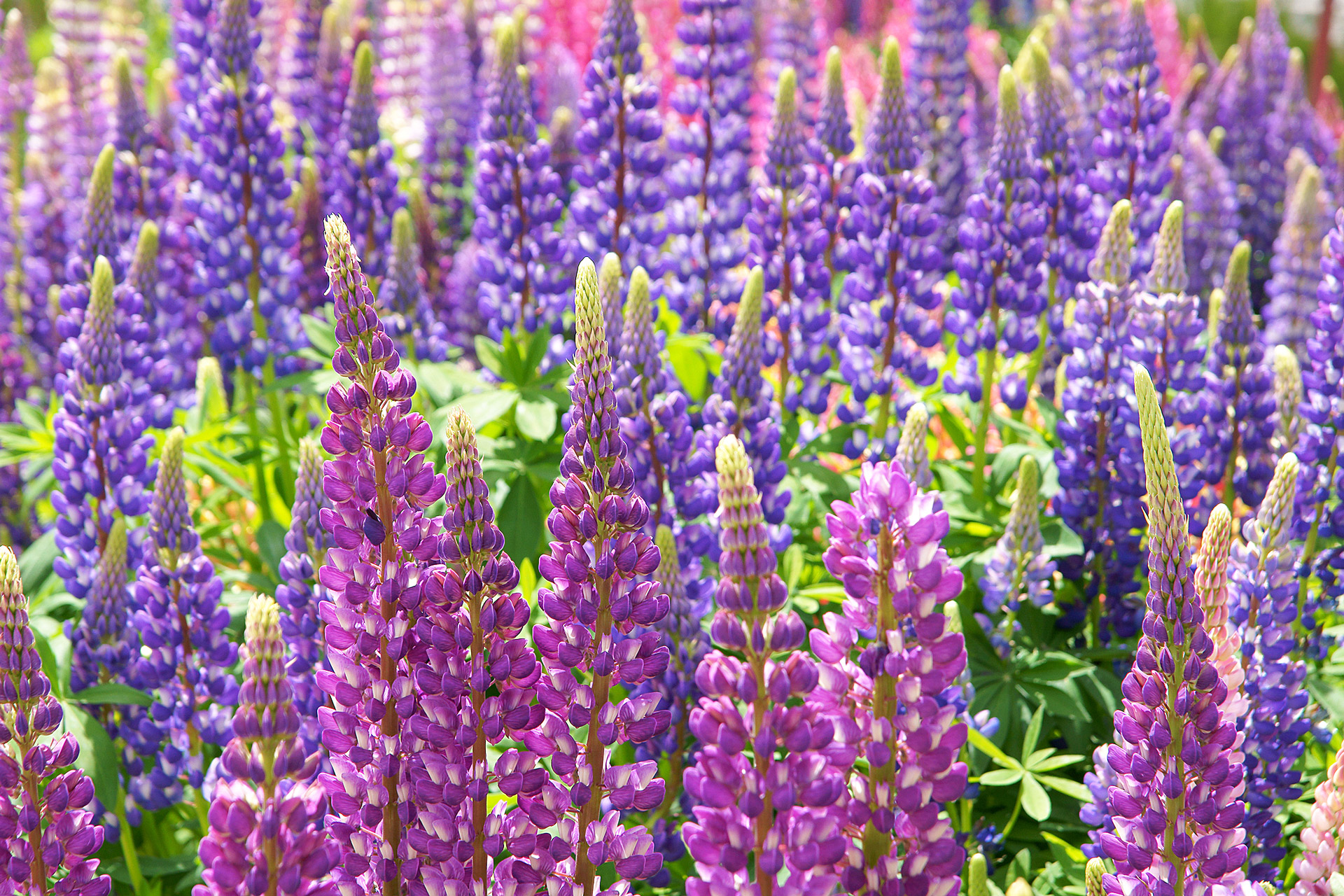
Lupine (Lupinus spp.) is a fast, nitrogen-fixing native wildflower with elegant palmate leaves and fragrant spires of blue-purple bloom — a keystone of the native meadow and one of the hardest-working plants for pollinators and soil. We offer two species: Riverbank Lupine (L. rivularis) and Big-Leaf Lupine (L. polyphyllus).2, 4
NOTE: Native wildflowers are dormant (no leaves/flowers) Summer–Fall.
Garden & Ecological Value
Lupine earns its place through what it gives the land, not the table. As a legume it hosts nitrogen-fixing bacteria on its roots, enriching poor soil; it's a fast pioneer for erosion control and restoration on droughty, gravelly, disturbed ground; and its flowers are a magnet for native bees, butterflies, and hummingbirds. Crucially, native lupines are larval host plants for many butterflies — Riverbank Lupine among the hosts tied to the recovery of the endangered Fender's blue butterfly in Willamette Valley prairies.1, 4
Please note — not for eating: unlike the domesticated "sweet" lupins grown for food, wild and ornamental lupines contain toxic quinolizidine alkaloids (concentrated in the seeds and pods), and should never be eaten. Keep seed pods away from children and pets.1
Ornamental Qualities
Lupine's whorls of blue-purple, sweetly scented flowers rise on stalks to about 3 ft, above beautifully symmetrical palmate leaves that cup spring dew and rain at their centers. It's a spring showpiece — plant it with Common Camas or Great Camas to build a classic native meadow that feeds pollinators and delights the eye.1
Environment & Culture
Ecology: Lupine grows in open woodlands, streambanks, and meadows throughout the Northwest, including steep, gravelly, droughty slopes. As a nitrogen-fixing pioneer it heals disturbed ground, controls erosion, and rebuilds fertility — and its role as a butterfly host makes it a cornerstone of prairie restoration.1, 2
Culture: Lupines have long been valued for tending the land and for their beauty; we honor the Indigenous stewardship of the prairies where they thrive. We offer them with respect for that living knowledge and invite support for Indigenous-led restoration through our Charitable Giving page.4
Attributes
- Native Range: Throughout the PNW; meadows, streambanks, open slopes1
- USDA Zones: ~4–93
- Light: Full sun1
- Water: Low; drought-tolerant, pioneer of dry ground1
- Soil: Lean, gravelly, well-drained; fixes its own nitrogen1
- Habit: Perennial wildflower, ~3 ft; blue-purple flower spires2
- Use: Nitrogen-fixer, pollinator & butterfly host, erosion control — not edible (toxic)1
References
- Native Foods Nursery field notes; USDA NRCS, Lupinus rivularis / polyphyllus.
- Pojar, J. & MacKinnon, A., Plants of the Pacific Northwest Coast, 2014.
- USDA PLANTS Database, Lupinus.
- Colorado State Univ. Guide to Poisonous Plants; USFWS, Fender's blue butterfly recovery.
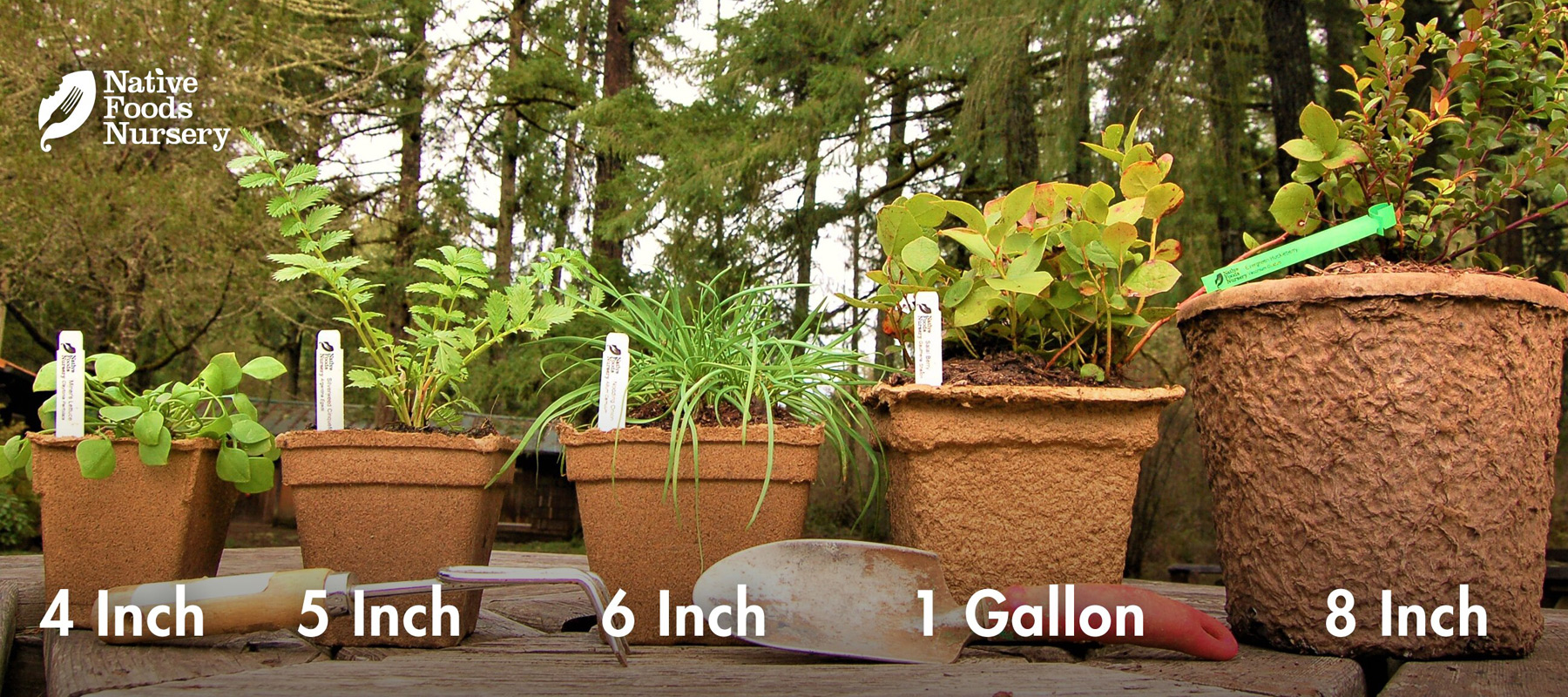
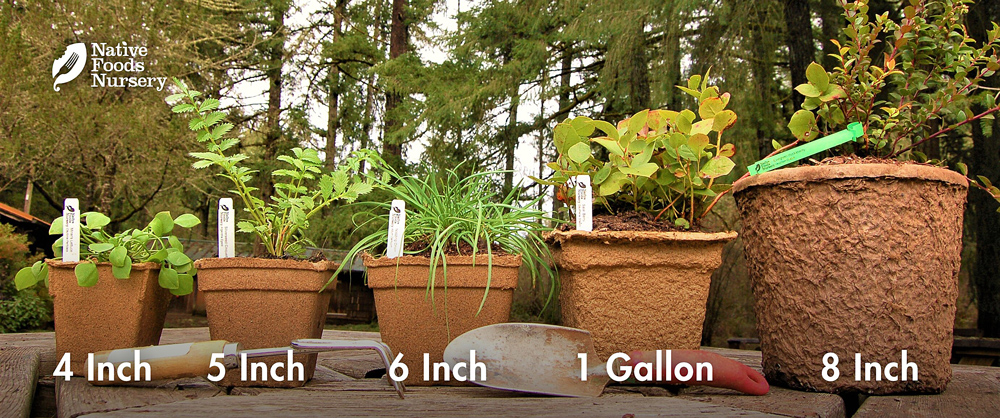
Pot Sizing Guide
Planting Guide: Lupine (Lupinus rivularis & polyphyllus)
Tip: Plant it to build soil and feed pollinators — it fixes nitrogen and thrives on lean, gravelly ground in full sun. Just remember: it's a habitat plant, not a food (the seeds are toxic).
When Your Plant Arrives
Open the box promptly and lift your plant out gently, holding the pot rather than the stem. Leave it in its biodegradable eco-pot for now — the roots are settled and don’t need disturbing yet. Give it a slow, thorough drink until water runs through the bottom, then set it somewhere bright but sheltered, out of harsh afternoon sun, drying wind, and frost. Let it rest and acclimate there for a few days before planting, so the move from our greenhouse to your garden is a gentle one. If anything doesn’t look right, please contact customer service within 7 days of delivery and we’ll take care of you.
Choosing a Site
Light: Full sun.
Soil: Lean, gravelly, well-drained; tolerates poor, dry ground.
Space: 12–24 in apart.
Planting Steps
Sow seed (scarify or soak first) or plant plugs in fall or spring; firm and water in. Site it permanently — the deep taproot resents moving.
If it came in a biodegradable eco-pot, plant it pot and all — the pot is pressed from composted cow manure, so it melts into the soil and gives the young roots their first feed. No need to remove it.
Watering & Care
Establishment: Light water the first season.
After establishment: Drought-tolerant; avoid rich, wet soil (it fixes its own nitrogen).
Maintenance: Let it self-sow.
Protection
Wildlife: Nectar for bees, butterflies, and hummingbirds; a larval host, including the endangered Fender’s blue butterfly.
Harvest Basics
Safety (important): Despite being a legume, lupines contain toxic alkaloids and are not a food plant — do not eat any part. Even ornamental garden lupines and their seeds are poisonous without specialized processing.
Use: Grow it for its beauty, its pollinators, and the nitrogen it fixes into the soil.
