



Highbush Cranberry 'Wentworth'

- Current Stock:
- 0
- Other Names:
- American Highbush Cranberry, American Cranberrybush, Viburnum trilobum, Wentworth, Cramp Bark
- Latin Name:
- Viburnum opulus var. americanum ('Wentworth' and native seedlings)
Highbush Cranberry (Viburnum opulus var. americanum, also sold as V. trilobum) is the native American highbush cranberry: a big, arching shrub that blooms in lacy white clusters in early summer and hangs heavy in fall with glossy scarlet fruit that persists into winter.1, 2 We offer it two ways: the named fruiting selection ‘Wentworth’ in a 5″ eco-pot, and native seedlings as a bare-root bundle of 3.
Pre-order: both begin shipping in mid-November 2026. Choose your plant above, and see the comparison table at the bottom of the page.
Plant both for better fruit set. Highbush cranberry sets fruit on its own, but crops are usually heavier when a genetically different plant is nearby to cross-pollinate. Every ‘Wentworth’ is a clone of the same plant, so a second ‘Wentworth’ won’t help, while each native seedling is genetically unique. One ‘Wentworth’ plus a bundle of seedlings gives you a pollination partner and a fruiting hedgerow.
Edible & Medicinal Uses
‘Wentworth’ is one of a handful of native selections chosen for good fruit and processing quality; seedlings bear the same kind of fruit, with more variation from plant to plant.1 The berries are sharply tart and astringent raw, but cooked and sweetened they make an excellent jelly, sauce, or juice in the role of true cranberries — and their high pectin helps jelly set. Most of the astringency is in the seeds, so strain them out.1, 2 Fruit picked slightly under-ripe has the brightest flavor; after a hard frost it softens and sweetens but can turn musty when cooked.1 Some Indigenous peoples mashed and dried the berries into cakes, and the bark is the traditional “cramp bark” of herbal medicine.3
Ornamental Qualities
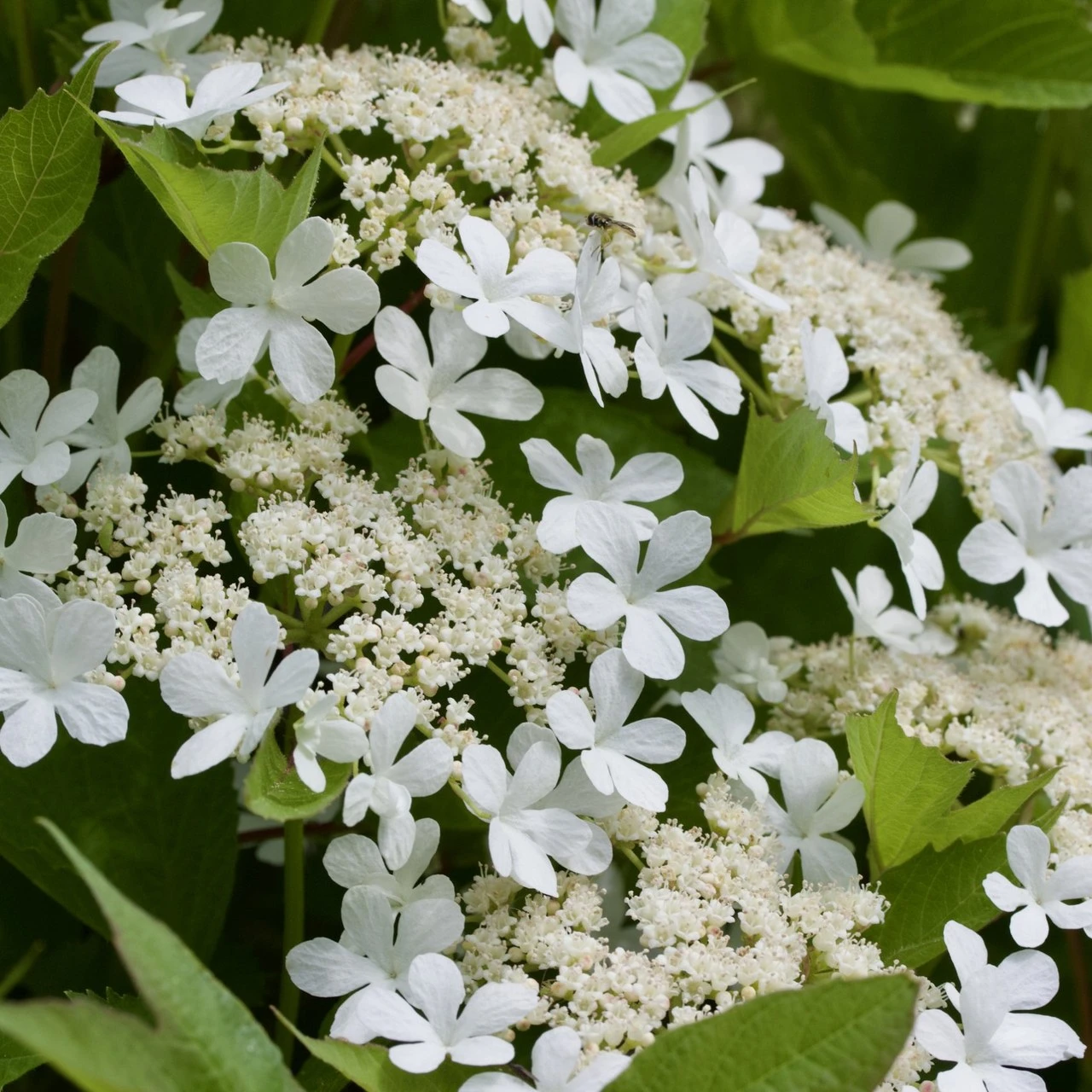
A large shrub to 8–12 ft (up to 15 ft unpruned) with three-lobed, maple-like leaves that turn red to purple in fall.1, 2 Flat white lacecap flowers open in late spring to early summer — late enough to usually dodge spring frost — and are followed by drooping clusters of bright red fruit. ‘Wentworth’ ripens its lighter-red fruit earlier than ‘Phillips’.2 Use it as an edible hedgerow, screen, or rain-garden backdrop with Pacific Crabapple and Black Gooseberry.
Environment & Culture
Ecology: The native American highbush cranberry ranges across northern North America from Newfoundland to British Columbia and south in the West into Washington, growing in moist open woods, streambanks, and wetland edges.1, 3 Its flowers feed pollinators, it hosts the Spring Azure butterfly, and its fruit — usually left until it has frozen and thawed a few times — feeds waxwings, robins, grouse, and many mammals through winter.1, 3
Culture: A traditional food and medicine plant for many northern and Northwest peoples. We offer it with respect for that knowledge and invite support for Indigenous-led restoration through our Charitable Giving page.3
Not the European bush: The European guelder rose (V. opulus var. opulus) looks nearly identical but has bitter fruit and is grown only as an ornamental. ‘Wentworth’ and our seedlings are the native, edible variety.1
In the Kitchen
Simmer the berries with a little water, press out the seeds, then sweeten and cook down into a ruby jelly or a tart cranberry-style sauce for game and holiday dishes; the strained juice makes a vivid syrup. Always cook the fruit — unripe or raw berries in quantity can upset the stomach.3 (Growing and harvest details are on the Planting Guide tab.)
Attributes
- Native Range: Northern N. America, Newfoundland to British Columbia; south to Washington in the West1
- USDA Zones: ~3–72
- Light: Full sun for best fruit; tolerates part shade1, 2
- Water: Consistently moist, well-drained1
- Soil: Moist loam, pH ~6.0–7.52
- Habit: Deciduous shrub, 8–12 ft (to 15 ft); red to purple fall color1, 2
- Harvest: Late August–October; ‘Wentworth’ is an early-ripening selection1, 2
- Bearing Age: 2–3 years (‘Wentworth’); about 3–5 years (seedlings)
- Pollination: Self-fruitful; heavier crops with a genetically different plant nearby
- Edible: Fruit, cooked — strain seeds for jelly, sauce, juice2
Wentworth or Native Seedlings?
| ‘Wentworth’ | Native seedlings | |
|---|---|---|
| Form | Potted, 5″ eco-pot | Dormant bare-root, bundle of 3 |
| Genetics | Named clone selected for fruit and processing quality1 | Seed-grown wild type; every plant is genetically different |
| Fruit | Reliable crops; ripens early2 | Varies from plant to plant |
| First fruit | 2–3 years | About 3–5 years |
| Best for | Jelly and sauce fruit | Hedgerows, habitat plantings, and pollination partners for ‘Wentworth’ |
References
- USDA NRCS Plant Guide, Highbush Cranberry, Viburnum opulus var. americanum.
- UW–Madison CIAS, Uncommon Fruits: American Highbush Cranberry.
- Native Plants PNW, “American Cranberrybush, Viburnum opulus.”
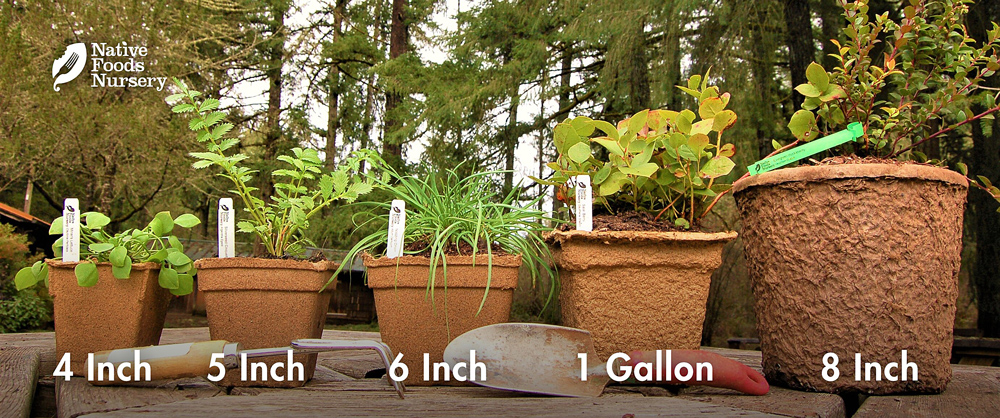
Pot Sizing Guide
Planting Guide: Highbush Cranberry — ‘Wentworth’ & Native Seedlings (Viburnum opulus var. americanum)
Tip: Give it sun and steady moisture — a rain-garden edge, a low spot that stays damp but drains, or an irrigated hedgerow — and you’ll get the heaviest crops of jelly fruit.
When Your Plant Arrives
Potted ‘Wentworth’: Open the box promptly and lift your plant out gently, holding the pot rather than the stem. Leave it in its biodegradable eco-pot for now. Give it a slow, thorough drink until water runs through the bottom, then set it somewhere bright but sheltered, out of harsh afternoon sun, drying wind, and frost, for a few days before planting.
Bare-root seedlings: Your plants travel dormant — no leaves and no soil — which is normal and the healthiest way for them to ship. Keep the roots moist and cool, and plant within a day or two; if you can’t, heel the roots into damp soil or sawdust somewhere cool and out of frost. Soak the roots in water for 30–60 minutes just before planting. Don’t let them dry out or sit in standing water.
If anything doesn’t look right, please contact customer service within 7 days of delivery and we’ll take care of you.
Choosing a Site
Light: Full sun for best flowering, fruit, and fall color; tolerates part shade.
Soil: Moist, well-drained loam, pH about 6.0–7.5; avoid standing water and droughty ground.
Space: 6–8 ft apart, or 4–5 ft for a hedge.
Planting Steps
Plant in fall or spring while cool and moist.
Potted: If it came in a biodegradable eco-pot, plant it pot and all — the pot is pressed from composted cow manure, so it melts into the soil and gives the young roots their first feed. No need to remove it.
Bare-root: Dig a hole wide enough to spread the roots without bending them, and set the plant at the depth it grew (look for the soil line on the stem).
Set at the depth it grew, backfill with compost-enriched soil, firm, water in, and mulch to keep the roots cool and damp.
Watering & Care
Establishment: Keep consistently moist; selections can be slow to settle in the first year or two.
After establishment: Wants steady moisture — water through Willamette Valley summers. A yearly top-dressing of compost or rotted manure keeps it vigorous.
Pollination: Self-fruitful, but crops are usually heavier with a genetically different highbush cranberry nearby — our native seedlings, or another variety such as ‘Phillips’. A second ‘Wentworth’ won’t help, since all are the same clone. Plant partners within about 50 ft of each other.
Pruning & propagation: Thin a few of the oldest stems in late winter to keep it productive and in bounds; roots from softwood cuttings taken mid-June to early July.
Protection
Pests: Generally trouble-free; watch for powdery mildew and leaf spot in crowded, shady spots. Viburnum leaf beetle is a serious pest of this species where it occurs — shot-hole chewed leaves in spring are the sign.
Wildlife: Flowers feed pollinators, it hosts the Spring Azure butterfly, and the winter fruit feeds waxwings, robins, and grouse.
Companions: Pacific Crabapple, Black Gooseberry, Blue Elderberry, and American Cranberry.
Harvest Basics
Note: Not a true cranberry, but its tart scarlet fruit fills the same kitchen role. Bearing begins in 2–3 years for ‘Wentworth’ and about 3–5 years for seedlings.
Season: Late August into October — ‘Wentworth’ ripens early. Slightly under-ripe fruit has the brightest flavor; after frost it’s softer but can taste musty cooked.
Use: Always cook — raw or unripe fruit in quantity can upset the stomach. Strain out the seeds (where the astringency lives) for jelly, sauce, or juice.
