
Seascape Strawberry ~ Bundle of 3 Bare-root

- Current Stock:
- 0
- Other Names:
- Seascape Everbearing Strawberry, Day-Neutral Strawberry
- Latin Name:
- Fragaria × ananassa 'Seascape' (native F. virginiana ancestry)
Seascape Strawberry (Fragaria × ananassa 'Seascape') is a big, sweet, everbearing garden strawberry with a wild native heart: its ability to fruit all summer long comes from the native Mountain Strawberry (Fragaria virginiana ssp. glauca), which UC Davis breeder Royce Bringhurst collected in Utah's Wasatch Mountains and bred into a new generation of strawberries.1, 2, 3
Offered as a bundle of 3 bare-root plants — see the Planting Guide tab for bare-root handling.
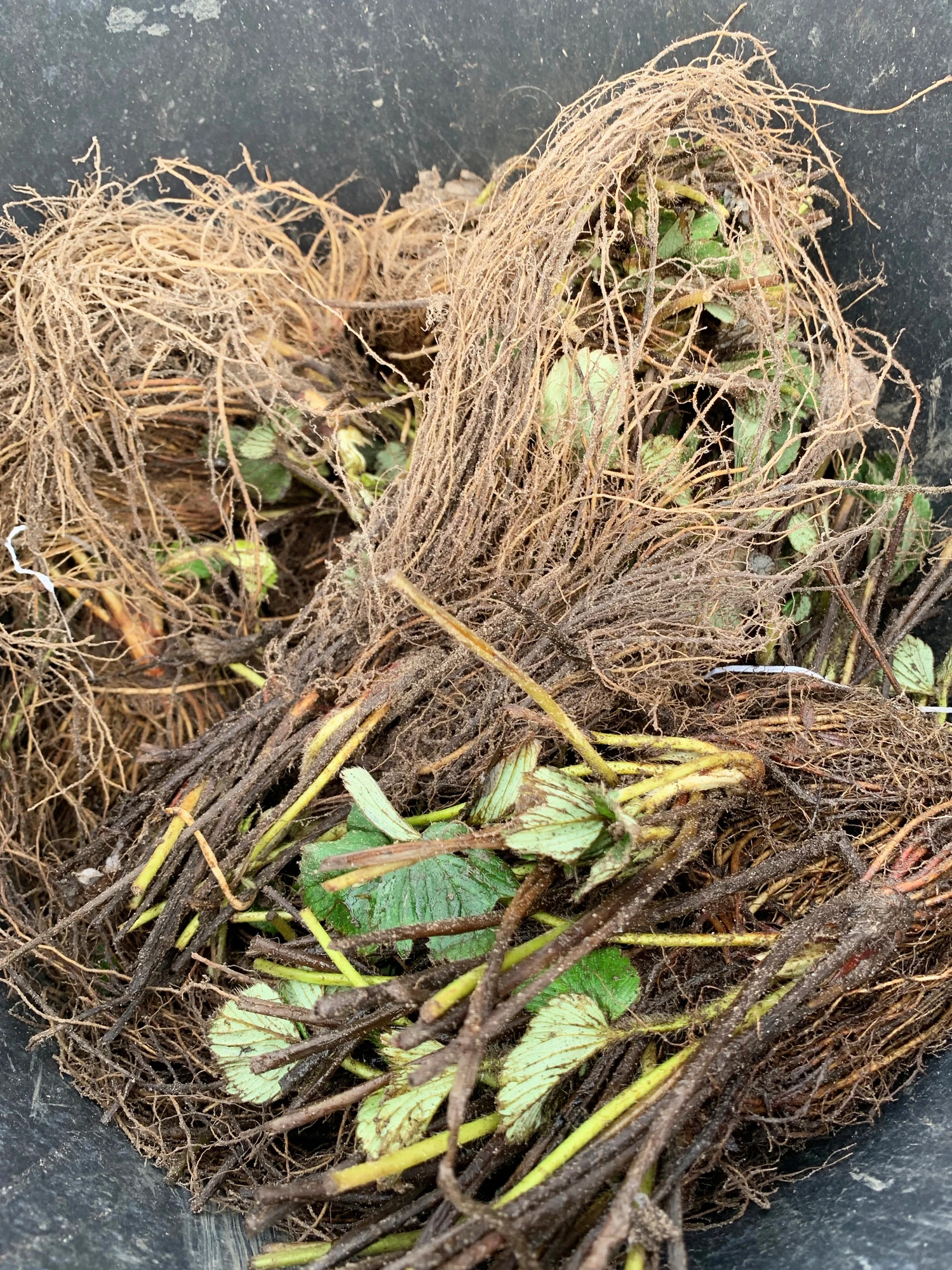
PRE-ORDER: Seascape ships starting mid-January. Bare-root plants arrive dormant (no leaves) and without soil.
The Native Story
Every garden strawberry descends from two wild strawberries of the Americas: our Coastal Strawberry (F. chiloensis) and the meadow and Mountain Strawberry (F. virginiana). Seascape carries an extra, more recent dose of the wild. In the 1970s, Bringhurst found that certain high-mountain F. virginiana ssp. glauca plants in Utah kept flowering through the long days of summer. He crossed them with garden strawberries and created the first day-neutral (everbearing) varieties, released in 1980.2, 3 Seascape, a 1983 cross of 'Selva' × 'Douglas' released by Bringhurst and Victor Voth, is one of the best-loved of that line — so every summer-long harvest is a gift from a native mountain strawberry.1
Edible Uses
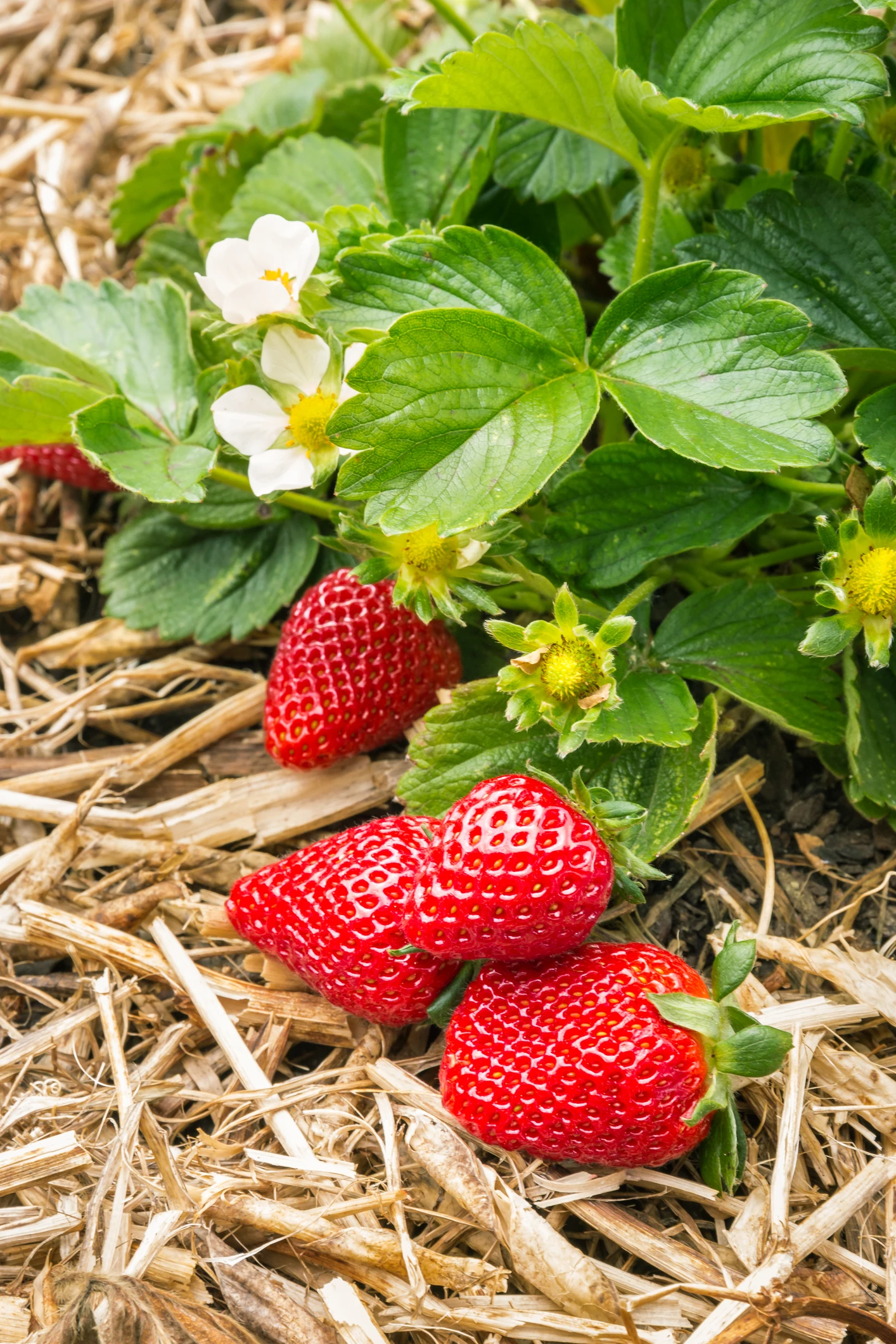
Seascape bears large, very firm, bright-red berries — red right through to the center — with a flavor its breeders called exceptional, better than the varieties it was bred to replace.1 Because it's day-neutral, it starts fruiting about three months after planting and keeps going in waves through summer and into fall, as long as temperatures stay mild.1, 4 That makes it the perfect “snacking” strawberry: a steady handful for breakfast, salads, and shortcake all season rather than one big crop.
Ornamental Qualities
A tidy, upright, vigorous plant with glossy trifoliate leaves, white flowers, and red fruit at the same time for months. Seascape makes fewer runners than June-bearers once fruiting, so it's well suited to raised beds, containers, hanging baskets, and edging — and it pairs beautifully with our native Mountain, Coastal, and Woodland Strawberries for a planting that tells the whole strawberry story.
Environment & Culture
Growing: Plant bare-root crowns in early spring with the crown at soil level, in full sun and rich, well-drained soil. Pinch the first flowers for about a month after planting for stronger plants and bigger later crops. Day-neutral strawberries fruit best in cool to mild summers and slow down in heat over about 85°F, picking up again as nights cool. Plants are most productive for their first two to three seasons; refresh beds with new plants or rooted runners.4, 5
Plant health: Seascape is highly resistant or tolerant to common strawberry viruses; it can be susceptible to leaf spot and spider mites, so give it good airflow and avoid overhead watering.1
In the Kitchen
Eat them sun-warm off the plant, slice over yogurt or cereal, or toss with a little sugar for shortcake. Seascape's firm texture holds up well in tarts and fruit salads, and the long season means a few extra berries for jam or the freezer every week. (Growing and harvest details are on the Planting Guide tab.)
Attributes
- Type: Day-neutral (everbearing) garden strawberry1
- Native connection: Everbearing trait from wild Mountain Strawberry (F. virginiana ssp. glauca), Wasatch Mountains, Utah2, 3
- Bred by: Royce Bringhurst & Victor Voth, University of California (patented 1991)1
- Fruit: Large, very firm, bright red throughout; conic1
- Harvest: Late spring through fall in waves; begins about 3 months after planting1
- USDA Zones: ~4–8
- Light: Full sun
- Water: Regular, even moisture; mulch to keep fruit clean
- Soil: Rich, well-drained, slightly acidic
- Spacing: About 12 in apart
- Pollination: Self-fertile
References
- Bringhurst, R. S. & Voth, V. U.S. Plant Patent PP7,614, “Strawberry plant named 'Seascape',” University of California, 1991.
- Fedco Trees, “Seascape Everbearing Strawberry” (Bringhurst's day-neutrals from wild plants of Utah's Wasatch Mountains).
- USDA-ARS National Plant Germplasm System, F. virginiana subsp. glauca ‘Utah #13,’ collected by R. S. Bringhurst, 1983; HortScience 60(11), 2025 (UC day-neutrals trace to a F. virginiana ssp. glauca ecotype).
- Oregon State University Extension, Strawberry Cultivars for Western Oregon and Washington (EC 1618), rev. 2025.
- Washington State University Extension, Growing Day-Neutral Strawberries in Western Washington.
Planting Guide: Seascape Strawberry (Fragaria × ananassa ‘Seascape’)
Tip: Plant in full sun with rich soil and steady water — it flowers and fruits in waves from late spring into fall, and it’s right at home in a raised bed or a big pot.
When Your Plant Arrives
Open the box promptly. Your plants travel dormant — no leaves and no soil — which is normal and the healthiest way for them to ship. Keep the roots moist and cool, and unwrap them only when you’re ready to plant. Aim to get them into the ground or a pot within a day or two; if you can’t, tuck the roots into damp soil, sawdust, or a bucket of moist material and hold them somewhere cool and out of frost. Don’t let the roots dry out or sit in standing water. If anything looks amiss, please contact customer service within 7 days of delivery and we’ll make it right.
Choosing a Site
Light: Full sun.
Soil: Rich, well-drained, slightly acidic; raised beds and containers are ideal.
Space: 12 in apart; one plant per 8–10 in pot.
Planting
Depth: Set the crown right at soil level — roots covered, crown not buried.
Roots: Fan the roots out and straight down; trim to about 5 in if very long.
Finish: Firm the soil and water in well.
Watering & Care
Establishment: Keep evenly moist; pinch the first flowers for a few weeks so plants root in.
After establishment: Regular water and a light feeding every month or so keeps fruit coming all season.
Maintenance: Few runners; mulch with straw; refresh plants every 2–3 years.
Protection
Deer: May browse.
Wildlife: Flowers feed pollinators; birds and slugs love ripe berries, so net and pick often.
Companions: Raised beds, pots, hanging baskets, or the front of a sunny guild.
Harvest Basics
Season: Late spring through fall in waves; summer heat may slow it briefly.
Use: Large, sweet, firm berries — fresh snacking, desserts, jam.
