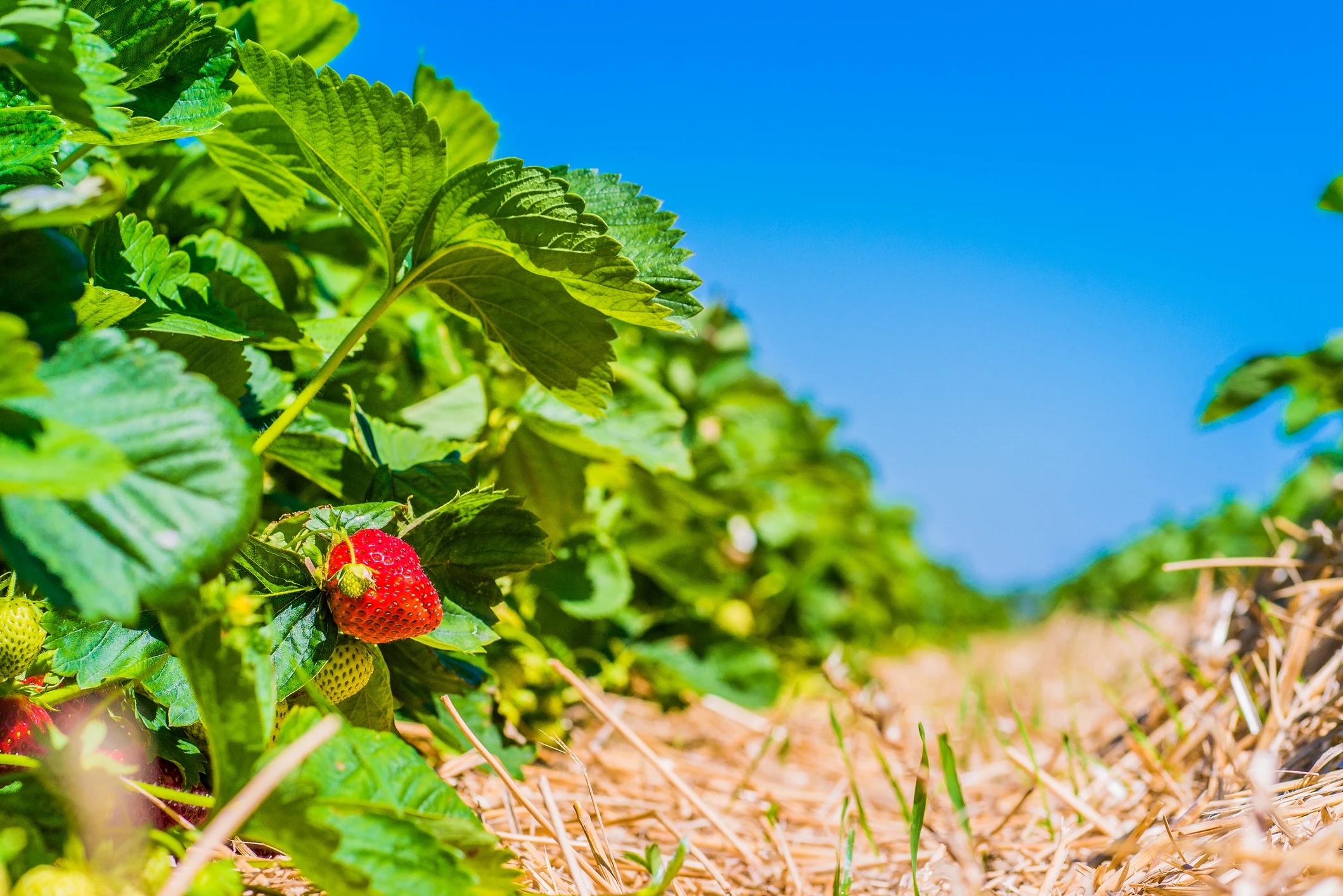
Shuksan Strawberry (Fragaria × ananassa 'Shuksan') is a big, glossy, Northwest-bred June-bearer with native beach strawberry in its blood: its resistance to red stele root rot comes from a wild Coastal Strawberry (Fragaria chiloensis) collected on the Oregon coast near Reedsport.1
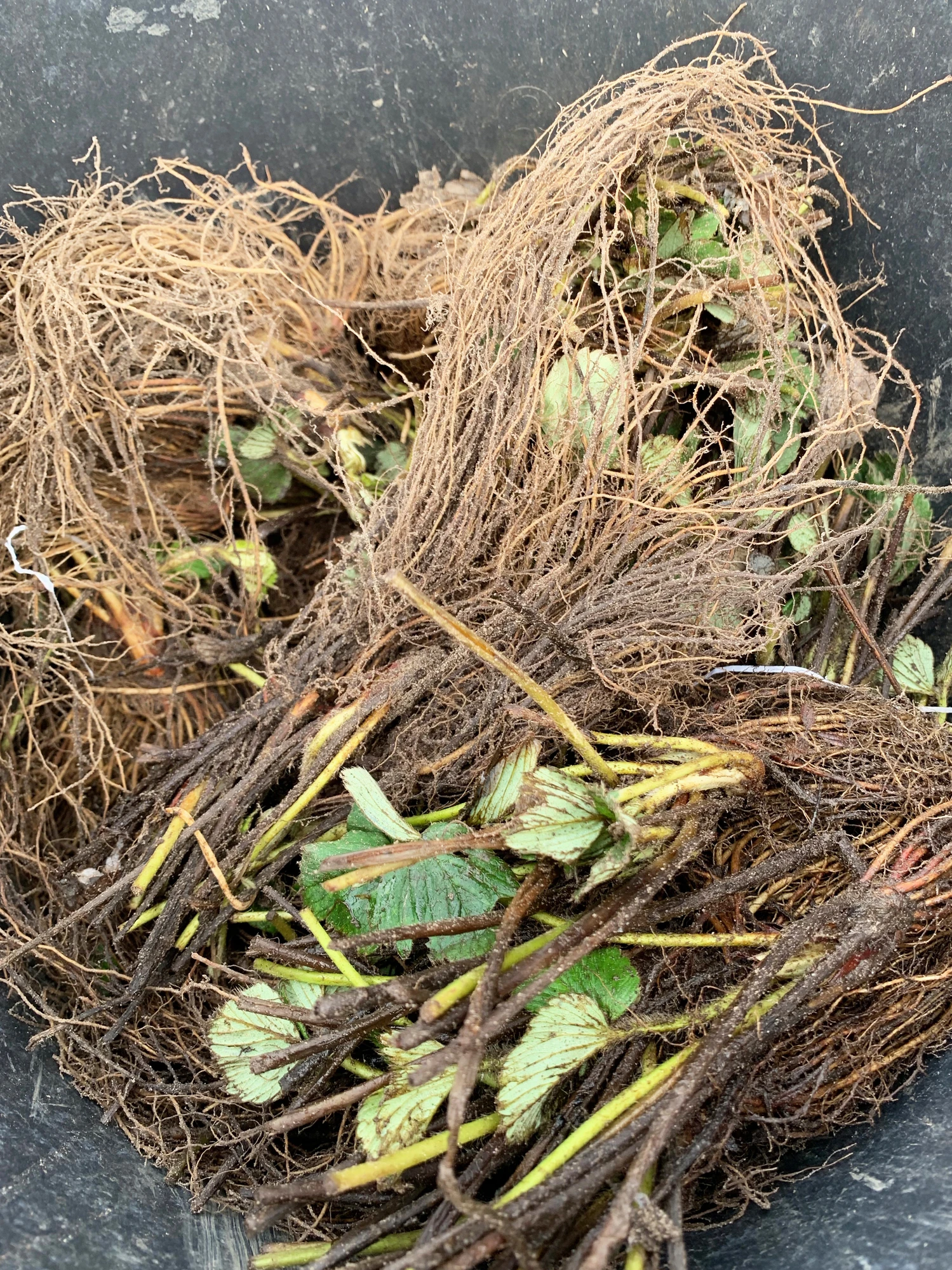
Offered as a bundle of 3 bare-root plants — see the Planting Guide tab for bare-root handling.
PRE-ORDER: Shuksan ships starting mid-February. Bare-root plants arrive dormant (no leaves) and without soil.
The Native Story
Every garden strawberry descends from two wild strawberries of the Americas: our Coastal Strawberry (F. chiloensis) and the meadow and Mountain Strawberry (F. virginiana). Shuksan's Coastal Strawberry connection is closer to home. Its pedigree includes a wild beach strawberry that USDA breeder G. F. Waldo collected on an Oregon beach — the Reedsport clone — which is “the only known source of red stele resistance” in Shuksan's family tree.1 Every parent and grandparent of Shuksan came from the Pacific states. Washington State University breeders at Puyallup made the cross in 1962 and released Shuksan, named for the Cascade peak, for planting in 1971.1
Edible Uses
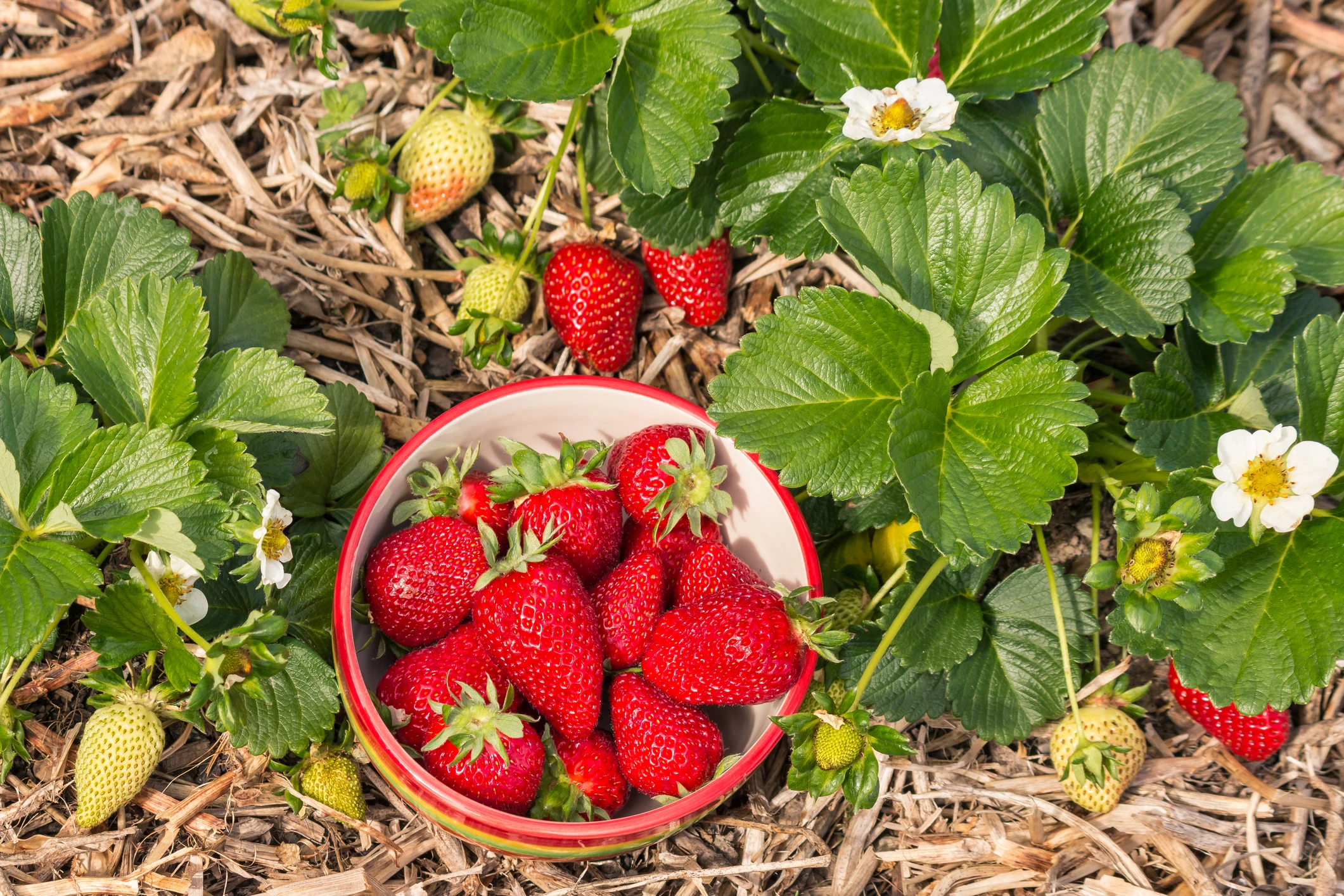
Shuksan is a large-fruited, midseason June-bearer: one generous crop of bright-red, glossy, firm berries in early summer. In taste tests of frozen fruit it beat the old Northwest standard for flavor, appearance, and texture, and its preserves hold their color longer.1 That makes it a classic “jam and freezer” berry — the one to plant when you want flats of strawberries for preserves, pies, and a winter's worth of smoothies.
Ornamental Qualities
A vigorous, productive plant with deep-green trifoliate leaves, white spring flowers, and plenty of runners to fill a bed. Grown in a matted row or a dedicated strawberry patch, it quickly makes a lush, low groundcover — and it looks right at home beside our native Coastal Strawberry, its wild ancestor.
Environment & Culture
Growing: Plant bare-root crowns in early spring with the crown at soil level, in full sun and rich, well-drained soil. For the strongest plants, pinch off flowers the first year and let it fruit fully from the second year on. After harvest, renovate the bed by mowing or trimming old leaves and thinning runners.2
Toughness: Shuksan was bred for the Northwest and is known for exceptional winter hardiness — in the hard winter of 1968–69 (−10°F) it came through and fruited while neighboring varieties were badly injured. It resists red stele races A-1 and A-3, has high virus tolerance, and showed low fruit rot in trials.1
In the Kitchen
Pick ripe berries in the cool of the morning and freeze them whole on a tray, then bag them for the year. Shuksan's firm, deeply colored fruit makes outstanding jam, freezer preserves, pie, and syrup — and plenty of fresh eating during the June rush. (Growing and harvest details are on the Planting Guide tab.)
Attributes
- Type: June-bearing garden strawberry, midseason1
- Native connection: Red stele resistance from wild Coastal Strawberry (F. chiloensis, Reedsport, Oregon)1
- Bred by: Washington State University, Puyallup (Barritt, Schwartze & Norton); WSU 685 × 'Columbia'1
- Fruit: Large, firm, bright red and glossy1
- Harvest: June (one main crop), Pacific Northwest lowlands
- USDA Zones: ~5–8; notably winter-hardy1
- Light: Full sun
- Water: Regular, even moisture during bloom and fruiting
- Soil: Rich, well-drained
- Spacing: 12–18 in apart in rows; spreads by runners
- Pollination: Self-fertile
References
- Barritt, B. H., Schwartze, C. D. & Norton, R. A., “Shuksan, a New Winter Hardy Strawberry for the Pacific Northwest,” Fruit Varieties Journal (American Pomological Society).
- Oregon State University Extension, Strawberry Cultivars for Western Oregon and Washington (EC 1618), rev. 2025.