Tiger Lily ~ Bundle of 3 Bare-root
Product on Preorder

Current Stock:
0
Other Names:
Oregon Lily, Columbia Lily
Latin Name:
Lilium Columbianum
Available November 10, 2026.  Plants ship within 3 weeks of this date, shipped in the order they were received. NOTE: We will wait to ship your order until all your plants become available.
Size *

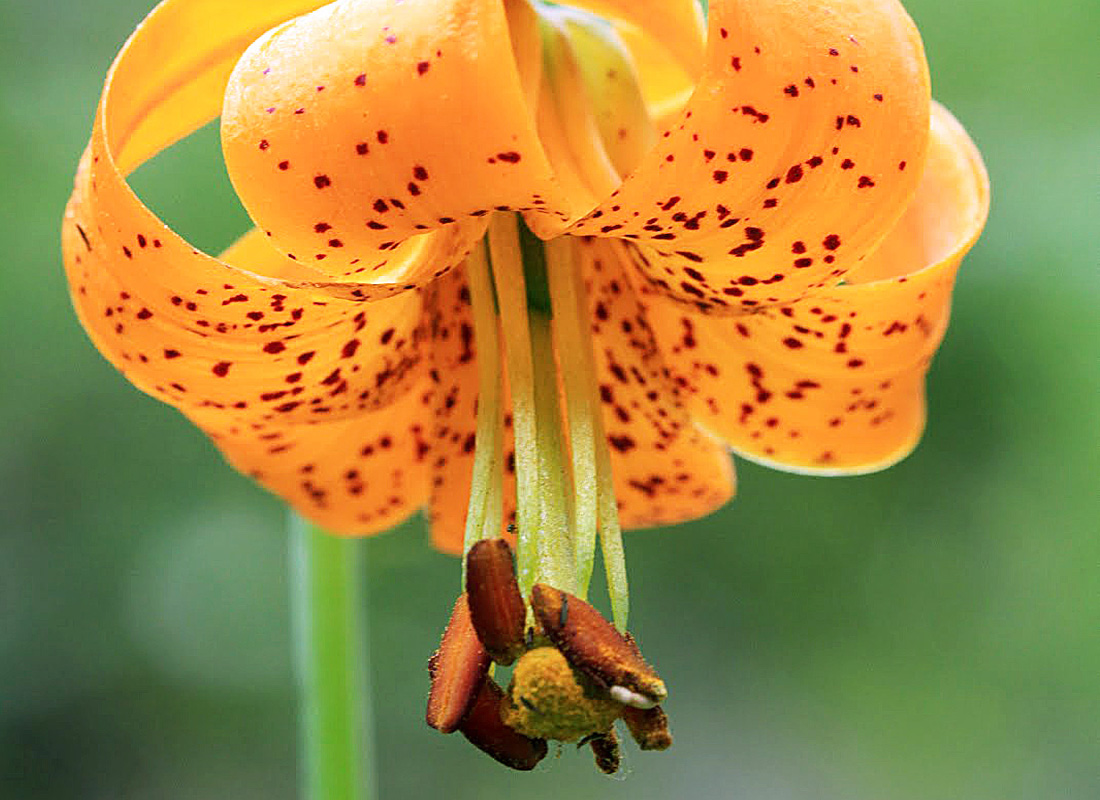
The Tiger Lily (Lilium columbianum), also called Columbia Lily, is one of the West's showiest wildflowers — nodding, turk's-cap blooms of brilliant yellow-orange, freckled with maroon and swept back into elegant curves, over whorls of pointed leaves.24

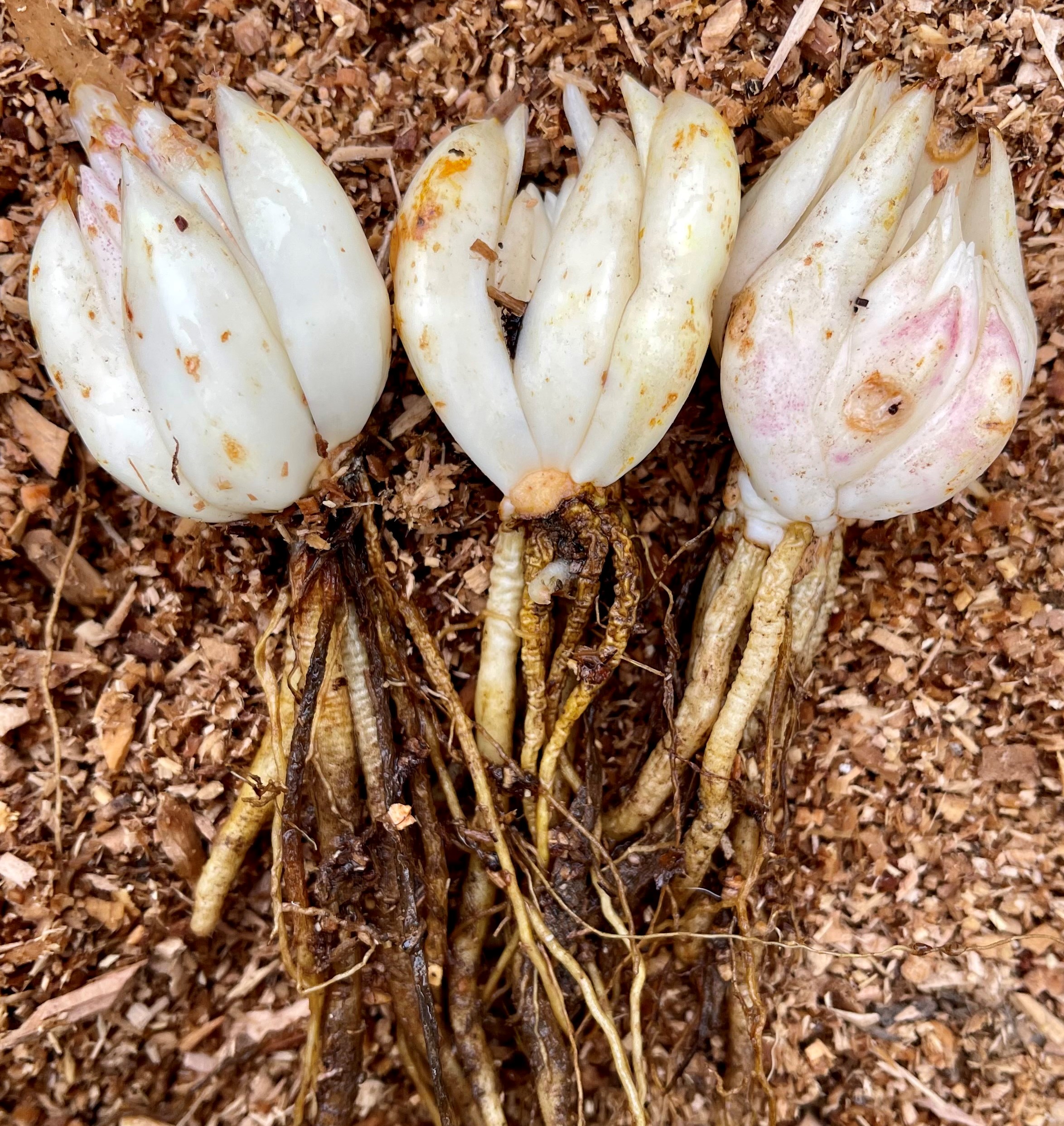
Offered as a bundle of 3 bare-root plants — see the Planting Guide tab for bare-root handling.

NOTE: Bare-root plants arrive dormant (no leaves) and without soil.

Edible & Medicinal Uses

Beneath the flowers grows a scaly white bulb — built of many small scales, like a loose garlic head — that is edible and pleasantly sweet, tasting of sweet chestnut. Traditionally eaten raw or, more often, cooked (steamed or boiled), it is valued as a vegetable across the Northwest. Cooked, the bulb takes on a smooth, creamy texture, and it's known for — and actually enjoyed for — a distinctive bitter aftertaste. The flowers are edible too. (Harvest thoughtfully — each bulb is the whole plant — and enjoy it as a special food.)14

Ornamental Qualities

A stunning garden centerpiece, Tiger Lily rises 2–4 ft and dangles as many as a dozen or more fragrant, spotted orange turk's-cap flowers in early-to-mid summer, beloved by hummingbirds and swallowtails. It shines in a border, woodland edge, or meadow and is beautiful with Chocolate Lily and native ferns.1

Environment & Culture

Ecology: Native from British Columbia to California, Tiger Lily grows in meadows, forest edges, thickets, and roadside clearings from lowlands to mountains. Its nectar-rich flowers are a favorite of hummingbirds and large butterflies.12

Culture: The bulbs are gathered and eaten as a vegetable by many Northwest peoples, raw or cooked, sometimes as a flavoring. We offer it with respect for that living knowledge and invite support for Indigenous-led restoration through our Charitable Giving page.4

In the Kitchen

If you harvest a bulb, separate the scales, rinse, and steam or simmer them until tender — sweet and chestnut-like with that signature bitter aftertaste, they're lovely in a broth or stir-fry, or added to a stew as you would a starchy vegetable. The freckled petals make a striking edible garnish. (Growing and harvest details are on the Planting Guide tab.)

Attributes

  • Native Range: British Columbia to California; meadows, edges, thickets1
  • USDA Zones: ~5–93
  • Light: Full sun to part shade1
  • Water: Moderate; moist but well-drained1
  • Soil: Rich, humusy, well-drained1
  • Habit: Bulb perennial, 2–4 ft; nodding orange turk's-cap flowers2
  • Edible: Scaly bulb (sweet, chestnut-like) and flowers — best cooked4

References

  1. Native Foods Nursery field notes; Lady Bird Johnson Wildflower Center, Lilium columbianum.
  2. Pojar, J. & MacKinnon, A., Plants of the Pacific Northwest Coast, 2014.
  3. USDA PLANTS Database, Lilium columbianum.
  4. Turner, N. J., Okanagan & Thompson ethnobotany; Wild Harvests.

Planting Guide: Tiger Lily (Lilium columbianum) — Bundle of 3 Bare-root

Tip: Give it rich, well-drained soil with its roots cool and shaded and its flowers in sun — and enjoy it mainly as a spectacular ornamental, harvesting a bulb only now and then.

When Your Plant Arrives

Open the package promptly. Your plants arrive as dormant bulbs or corms — no leaves and no soil, which is normal and how they travel best. Keep them cool, dry, and out of direct sun, and plant within a few days (sooner is better); if you must wait, store them somewhere cool and dark, not damp. Plant at the depth noted below, pointed end up. If anything looks amiss, please contact customer service within 7 days of delivery and we’ll make it right.

Choosing a Site

Light: Full sun to part shade (cool roots, sunny tops).

Soil: Rich, humusy, well-drained — never soggy.

Space: 8–12 in apart.

Planting Steps

Plant bulbs in fall, 4–6 in deep, on a little grit for drainage; firm and water in, and mulch to keep the roots cool.

Leave the stems standing until they yellow.

Watering & Care

Establishment: Keep evenly moist through the growing season.

After establishment: Moderate water; good drainage is essential.

Maintenance: Divide crowded clumps in fall.

Protection

Deer & rabbits: Lilies are readily browsed — protect with a cage or repellent.

Wildlife: Hummingbirds and swallowtails love the flowers.

Companions: Chocolate lily, meadow natives.

Harvest Basics

Season: Dig a bulb after flowering, once foliage matures, if harvesting.

Prep: Separate the scales and steam or simmer until tender — peppery and bitter, traditionally a seasoning or side, not a staple.

Sustainable harvest: Slow to grow and killed by digging, so take only the odd bulb from an established patch and replant the scales and bulblets; most gardeners grow it for the spectacular flowers alone.