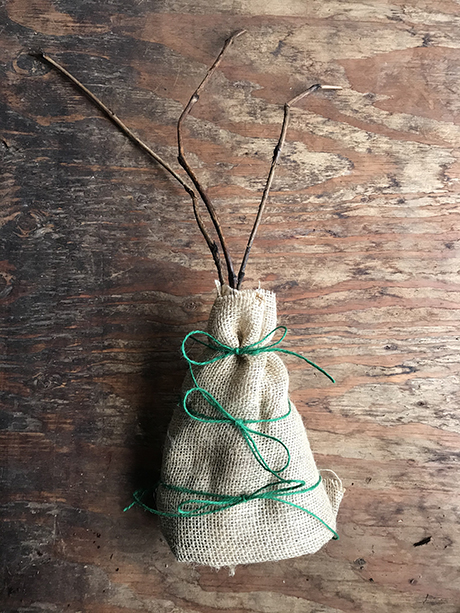
Biscuitroot (Lomatium spp., here barestem L. nudicaule and fernleaf L. dissectum) is a group of hardy native desert-parsleys — airy umbels of yellow flowers over lacy foliage — long treasured across the West as food, seasoning, and powerful medicine.2, 4
Offered as a bundle of 3 bare-root plants — see the Planting Guide tab for bare-root handling.
NOTE: Bare-root plants arrive dormant (no leaves) and without soil.
Edible & Medicinal Uses
Biscuitroots earned their name from their starchy, edible taproots, which are traditionally cooked, or dried and ground into a flour pressed into cakes. The root has a distinctive earthy, spicy flavor; barestem biscuitroot (L. nudicaule) in particular has sweet, tender roots when dug young, before they grow woody. It's also prized as a seasoning: the young leaves and shoots are a hardy spring green tasting of parsley, and the aromatic seeds — spicy like caraway — flavor soups, stews, and meats and make a pleasant tea. Fernleaf biscuitroot (L. dissectum) is above all a renowned traditional medicine — one of the most widely used medicinal plants in native North America, its root prepared for respiratory ailments. These are members of the carrot family; treat the medicinal root as a potent remedy to use knowledgeably, and enjoy the food and seasoning uses of the parts traditionally eaten.1, 4
Ornamental Qualities
Tough and architectural, biscuitroot forms mounds of finely divided, almost fern-like foliage topped with bright yellow flower umbels in spring, 1–5 ft depending on species. Blooming early when little else does, it's a superb pollinator plant for a dry meadow, rock garden, or naturalized bank, thriving on lean, dry ground.1, 4
Environment & Culture
Ecology: Native across western North America, biscuitroots grow on dry slopes, sagebrush steppe, and open ground, deeply drought-adapted by their large taproots. Their early flowers are crucial forage for native bees, butterflies, and moths, and the plants feed wildlife from bears to grazers.1, 4
Culture: Among the most important and widely used plants in native North America — food, seasoning, medicine, and ceremony — known to Great Basin peoples as Toza. We offer it with respect for that living knowledge and invite support for Indigenous-led restoration through our Charitable Giving page.4
In the Kitchen
For seasoning, use barestem biscuitroot: snip the celery-scented young greens into soups and stews, or crush the seeds as a spice and steep them for tea. Traditional root preparation means cooking the starchy taproot, or drying and grinding it into a flour for little cakes. Save the medicinal fernleaf root for knowledgeable use rather than the everyday kitchen. (Growing and harvest details are on the Planting Guide tab.)
Attributes
- Native Range: Western N. America; dry slopes, steppe, open ground1
- USDA Zones: ~4–83
- Light: Full sun1
- Water: Low; very drought-tolerant (deep taproot)1
- Soil: Well-drained, rocky to loamy; lean ground1
- Habit: Taprooted perennial, 1–5 ft; lacy foliage, yellow umbels2
- Uses: Edible root & seasoning greens/seeds (nudicaule); traditional medicine (dissectum)4
References
- Gardenia.net; USDA Forest Service, Plant of the Week, Lomatium.
- Pojar, J. & MacKinnon, A., Plants of the Pacific Northwest Coast, 2014.
- USDA PLANTS Database, Lomatium nudicaule / L. dissectum.
- USDA NRCS Plant Guide (Tilley et al., 2010); Moerman, D., Native American Ethnobotany, 1998.