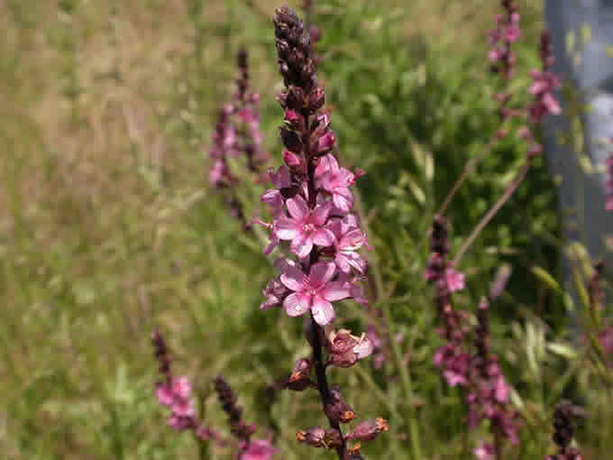
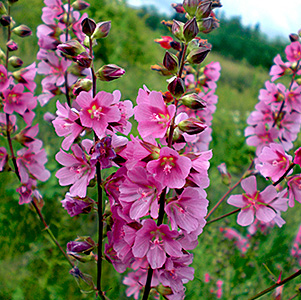
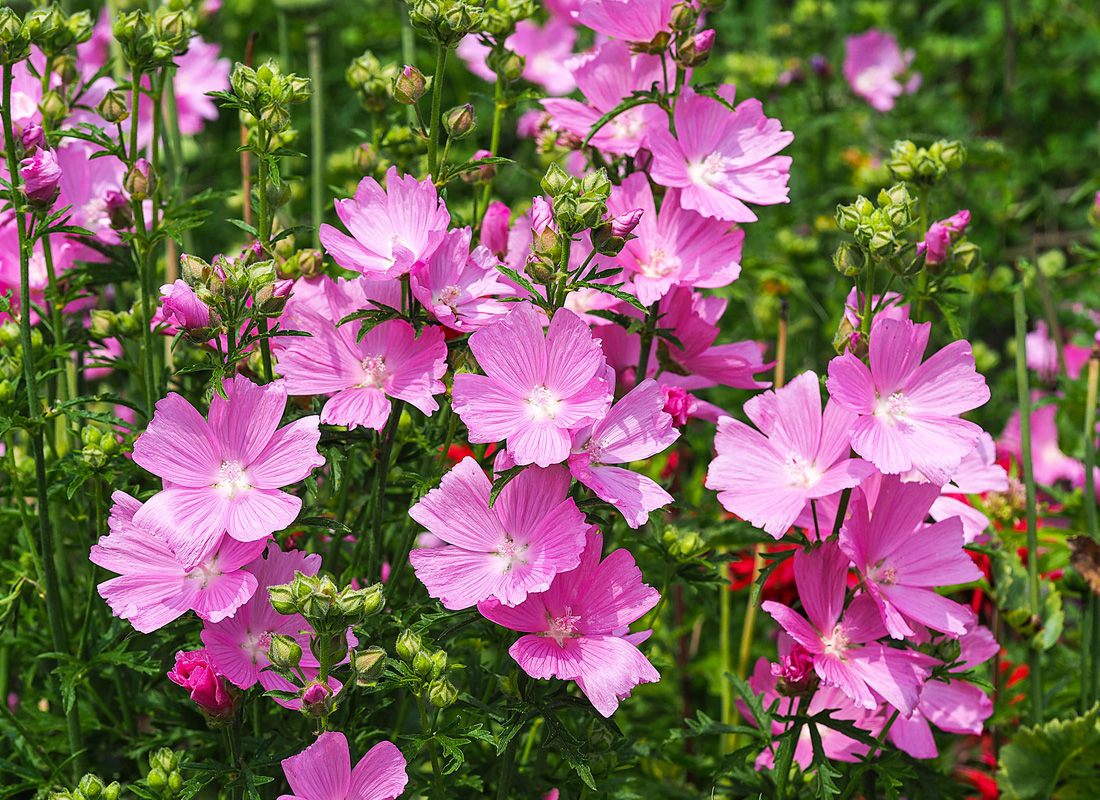
Henderson's Checkermallow (Sidalcea hendersonii) is a rare and beautiful Northwest perennial — tall spires of rose-pink mallow flowers over heart-shaped leaves — with tender, edible spring greens.2, 4
Offered as a bundle of 3 bare-root plants — see the Planting Guide tab for bare-root handling.
NOTE: Bare-root plants arrive dormant (no leaves) and without soil.
Edible & Medicinal Uses
The leaves and flowers are mild and pleasant, raw or cooked — add them to salads and soups or cook them into other dishes. The leaves have fuzzy hairs (though fewer than Dwarf Checkerbloom's), so the young leaves are the most tender. Like other members of the mallow family — food and medicine plants across many cultures for thousands of years — it's rich in vitamins and minerals, especially vitamin A.1, 4
Ornamental Qualities
Striking and long-blooming, Henderson's Checkermallow sends up tall stems of showy, rose-pink, hollyhock-like flowers above heart-shaped basal leaves. It tends to form a spreading colony — beautiful in a moist wildflower border or pollinator planting with Oregon Stonecrop, Nodding Onion, or Early Blue Violet.1
Environment & Culture
Ecology: Native to coastal marshes, wet meadows, and tidal edges of the Northwest, Henderson's Checkermallow is uncommon and declining with the loss of its wetland habitat — so garden plantings help conserve it. Its flowers are a rich nectar source for native bees and butterflies.1, 2
Culture: Checkermallows and other mallows are longstanding food and medicine plants, their leaves and flowers eaten and valued as gentle, soothing greens. We offer it with respect for that living knowledge and invite support for Indigenous-led restoration through our Charitable Giving page.4
In the Kitchen
Gather the tender young leaves and flowers for salads, or wilt the leaves into soups and sautes as a mild, softly mucilaginous green that lightly thickens a broth — classic mallow-family behavior. (Growing and harvest details are on the Planting Guide tab.)
Attributes
- Native Range: NW coast; marshes, wet meadows, tidal edges1
- USDA Zones: ~7–93
- Light: Full sun to part shade1
- Water: Moist to wet1
- Soil: Rich, moist; tolerates wet ground1
- Habit: Spreading perennial; tall rose-pink flower spires2
- Edible: Young leaves & flowers (raw or cooked)4
References
- Native Foods Nursery field notes; CalScape, Sidalcea hendersonii.
- Pojar, J. & MacKinnon, A., Plants of the Pacific Northwest Coast, 2014.
- USDA PLANTS Database, Sidalcea hendersonii.
- Moerman, D., Native American Ethnobotany, 1998.