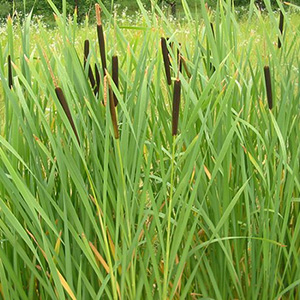
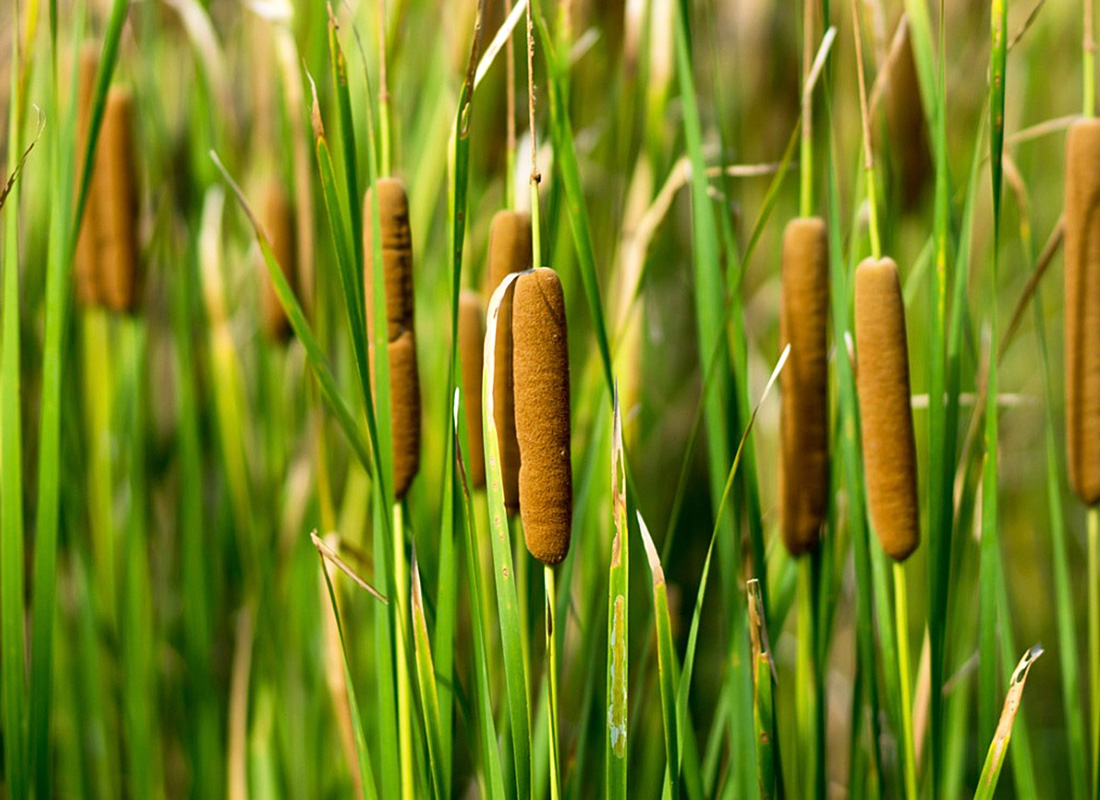
The Cattail (Typha latifolia) is the familiar brown-spiked sentinel of marsh and pond edge — and one of the most productive wild food plants in North America, offering something edible from nearly every part, in every season.2, 4
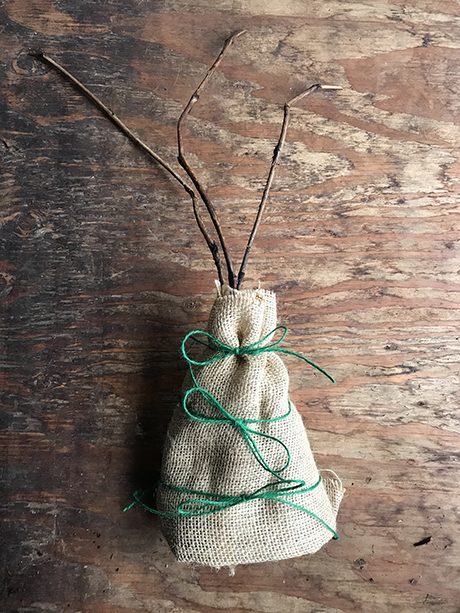
Offered as a bundle of 3 bare-root plants — see the Planting Guide tab for bare-root handling.
NOTE: Bare-root plants arrive dormant (no leaves) and without soil.
Edible & Medicinal Uses
Cattail is a whole pantry in one plant. In spring, the tender inner shoots ("Cossack asparagus") are peeled and eaten raw or cooked; in late spring the green flower spikes are boiled and eaten like tiny corn-on-the-cob; midsummer brings golden pollen, a protein-rich flour that substitutes one-for-one for wheat in pancakes and breads; and in fall and winter the starchy rhizomes are roasted or processed into flour. Remarkably, a cattail stand yields more starch per acre than most cultivated grains, and the plant is richer in calcium, iron, and potassium than potatoes or rice.1, 4
Ornamental Qualities
Architectural and iconic, Cattail brings tall, strappy blue-green leaves and the unmistakable velvety brown seed-spike to a pond, ditch, or rain garden, 5–8 ft. It's a superb plant for cleaning and holding wet soil and for wildlife, though vigorous — best given a dedicated wet spot or a submerged container to keep it in bounds.4
Environment & Culture
Ecology: Found in wetlands across the continent, Cattail is an ecosystem engineer — its dense stands shelter red-winged blackbirds, marsh wrens, and waterfowl, feed muskrats and beavers, and filter and stabilize wet ground.1, 2
Culture: Among the most important food and fiber plants for Indigenous peoples across North America: every part is used, the long leaves woven into mats, baskets, and shelter, the fluff used for insulation and tinder, and the many food parts gathered through the year. We offer it with respect for that living knowledge and invite support for Indigenous-led restoration through our Charitable Giving page.4
In the Kitchen
Follow the seasons: peel spring shoots for a crisp, cucumber-like raw snack or stir-fry; boil the young green flower spikes and nibble them like corn; shake midsummer's bright pollen into a bag and fold it into pancakes and biscuits; roast fall rhizomes or wash out their starch for flour. One firm rule — harvest only from clean, unpolluted water, since cattails absorb whatever is in their water and soil.5 (Growing and harvest details are on the Planting Guide tab.)
Attributes
- Native Range: Wetlands across North America (and beyond)1
- USDA Zones: ~3–103
- Light: Full sun1
- Water: Wet — shallow standing water to saturated soil1
- Soil: Mucky, wet; pond and ditch margins1
- Habit: Vigorous rhizomatous marsh perennial, 5–8 ft2
- Edible: Shoots, flower spikes, pollen, rhizomes — harvest only from clean water1
References
- Lady Bird Johnson Wildflower Center; USDA NRCS Plant Guide, Typha latifolia.
- Pojar, J. & MacKinnon, A., Plants of the Pacific Northwest Coast, 2014.
- USDA PLANTS Database, Typha latifolia.
- UW Bothell Wetland; Moerman, D., Native American Ethnobotany, 1998.
- "Foraging and Cooking Cattails," Forager Chef.