Early Blue Violet ~ Bundle of 3 Bare-root
Product on Preorder

$17.25
Current Stock:
0
Other Names:
Sand Violet, Hookedspur Violet, Marsh Violet, Western Blue Violet, Mountain Blue Violet, Hookspur Violet, Western Dog Violet
Latin Name:
Viola adunca
Available November 30, 2026.  Plants ship within 3 weeks of this date, shipped in the order they were received. NOTE: We will wait to ship your order until all your plants become available.
Size *

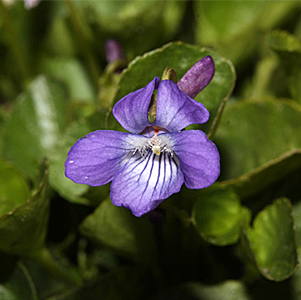
The Early Blue Violet (Viola adunca) is a dainty native groundcover whose blue-purple, spurred flowers rise over neat heart-shaped leaves in spring — and whose foliage is the sole food of the threatened Oregon silverspot butterfly.23

Offered as a bundle of 3 bare-root plants — see the Planting Guide tab for bare-root handling.

NOTE: Bare-root plants arrive dormant (no leaves) and without soil.

Edible & Medicinal Uses

The blue flowers and young leaves are edible and mild, richer in vitamins A and C than most garden greens — and the blue-flowered violets are the classic culinary ones, milder than their yellow relatives. As with all violets, enjoy leaves and flowers in moderation and leave the roots be.4

Ornamental Qualities

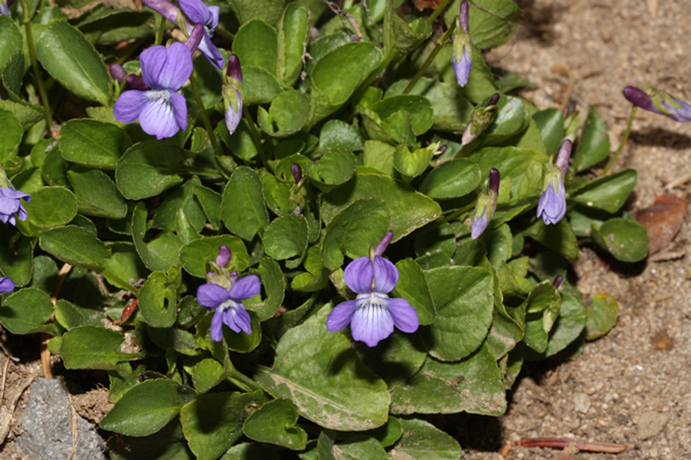
Low and neat, Early Blue Violet dots the spring garden with jewel-blue, spurred flowers over tidy foliage, spreading into a gentle groundcover. It's lovely at the front of a bed or woven through a meadow planting with Redwood Sorrel and native grasses.2

Environment & Culture

Ecology: This is a conservation keystone. Early Blue Violet is the sole larval host plant of the federally threatened Oregon silverspot butterfly, and a larval host for other Zerene and great spangled fritillaries and a spring nectar source for the imperiled Mardon skipper. Planting it — in open, sunny to lightly shaded ground from coastal prairies to mountain meadows — is a genuine act of butterfly conservation.3

Culture: Violets have a long place in Northwest foodways and folk medicine. We offer this one with respect for that tradition and invite support for Indigenous-led restoration through our Charitable Giving page.4

In the Kitchen

The blue flowers are the ones to candy: brush with egg white, dust with fine sugar, and dry into jewel-like cake decorations — or simmer a handful into a stunning violet syrup or jelly that turns a brilliant magenta with a squeeze of lemon. The young leaves go quietly into a spring salad.5 (Growing and harvest details are on the Planting Guide tab.)

Attributes

  • Native Range: Widespread across western N. America; coastal prairies to montane meadows1
  • USDA Zones: ~4–82
  • Light: Full sun to part shade (open ground)3
  • Water: Moist, well-drained2
  • Soil: Average to humus-rich; tolerates lean prairie soils2
  • Habit: Low herbaceous perennial groundcover2
  • Bloom: Blue-purple, spring2
  • Wildlife: Sole larval host of the threatened Oregon silverspot butterfly3
  • Edible: Leaves & flowers in moderation; roots not eaten4

References

  1. USDA PLANTS Database, Viola adunca.
  2. Pojar, J. & MacKinnon, A., Plants of the Pacific Northwest Coast, 2014.
  3. U.S. Fish & Wildlife Service / Oregon Zoo, Oregon Silverspot Butterfly & Viola adunca.
  4. Plants For A Future (PFAF) Database, Viola (edible uses & cautions).
  5. "Foraging Violets: How to Identify, Harvest & Use," Unruly Gardening.

Planting Guide: Early Blue Violet (Viola adunca) — Bundle of 3 Bare-root

Tip: Plant a generous patch in open, sunny ground — butterflies like the threatened Oregon silverspot need violets in density to find and use them.

When Your Plant Arrives

Open the box promptly. Your plant travels dormant — no leaves and no soil — which is normal and the healthiest way for it to ship. Keep the roots moist and cool, and unwrap them only when you’re ready to plant. Aim to get it into the ground or a pot within a day or two; if you can’t, tuck the roots into damp soil, sawdust, or a bucket of moist material and hold it somewhere cool and out of frost. Don’t let the roots dry out or sit in standing water. If anything looks amiss, please contact customer service within 7 days of delivery and we’ll make it right.

Choosing a Site

Light: Full sun to part shade.

Soil: Average to humus-rich, well-drained; tolerates lean prairie soils.

Space: 8–12 in apart.

Planting Steps

Plant in fall or spring; set crowns at soil level.

Water in and mulch lightly; in meadow plantings, keep competing grass down until established.

Watering & Care

Establishment: Keep moist the first season.

After establishment: Moderate water; tolerates drying once settled.

Maintenance: Let it self-sow to spread.

Protection

Deer: Generally left alone.

Wildlife: The sole larval host of the threatened Oregon silverspot butterfly, and a host for other fritillaries — a plant of real conservation value.

Harvest Basics

Use: Pick blue flowers and young leaves in moderation — mild, and richer in vitamins A and C than most garden greens; blue-flowered violets are the classic edible ones.

Note: Leave plenty for the butterflies, and never eat the roots.