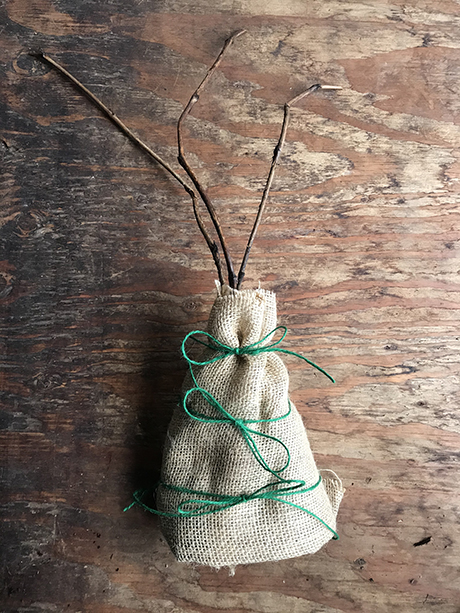
The California Hazelnut (Corylus cornuta var. californica) is our native filbert — a graceful, multi-stemmed shrub with soft, birch-like leaves, dangling ornamental catkins in late winter, and rich, delicious nuts.2, 4
Offered as a bundle of 3 PLUGS this year — see the Planting Guide tab for bare-root handling.
Edible & Medicinal Uses
The small, flavorful hazelnuts can be eaten raw or roasted, blended into nut butter, or ground into a gluten-free flour. They're an excellent source of fiber, manganese, and copper. The nuts are valued as food and the flexible shoots for weaving and tools, and a bark poultice sees traditional medicinal use. (Our native hazel yields smaller crops than the commercial European filbert, and you'll want to beat the squirrels to the harvest.)1, 4
Ornamental Qualities
A charming four-season shrub 6–15 ft tall, California Hazelnut opens the year with long, dangling golden catkins (with tiny ruby-red female flowers) before the leaves, carries soft rounded foliage through summer, and glows golden in fall. It's a graceful screen or hedgerow plant and a classic understory companion beneath Oregon White Oak and California Foothill Pine.1
Environment & Culture
Ecology: Native from British Columbia to California, California Hazelnut grows in moist, shaded woods and forest edges, often near streams. Its winter buds and catkins feed birds, its foliage hosts butterfly and moth larvae, and its nuts feed jays, squirrels, and many mammals.1, 2
Culture: Northwest peoples value hazel as food, medicine, and material — the straight young shoots woven and worked into baskets, traps, and tools — and continue to steward and restore it today. We offer it with respect for that living knowledge and invite support for Indigenous-led restoration through our Charitable Giving page.4
In the Kitchen
Gather the nuts in early fall as the husks brown (ahead of the squirrels), cure them a week or two, then crack and enjoy. Roast them to deepen the flavor, grind them into a silky nut butter, or fold hazelnut meal into cakes and cookies for a rich, native twist. (Growing and harvest details are on the Planting Guide tab.)
Attributes
- Native Range: British Columbia to California; moist shaded woods1
- USDA Zones: ~4–83
- Light: Full sun to full shade (best nuts with some sun)3
- Water: Moist; appreciates year-round moisture, tolerates dry shade1
- Soil: Loamy, acid, organic-rich, well-drained; tolerates clay3
- Habit: Multi-stemmed deciduous shrub, 6–15 ft2
- Bloom: Dangling catkins, late winter (ornamental)1
- Edible: Nuts — raw, roasted, nut butter, or flour4
References
- CalScape; Native Plants PNW, Corylus cornuta var. californica.
- Pojar, J. & MacKinnon, A., Plants of the Pacific Northwest Coast, 2014.
- USDA NRCS Plant Fact Sheet, California Hazelnut.
- Native Foods Nursery field notes; Moerman, D., Native American Ethnobotany, 1998.