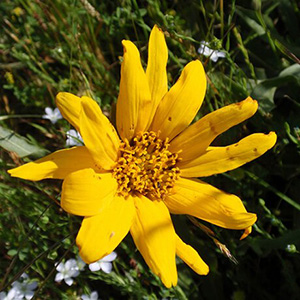
The California Compassplant (Wyethia angustifolia), a narrow-leaved "mule's ears," is a bold native wildflower resembling a sunflower — bright golden blooms over lance-shaped basal leaves — with edible seeds and young greens.2, 4
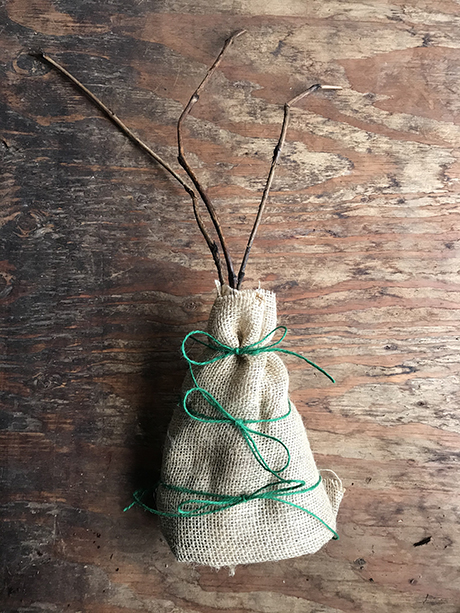
Offered as a bundle of 3 bare-root plants — see the Planting Guide tab for bare-root handling.
NOTE: Bare-root plants arrive dormant (no leaves) and without soil.
Edible & Medicinal Uses
The oil-rich seeds are the main food: traditionally dried, ground, and blended with other seed meals into pinole, or used as a flour to thicken soups and enrich breads. The young leaves can be eaten raw or lightly cooked as a potherb. The plant also has a history of medicinal use — a decoction of the leaves to reduce fever and bring on a sweat, and a root poultice for chest complaints. (It's a close relative of Balsamroot, and the two look much alike.)1, 4
Ornamental Qualities
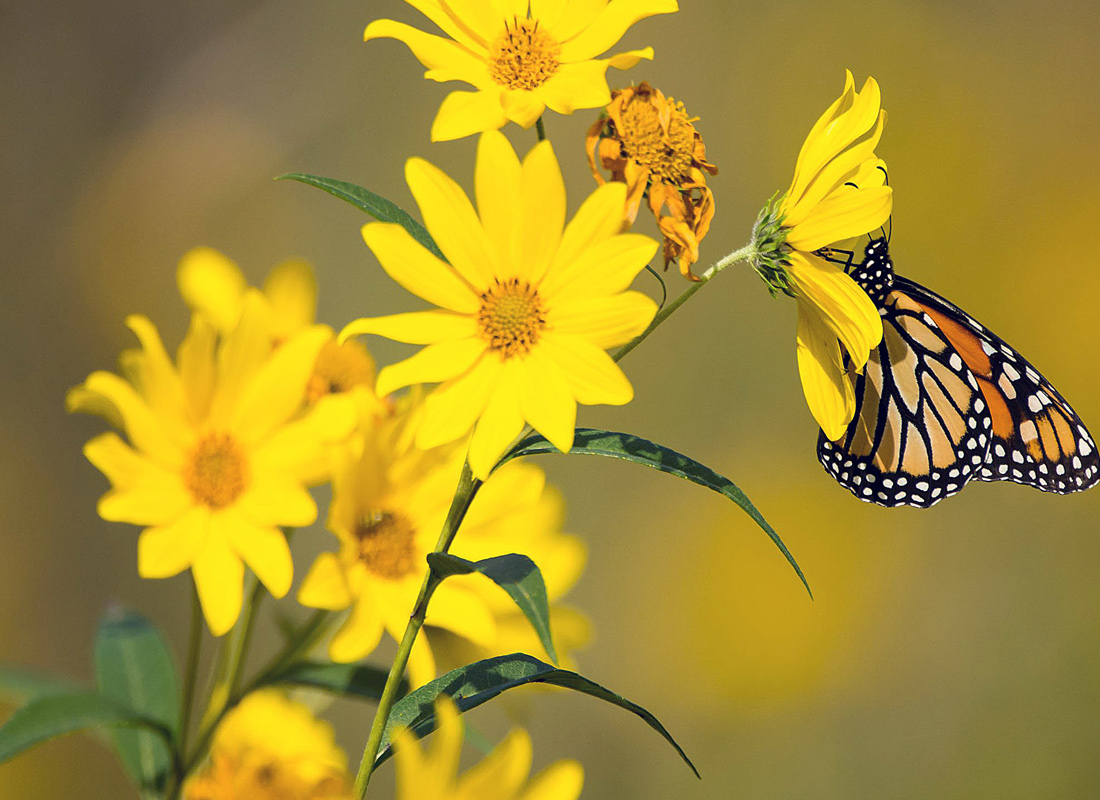
A handsome, sunflower-like perennial, California Compassplant sends up cheerful yellow flower heads on 1–2 ft stems above a rosette of narrow leaves in spring, then dies back to the root by summer. It's a strong pollinator plant for a meadow, dry border, or oak-savanna planting, lovely with Common Camas and native bunchgrasses.1
Environment & Culture
Ecology: Native to the grasslands, meadows, and oak woodlands of the West, California Compassplant is drought-adapted and summer-dormant, its spring bloom feeding native bees and butterflies.1, 4
Culture: The seeds are a traditional pinole food and the plant a valued medicine among California and Northwest peoples. We offer it with respect for that living knowledge and invite support for Indigenous-led restoration through our Charitable Giving page.4
In the Kitchen
Gather the ripe seeds, dry them, and grind them into a nutty meal to stir into pinole, porridge, or breads, or to thicken a soup. Pick the young leaves early and use them like a mild cooked green. (Growing and harvest details are on the Planting Guide tab.)
Attributes
- Native Range: Western N. America; grasslands, meadows, oak woodlands1
- USDA Zones: ~6–93
- Light: Full sun1
- Water: Low; drought-tolerant, summer-dormant1
- Soil: Well-drained; adaptable1
- Habit: Sunflower-like perennial, 1–2 ft; dies back in summer2
- Edible: Seeds (pinole/flour) & young leaves (potherb)4
References
- Native Foods Nursery field notes; CalScape, Wyethia angustifolia.
- Pojar, J. & MacKinnon, A., Plants of the Pacific Northwest Coast, 2014.
- USDA PLANTS Database, Wyethia angustifolia.
- Moerman, D., Native American Ethnobotany, 1998.