
Wine Grapes ~ Frontenac Gris (white) & Léon Millot (red)
- Current Stock:
- 0
- Other Names:
- Frontenac Gris, Leon Millot, Léon Millot, cold-hardy wine grape, red wine grape, white wine grape
- Latin Name:
- Vitis hybrids 'Frontenac Gris' and 'Léon Millot'
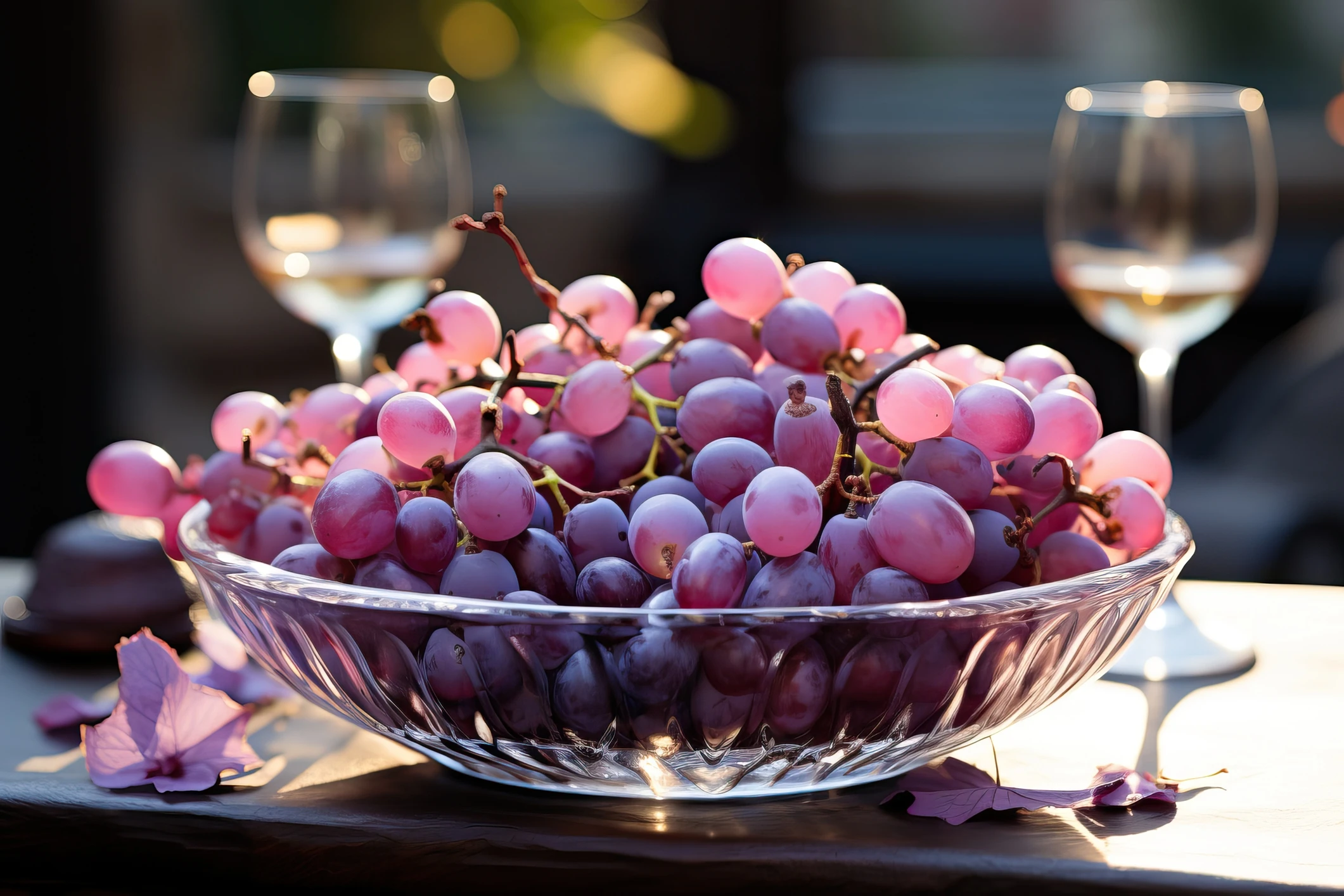
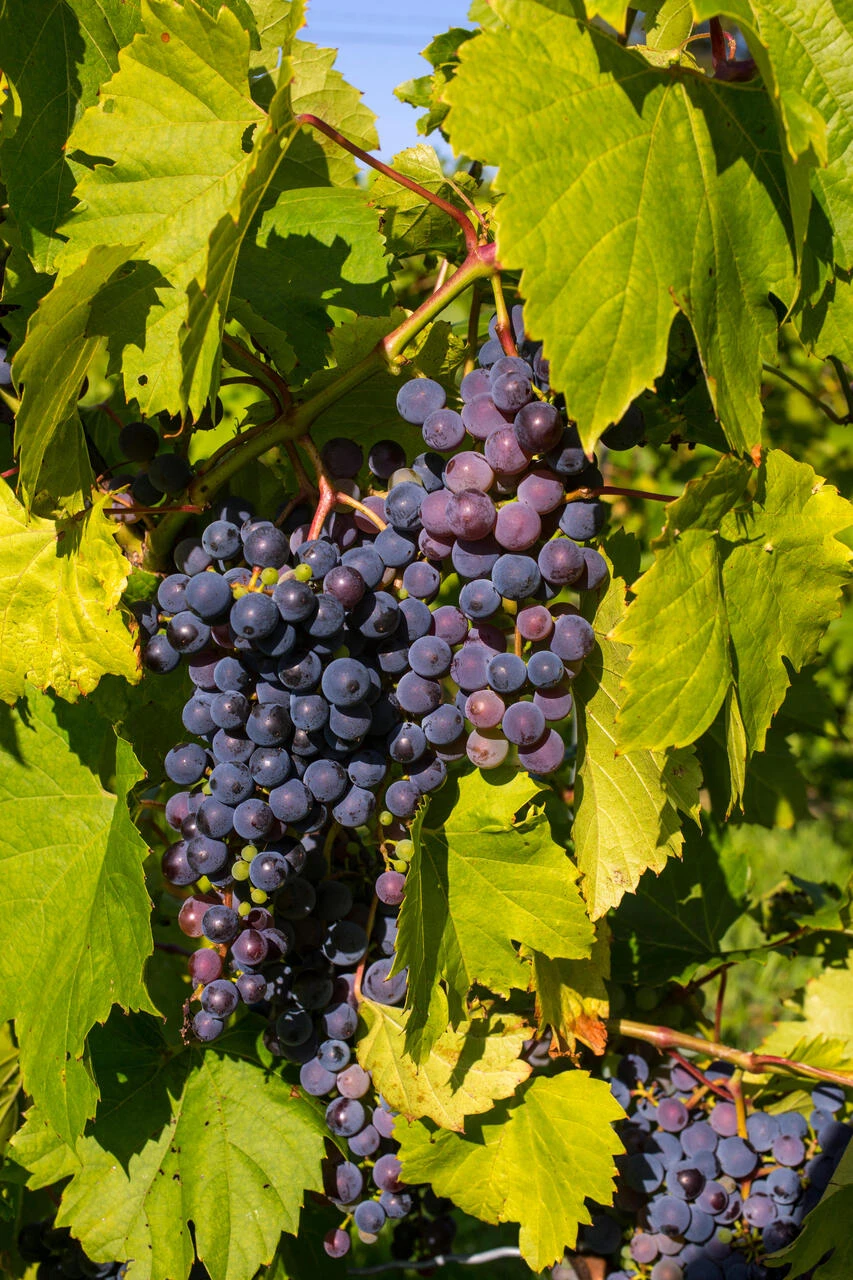
Two cold-hardy wine grapes, one page: ‘Frontenac Gris’ for white and ‘Léon Millot’ for red. Both draw their toughness and disease resistance from wild North American grapes—above all riverbank grape (Vitis riparia)—so they thrive where European wine grapes struggle. Plant one of each and you can make your own white and red from the same backyard trellis. [1][2]
Note: Choose your grape from the drop-down. Both are self-fertile—one vine will fruit on its own. See the comparison table below to pick the right one for your site and your glass.
Which Grape Is Right for You?
| ‘Frontenac Gris’ (white) | ‘Léon Millot’ (red) | |
|---|---|---|
| Wine style | White, rosé, dessert; also juice and jelly [1] | Deep purple-red; light Pinot-style to bold Syrah-style [2] |
| Flavor | Peach, pineapple, honey; bright acidity [1] | Dark berry and chocolate, earthy notes; low tannin [2][3] |
| Berry | Gray-pink skin, loose clusters [1] | Small blue-black berries, small clusters [2] |
| Pedigree | Sport of ‘Frontenac’ (Landot 4511 × V. riparia); Univ. of Minnesota, 2003 [1] | V. riparia × V. rupestris (101-14 Mgt.) × Goldriesling; Kuhlmann, Alsace, 1911 [2][3] |
| Ripening | Mid-to-late season; harvest at 23–26 Brix [1] | Early; ripens before Maréchal Foch [2][3] |
| Cold hardiness | Extreme: survives about −35 °F (Zones 3–8) [1] | Very hardy: Zones 4–8 [3] |
| Vigor | Moderately high [1] | Medium [3] |
| Disease | Low downy mildew and bunch rot; watch powdery mildew [1] | Good overall fungal resistance; watch botrytis and powdery mildew [2][3] |
| Best for | Colder or later sites; aromatic white wine | Cool, short-summer sites like the Willamette Valley; early red |
Edible Uses
‘Frontenac Gris’ ripens to a high 23–26 Brix with lively acidity, making aromatic white, rosé, and dessert wines with notes of peach, pineapple, and honey—plus a bright juice and jelly [1]. ‘Léon Millot’ makes a deeply colored red with dark-berry and chocolate notes; it is low in tannin and high in malic acid, so home winemakers often run a malolactic fermentation [2]. Both are fine for juice and jam, though neither is a table grape (see our ‘Bluebell’ for fresh eating).
Ornamental Qualities
Big lobed leaves, curling tendrils, and heavy fall clusters make either vine a handsome cover for an arbor, fence, or pergola. Planted together, the gray-pink ‘Frontenac Gris’ and blue-black ‘Léon Millot’ clusters make a beautiful pairing at harvest.
Environment and Culture
Both grapes descend from wild North American vines. Vitis riparia, the riverbank grape, is the hardiest native grape on the continent and the backbone of cold-climate grape breeding [4]. The University of Minnesota’s ‘Frontenac Gris’ is half-riparia by pedigree [1]; Eugène Kuhlmann’s ‘Léon Millot’ crosses a riparia × rupestris (sand grape) parent with the European Goldriesling [2]. The result is two vines that handle hard cold and resist much of the fungal pressure of a wet Northwest spring.
Harvest, Care, and Preparation
Site: Full sun, good air flow, and well-drained soil; avoid frost pockets, since ‘Léon Millot’ breaks bud early [3].
Training: A sturdy trellis or arbor; prune hard every winter, keeping a permanent framework and a few strong canes or spurs.
Pollination: Both self-fertile [1][3].
Harvest: ‘Léon Millot’ first, in early fall; ‘Frontenac Gris’ later, once it reaches full sugar [1][2]. Net against birds as the clusters color.
(See Planting Guide in next tab for more info.)
Attributes
FRONTENAC GRIS (white)
- Type: Cold-hardy hybrid wine grape (sport of ‘Frontenac’) [1]
- Native Heritage: Vitis riparia in pedigree [1][4]
- USDA Zones: 3–8 (survives about −35 °F) [1]
- Light: Full sun
- Pollination: Self-fertile
- Bearing Age: 2–3 years from planting
- Ripening: Mid-to-late season [1]
- Use: White, rosé, and dessert wine; juice; jelly [1]
LÉON MILLOT (red)
- Type: French-American hybrid wine grape (Kuhlmann, 1911) [2]
- Native Heritage: V. riparia × V. rupestris in pedigree [2][3]
- USDA Zones: 4–8 [3]
- Light: Full sun
- Pollination: Self-fertile [3]
- Bearing Age: 2–3 years from planting
- Ripening: Early [2][3]
- Use: Red wine; juice; jam [2]
- Our vines: Self-rooted (grown on their own roots)
References
[1] University of Minnesota Grape Breeding — “Frontenac gris” (2003 release; hardiness to −35 °F; 23–26 Brix; wine style; disease notes). mnhardy.umn.edu
[2] “Léon Millot” — breeder Eugène Kuhlmann (Colmar, Alsace, 1911); pedigree; early ripening; small berries; deep purple, low-tannin wine. Wikipedia
[3] Double A Vineyards — “Léon Millot” cultivar notes (zones 4–8; early bud break; medium vigor; disease ratings; self-pollinating). doubleavineyards.com
[4] USDA PLANTS / NatureServe — Vitis riparia (native range and role in cold-hardy grape breeding).
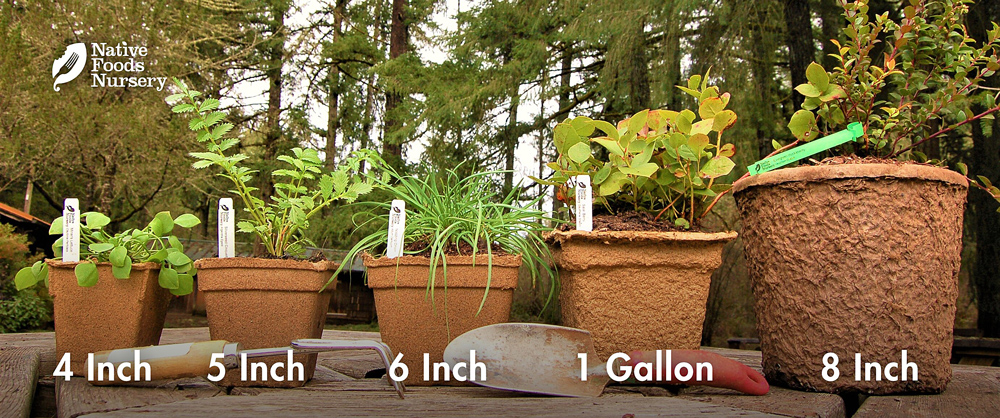
Pot Sizing Guide
Planting Guide: Wine Grapes — ‘Frontenac Gris’ & ‘Léon Millot’ (Vitis hybrids)
Tip: Full sun, sharp drainage, good air flow, and a strong trellis. Both are cold-hardy, disease-tolerant wine grapes bred from wild North American vines.
When Your Plant Arrives
Potted vines: Water thoroughly and let the vine rest somewhere bright but sheltered for a few days before planting.
Dormant bare-root vines: Keep the roots moist and cool, and plant as soon as you can. Soak the roots in a bucket of water for 30–60 minutes just before planting. If anything doesn’t look right, please contact customer service within 7 days of delivery.
Choosing a Site
Light: Full sun (6–8+ hours).
Soil: Well-drained loam or sandy loam of moderate fertility; avoid wet ground.
Air & frost: Good air movement reduces mildew. Avoid low frost pockets — ‘Léon Millot’ leafs out early in spring.
Space: About 6–8 ft between vines along a trellis or arbor.
Planting Steps
Plant in spring once the ground is workable. Dig a hole wide enough to spread the roots, set the vine at the depth it grew before, firm the soil, water in deeply, and mulch.
Both grapes are self-rooted (grown on their own roots, not grafted), so you can plant a little deeper than before without worry, and a vine killed to the ground by extreme cold can regrow true to variety from its roots.
Watering & Care
Establishment: Keep evenly moist the first 1–2 summers.
After establishment: Moderate water; deep and infrequent is best. Avoid heavy nitrogen.
Training & Pruning
Year 1, let one strong shoot grow and tie it to a stake. Year 2, train it up to the trellis wire and start a permanent framework (a cordon or a few arms). Every winter after that, while dormant, prune hard: grapes fruit on new shoots from last year’s wood, so keep a few short spurs or canes and remove the rest.
Protection
Birds: Net as the clusters color.
Disease: Open the canopy in summer by removing crowded shoots and some leaves around the clusters; this is the best defense against powdery mildew and bunch rot.
Cold: Both are very hardy (‘Frontenac Gris’ to about −35 °F; ‘Léon Millot’ Zones 4–8).
Harvest Basics
Timeline: First small crop 2–3 years after planting.
Season: ‘Léon Millot’ in early fall; ‘Frontenac Gris’ mid-to-late fall, at about 23–26 Brix.
Use: Crush and ferment, press for juice, or cook into jelly.
References
- University of Minnesota Grape Breeding — Frontenac gris.
- Léon Millot — Kuhlmann (1911); cultivar history and wine traits.
- Double A Vineyards — Léon Millot cultivar notes.
