
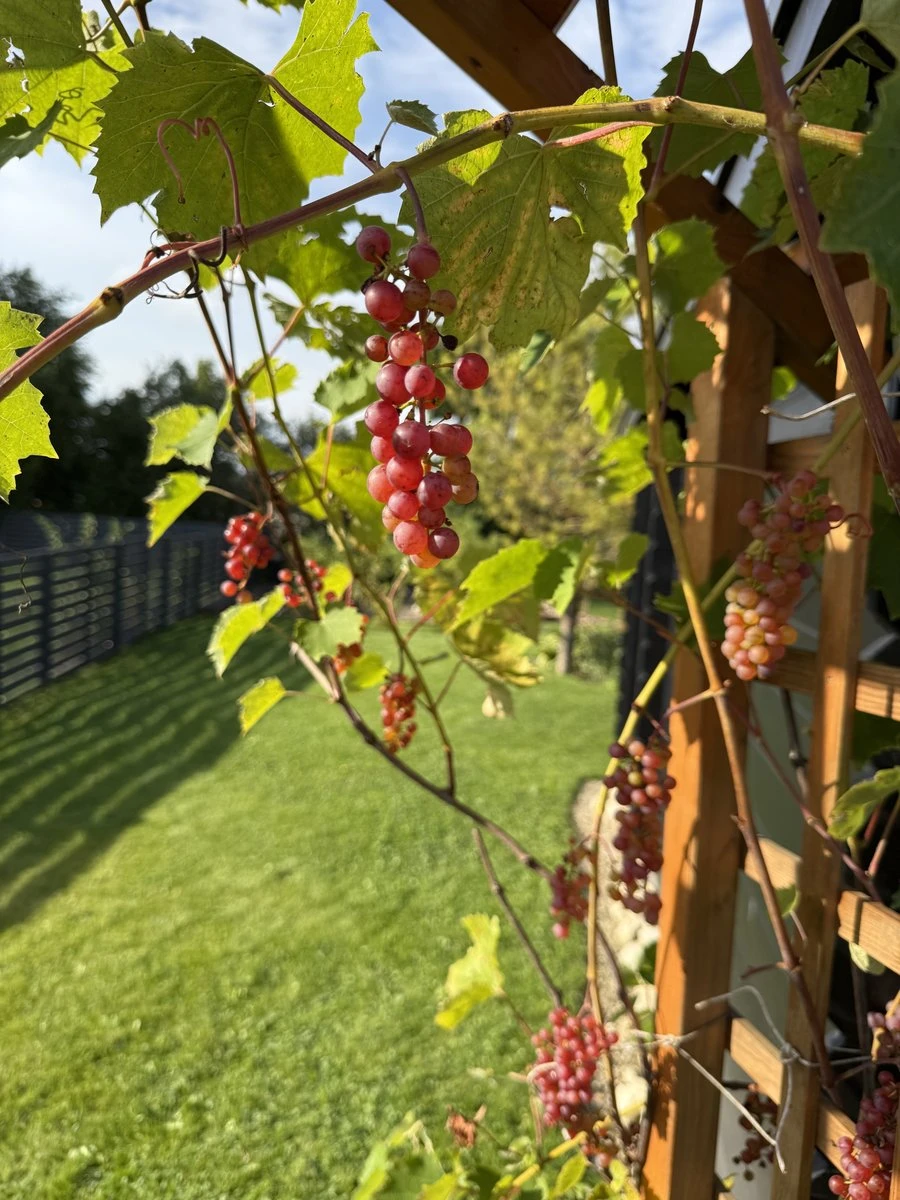
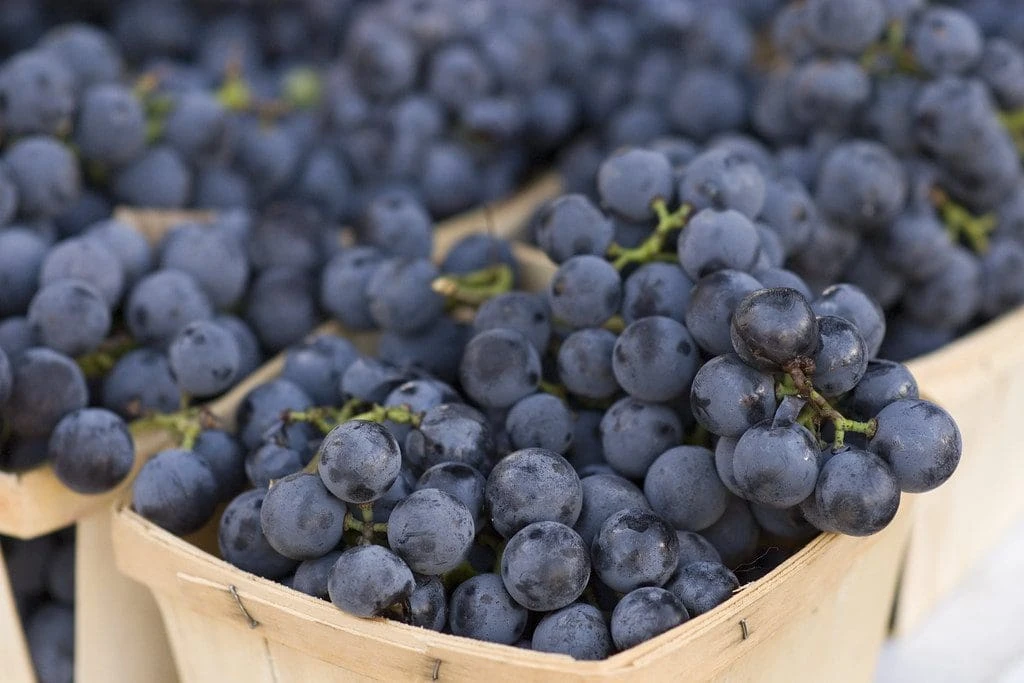
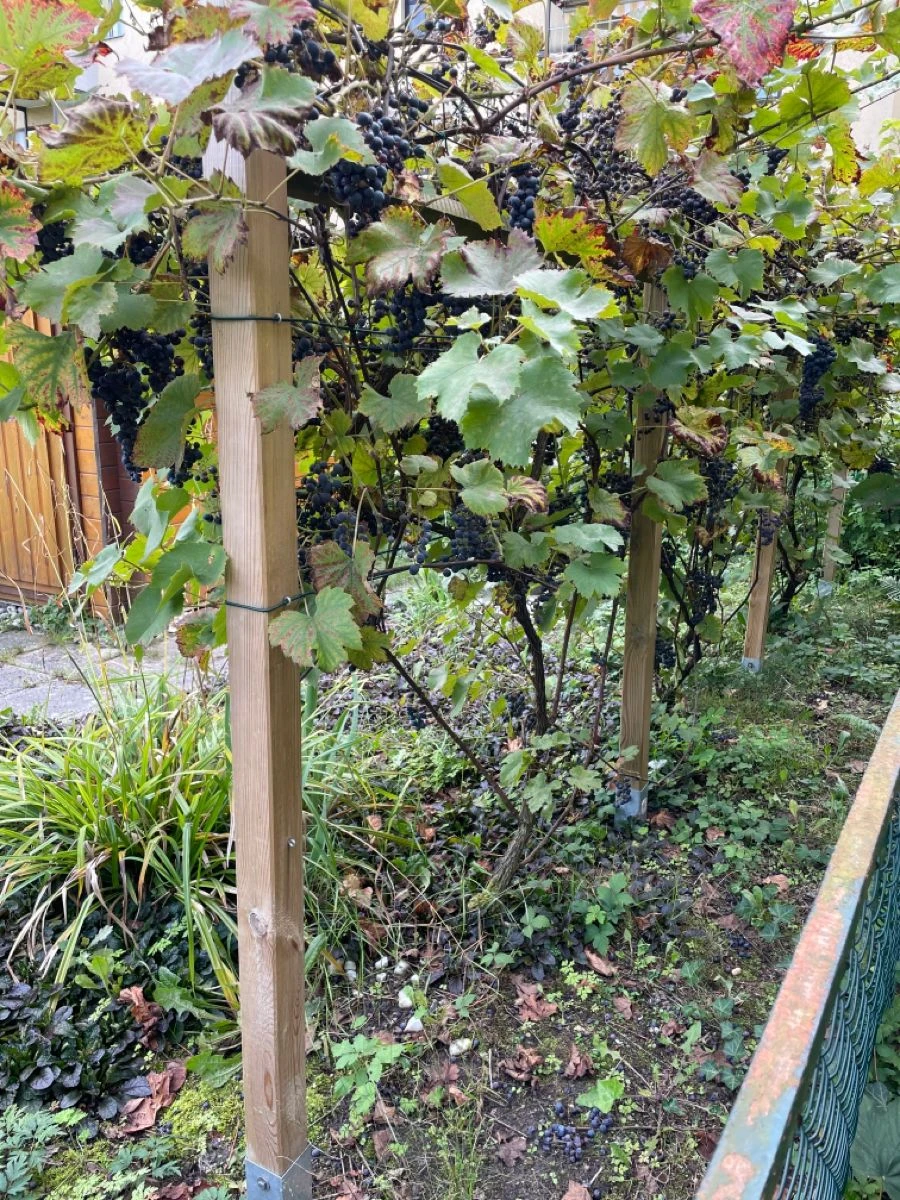
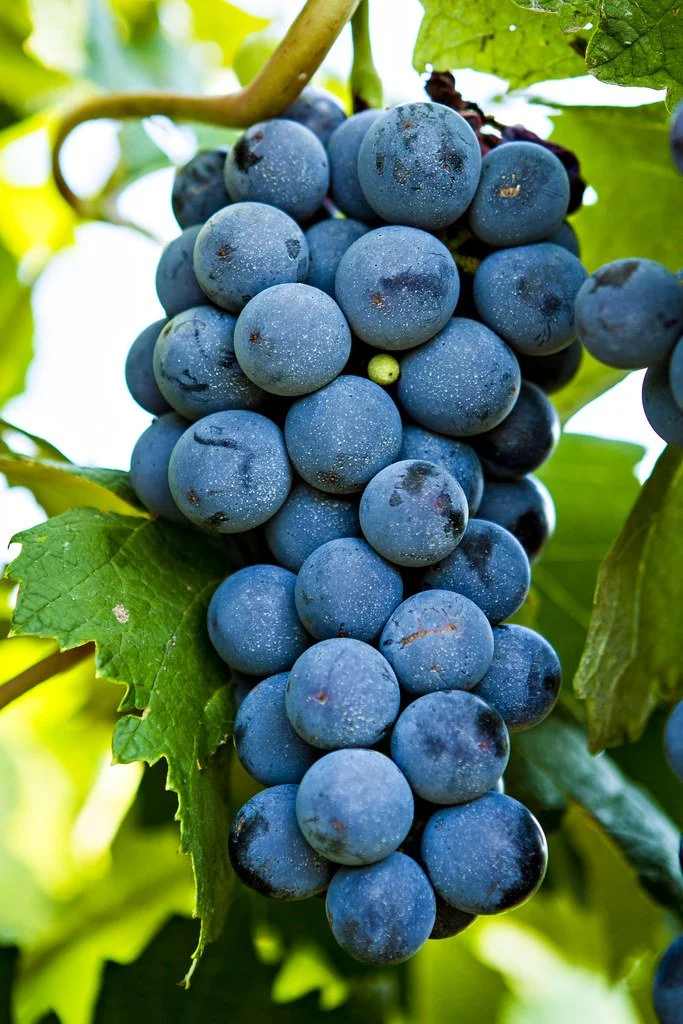
Table Grapes ~ Bluebell (blue) & Somerset Seedless (red)
- Current Stock:
- 0
- Other Names:
- Bluebell, Somerset Seedless, Somerset, seedless grape, table grape, cold-hardy grape
- Latin Name:
- Vitis hybrids 'Bluebell' and 'Somerset Seedless'
Two cold-hardy table grapes, one page: ‘Bluebell’, a blue, Concord-style grape for fresh eating, juice, and jelly, and ‘Somerset Seedless’, a sweet red seedless grape for snacking straight off the vine. Both draw their toughness and disease resistance from wild North American grapes—above all the riverbank grape (Vitis riparia)—so they ripen and thrive where European table grapes struggle. [1][3][5]
Note: Choose your size and grape above. Both are self-fertile—one vine will fruit on its own. See the comparison table at the bottom of the page to pick the right one for your garden.
Availability: ‘Bluebell’ 1-gallon vines are in stock and ship now. ‘Somerset Seedless’ is new for 2027: bare-root vines will be listed in March 2027 and ship in mid-April, and potted 1-gallon vines will not be ready until fall 2027.
Edible Uses
‘Bluebell’ has the rich, aromatic flavor of a Concord, with deep blue-purple slip-skin berries: squeeze the sweet pulp from the skin to eat fresh, or make classic grape juice, jelly, and preserves [1][2]. ‘Somerset Seedless’ is a true snacking grape: firm, very sweet, rose-red seedless berries you eat whole, skin and all. It can be picked at the pink stage for a lighter flavor or left to deepen to red for full sweetness [5][6]. For wine, see our ‘Frontenac Gris’ and ‘Léon Millot’.
Ornamental Qualities
Big lobed leaves, curling tendrils, and hanging clusters make either vine a handsome cover for an arbor, fence, or pergola, and an edible privacy screen in summer. Planted together, the blue ‘Bluebell’ and rosy ‘Somerset’ clusters make a beautiful pairing, and the two ripen at different times to stretch your harvest.
Environment and Culture
Both grapes owe their toughness to wild North American vines, above all the riverbank grape (Vitis riparia), the hardiest native grape on the continent and the backbone of cold-climate grape breeding [3]. ‘Bluebell’ came out of the University of Minnesota in 1944 [1]. ‘Somerset Seedless’ is one of the last releases of Elmer Swenson, the Wisconsin dairy farmer who bred many of today’s cold-hardy grapes; it is widely considered one of the hardiest and most reliable seedless grapes available [5][6][8].
Harvest, Care, and Preparation
Site: Full sun, good air flow, and well-drained soil.
Training: A sturdy trellis or arbor; prune hard every winter, keeping a permanent framework and a few strong canes or spurs.
Pollination: Both self-fertile; one vine will fruit on its own.
Harvest: ‘Somerset Seedless’ first, from late August; ‘Bluebell’ a little later, when fully blue and aromatic. Pick Somerset promptly once ripe, since overripe clusters can drop berries or rot [5]. Net against birds as the clusters color.
(See Planting Guide in next tab for more info.)
Attributes
BLUEBELL (blue, seeded)
- Type: Cold-hardy hybrid table and juice grape [1]
- Native Heritage: Vitis riparia in pedigree [1][3]
- USDA Zones: 3–8 (hardy to about −35 °F) [2][3]
- Light: Full sun
- Pollination: Self-fertile
- Bearing Age: 2–3 years from planting
- Ripening: Mid-season, earlier than Concord [4]
- Use: Fresh eating, juice, jelly [2]
SOMERSET SEEDLESS (red, seedless)
- Type: Cold-hardy hybrid seedless table grape (Swenson, ES 12-7-98) [5][7]
- Native Heritage: V. riparia and V. labrusca in pedigree [5]
- USDA Zones: 4–8; Zone 3 with winter protection [6][8]
- Light: Full sun
- Pollination: Self-fertile [8]
- Bearing Age: 2–3 years from planting
- Ripening: Very early (late August–mid-September) [5][6]
- Use: Fresh eating; juice and jelly
Which Grape Is Right for You?
| ‘Bluebell’ (blue, seeded) | ‘Somerset Seedless’ (red, seedless) | |
|---|---|---|
| Flavor | Rich, aromatic, Concord-like sweet-tart [1][2] | Very sweet and fruity, often strawberry-like; 19–23 Brix at full ripeness [5][6] |
| Berry | Deep blue-purple, seeded, slip-skin (pulp squeezes out of the skin) [2] | Rose-pink to red, seedless, firm, skin stays on; small berries in compact clusters [5][6] |
| Best use | Juice, jelly, and fresh eating | Fresh eating straight off the vine; also juice and jelly |
| Pedigree | Univ. of Minnesota, 1944; ‘Beta’ (V. riparia line) × labrusca-type [1] | Elmer Swenson, Wisconsin (ES 12-7-98), released 2002; V. riparia, labrusca, and vinifera in its background [5][7] |
| Ripening | Mid-season, earlier than Concord [4] | Very early: late August to mid-September [5][6] |
| Cold hardiness | About −35 °F (Zones 3–8) [2][3] | Zones 4–8; Zone 3 with winter protection [6][8] |
| Vigor | Vigorous | Moderate [6][8] |
| Disease | Low downy mildew and bunch rot; moderate resistance to black rot and powdery mildew [2][3] | Generally disease resistant; some downy mildew risk, and berries can split or drop if left too long on the vine [5][6] |
| Best for | The classic backyard Concord-style grape, even in cold or cool-summer sites | Kids and fresh snacking; short-season sites where later grapes don’t ripen |
References
[1] UC Davis FPS — Grape Variety: Bluebell (release year & pedigree).
[2] Univ. of Minnesota Enology — Bluebell Factsheet (fruit description, use, disease notes).
[3] USDA PLANTS / NatureServe — Vitis riparia native range & breeding significance; North Dakota State University Extension — cold-hardiness notes.
[4] Double A Vineyards — ‘Bluebell’ cultivar page (“earlier and hardier than Concord”).
[5] University of Wisconsin West Madison Agricultural Research Station — table grape variety notes (‘Somerset Seedless’: 2002 release, pedigree, early ripening, flavor, disease and harvest notes). wisc.edu
[6] University of Minnesota Extension — “What is the future of table grapes in Minnesota?” (Brix, berry and cluster size, Zone 3 with winter protection). umn.edu
[7] Univ. of Nebraska Viticulture — later Swenson cultivars and selection numbers.
[8] Double A Vineyards — ‘Somerset Seedless’ cultivar notes (Zones 4–8, medium vigor, self-pollinating). doubleavineyards.com
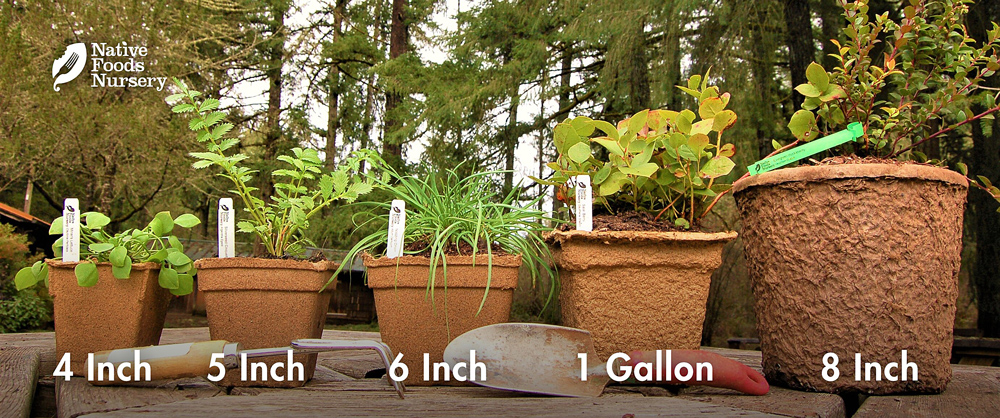
Pot Sizing Guide
Planting Guide: Table Grapes — ‘Bluebell’ & ‘Somerset Seedless’ (Vitis hybrids)
Tip: Full sun, sharp drainage, good air flow, and a strong trellis. Both are cold-hardy, disease-tolerant table grapes bred from wild North American vines.
When Your Plant Arrives
Potted vines: Water thoroughly and let the vine rest somewhere bright but sheltered for a few days before planting. If it came in a biodegradable eco-pot, plant it pot and all.
Dormant bare-root vines: Keep the roots moist and cool, and plant as soon as you can. Soak the roots in a bucket of water for 30–60 minutes just before planting. If anything doesn’t look right, please contact customer service within 7 days of delivery.
Choosing a Site
Light: Full sun (6–8+ hours).
Soil: Well-drained loam or sandy loam of moderate fertility; avoid wet ground.
Air & frost: Good air movement reduces mildew. Avoid low frost pockets.
Space: About 6–8 ft between vines along a trellis or arbor.
Planting Steps
Plant dormant bare-root vines in winter or early spring, any time the ground isn’t frozen or waterlogged; plant potted vines in spring. Dig a hole wide enough to spread the roots, set the vine at the depth it grew before, firm the soil, water in deeply, and mulch.
Watering & Care
Establishment: Keep evenly moist the first 1–2 summers.
After establishment: Moderate water; deep and infrequent is best, with steady moisture while the fruit swells. Avoid heavy nitrogen.
Training & Pruning
Year 1, let one strong shoot grow and tie it to a stake. Year 2, train it up to the trellis wire and start a permanent framework (a cordon or a few arms). Every winter after that, while dormant, prune hard: grapes fruit on new shoots from last year’s wood, so keep a few short spurs or canes and remove the rest. Left unpruned, a grape becomes a tangled, unproductive thicket.
Protection
Birds: Net as the clusters color.
Disease: Open the canopy in summer by removing crowded shoots and some leaves around the clusters; this is the best defense against mildew and bunch rot.
Cold: Both are very hardy (‘Bluebell’ to about −35 °F; ‘Somerset Seedless’ Zones 4–8, and Zone 3 if the canes are laid down and mulched for winter).
Harvest Basics
Timeline: First small crop 2–3 years after planting.
Season: ‘Somerset Seedless’ very early, late August to mid-September; pick promptly, since overripe clusters can drop berries or rot. ‘Bluebell’ mid-season, when fully blue and aromatic.
Use: Eat fresh, press for juice, or cook into jelly.
References
- University of Minnesota Enology — Bluebell factsheet.
- University of Wisconsin West Madison ARS — table grape variety notes (Somerset Seedless).
- University of Minnesota Extension — cold-climate table grapes.
