The Water Parsnip (Sium suave) is a moisture-loving native of the carrot family with clusters of long, crisp, sweet white roots — a wetland vegetable that eats much like a carrot or parsnip.2, 4
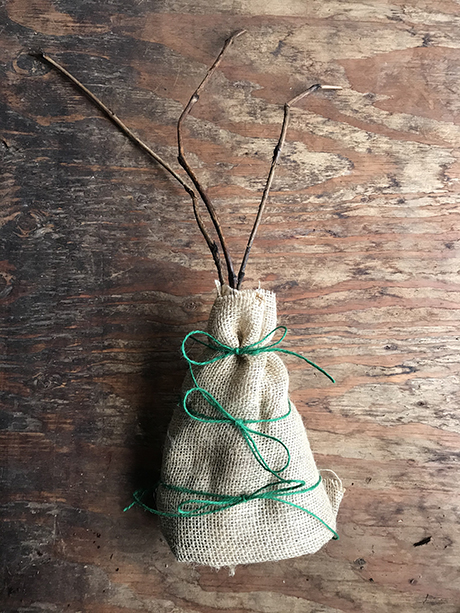
Offered as a bundle of 3 bare-root plants — see the Planting Guide tab for bare-root handling.
NOTE: Bare-root plants arrive dormant (no leaves) and without soil.
Edible & Medicinal Uses
The plant produces a cluster of fleshy white roots that resemble small parsnips — crunchy and sweet, and delicious used any way you'd use a carrot: eaten raw and whole, shredded into salads and rice bowls, or cooked into soups and stir-fries. The young leaves are sometimes used as a relish. Roots are best harvested in spring and fall (young plants are the tender ones). WARNING: Water Parsnip closely resembles the deadly Water Hemlock and grows in the same wet places, so never wild-harvest it without expert identification — a mistake can be fatal. Because our nursery plants are known and labeled, you can grow and enjoy this one with confidence.1, 4
Ornamental Qualities
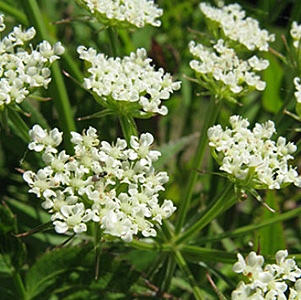
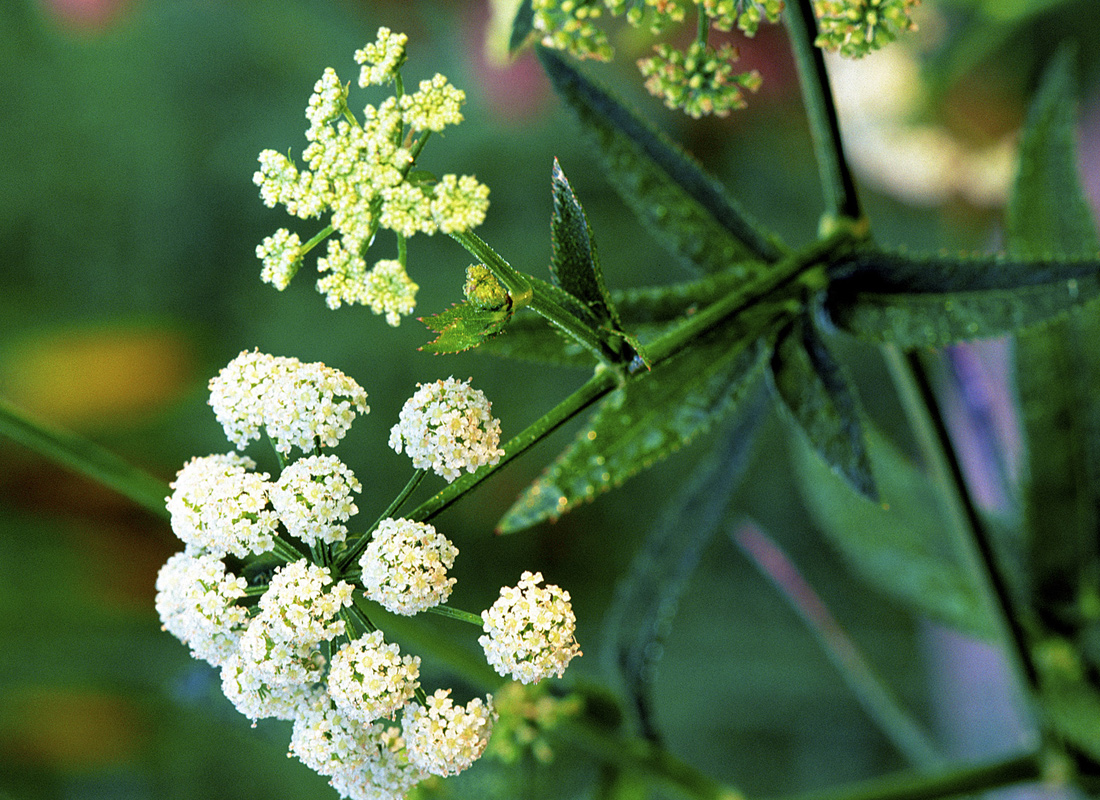
An elegant wetland plant, Water Parsnip sends up tall, hollow stalks topped with wide, lacy umbrellas of tiny creamy-white flowers in summer — a magnet for bees, beetles, and butterflies. Its leaves shift form depending on whether it's growing submerged, at the margin, or on land. It's lovely in a pond, ditch, rain garden, or bog edge.1
Environment & Culture
Ecology: Native across North America, Water Parsnip thrives in marshes, wet meadows, ditches, pond margins, and shallow water. Its abundant flowers are excellent forage for a wide range of pollinators, and it provides cover in wetland plantings.1, 2
Culture: The crisp roots are a traditional food of many peoples (Ktunaxa naq̣aṇkam), and the crushed root serves as a pain-relieving poultice for broken limbs. We offer it with respect for that living knowledge and invite support for Indigenous-led restoration through our Charitable Giving page.4
In the Kitchen
Harvest the fleshy root clusters in spring or fall, scrub them, and treat them like carrots: snack on them raw, shred them into a slaw or grain bowl, or simmer them into soups and stir-fries for a sweet, nutty note. (Growing and harvest details are on the Planting Guide tab.)
Attributes
- Native Range: Across North America; marshes, wet meadows, pond margins1
- USDA Zones: ~3–93
- Light: Full sun to part shade1
- Water: Wet — saturated soil to shallow standing water1
- Soil: Mucky, wet1
- Habit: Wetland perennial, 2–6 ft; white flower umbels2
- Edible: Roots (raw or cooked, carrot-like) — wild-harvest only with expert ID1
References
- Wikipedia; Missouri Botanical Garden, Sium suave.
- Pojar, J. & MacKinnon, A., Plants of the Pacific Northwest Coast, 2014.
- USDA PLANTS Database, Sium suave.
- Moerman, D., Native American Ethnobotany, 1998; Kutenai ethnobotany.