

Bog Blueberry

- Current Stock:
- 0
- Other Names:
- Bog Bilberry, Northern Bilberry, Alpine Blueberry, Western Blueberry, Curaq (Yup'ik)
- Latin Name:
- Vaccinium uliginosum
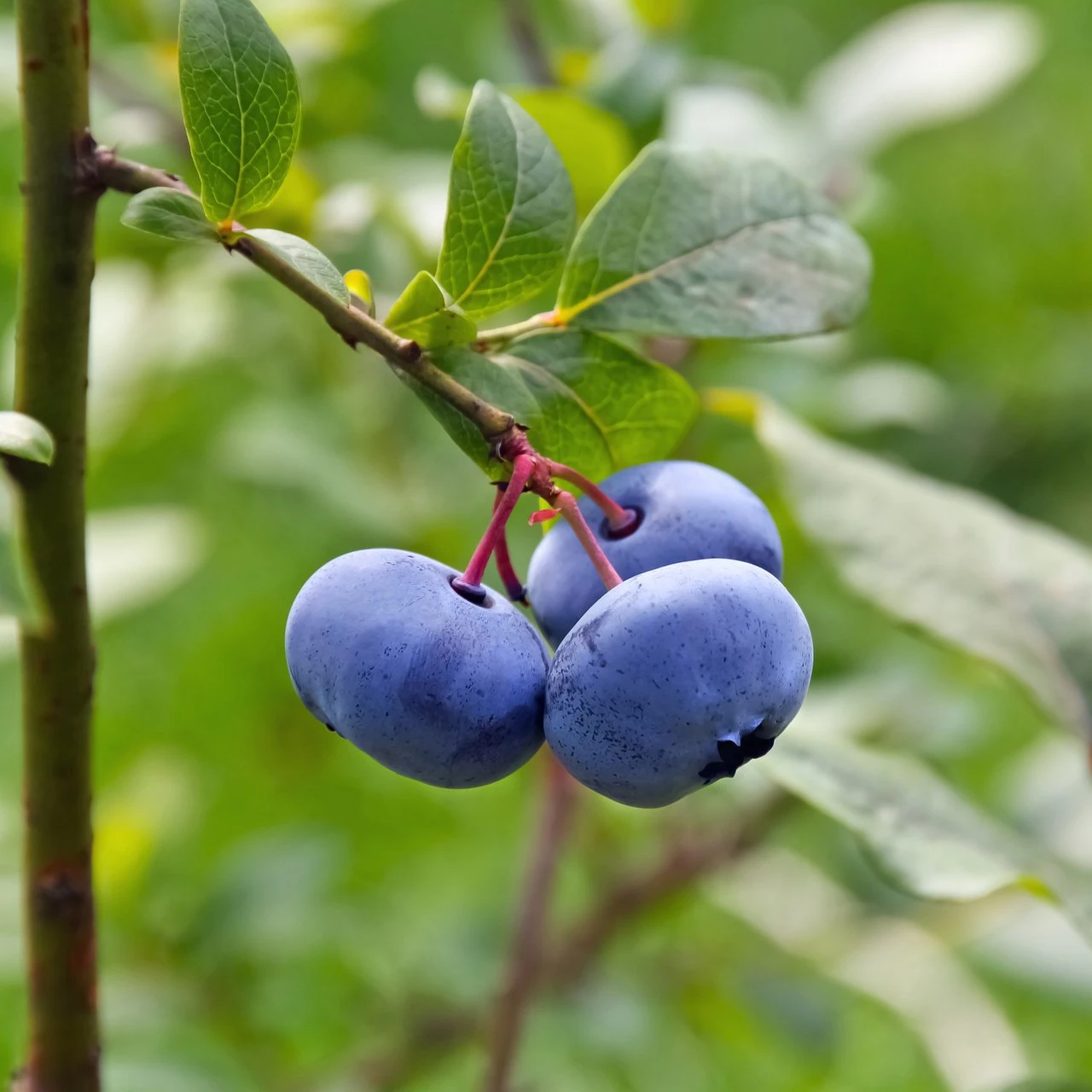
Bog Blueberry (Vaccinium uliginosum) is the hardiest wild blueberry in our catalog — a low, twiggy, cold-loving shrub that ranges from Alaskan tundra to the bogs and high meadows of the Cascades, Klamath Mountains and Sierra Nevada. Blue-green leaves, pink lantern-shaped spring flowers, and dusky blue berries make it a beautiful small berry plant for wet, acidic corners of the garden [1][2][3].
Edible Uses
The berries are mild, sweet and juicy, a little softer and less tart than most huckleberries. Eat them fresh or use them like any blueberry: jams, jellies, syrups, pies, muffins and pancakes. They freeze and dry well. Across the North, bog blueberries have long been put up for winter — stored cold or in oil — and folded into akutaq, and the leaves are dried for tea [1][4].
Ornamental Qualities
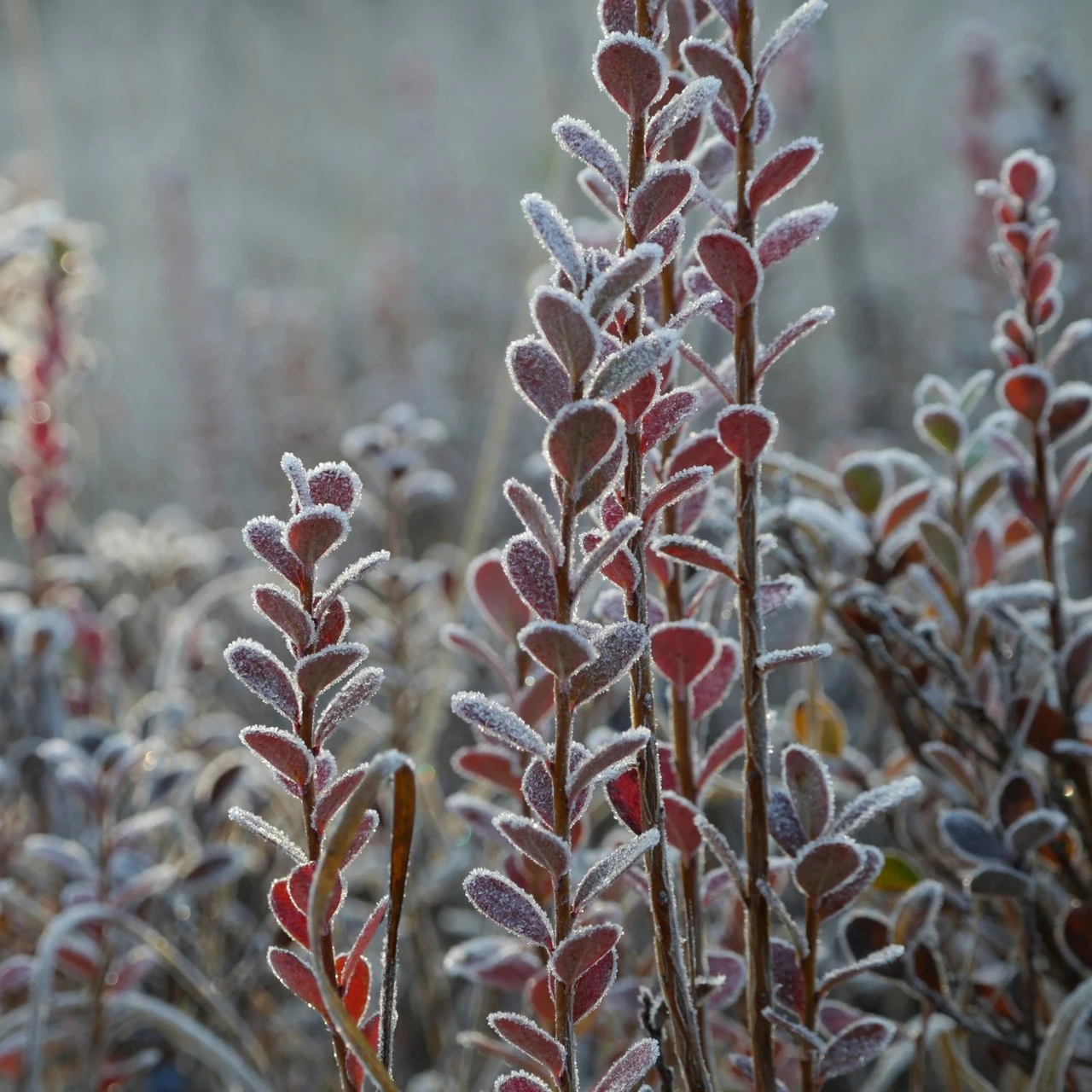
A dense, knee-high mound of small, blue-green, oval leaves that turn rich red to burgundy in fall. Clusters of pink to white urn-shaped flowers hang from the branch tips in late spring, followed by blue berries with a frosty bloom. Lovely at the edge of a rain garden, pond or bog bed, or as a low edible groundcover with other acid-loving natives [2][3].
For a multi-season native berry patch, pair Bog Blueberry with Cascade Blueberry, Black Huckleberry and Lingonberry.
Environment and Culture
Circumboreal: native across Alaska, Canada and Greenland, south through Washington and Oregon to the high mountains of northern California, the northern Rockies, the Great Lakes and New England, as well as northern Europe and Asia. In the West it grows in sphagnum bogs, wet subalpine meadows, rocky alpine slopes and open conifer woods [1][2][3]. The name uliginosum means “of wet places.”
Bog blueberry is one of the most important wild fruits of the far North. It is gathered by Iñupiaq, Yup’ik, Alutiiq, Unangan, Tlingit and many Athabaskan peoples, and remains a staple of summer berry picking in Alaska today [1][4]. Bears, grouse, ptarmigan, songbirds and small mammals all feed on the fruit [1]. (Learn more & how to help on our Charitable Giving page.)
Harvest, Care, and Preparation
Grow in moist to wet, strongly acidic, organic soil in full sun to part shade. Unlike most of our huckleberries, it is happy in full sun and in soils that stay damp, as long as the water isn’t stagnant and alkaline. Mulch with conifer needles or bark and never let it dry out in its first summers. Harvest when berries are fully blue and come off easily [2][5].
Note: As a wild native, bog blueberry is small and fruits more modestly than cultivated blueberries. Plant several together for a worthwhile harvest — multiple plants also improve pollination and fruit set.
(See Planting Guide on the next tab for more information.)
In the Kitchen
Toss a handful into pancakes or muffins, simmer them into a quick sauce for yogurt or ice cream, or cook them down with a little sugar into jam. Freeze extras spread on a tray, then bag them, for blueberry pie in winter.
Attributes
- Native Range: AK, Canada & Greenland south to WA, OR, northern CA (high mountains), ID, MT, WY; east to the Great Lakes and New England; also northern Europe & Asia [1][2][3]
- USDA Zones: 2–7 (into 8 in cool, moist Pacific Northwest sites) [2]
- Ease of Care: Moderate to difficult; easy once soil is acidic and stays moist [2][5]
- Deer Resistance: Low to moderate
- Light Requirements: Full sun to part shade; afternoon shade in hot inland gardens [2]
- Soil Type: Strongly acidic (pH ~4.0–5.5), moist to wet, rich in organic matter; tolerates peat and poor soils [2][5]
- Water Requirements: Moist to wet; good choice for bog beds, pond margins and rain gardens [2][3]
- Pollination: Self-fertile; bees and bumblebees; multiple plants improve fruit set [5]
- Bearing Age: ~2–4 years
- Size at Maturity: 8–24 in tall, spreading slowly by rooting stems [1][2]
- Plant Spacing: 18–30 in
- Bloom Time: May–June (later at high elevation) [3]
- Harvest Time: Late July–September [1]
- Indigenous Names: curaq (Central Alaskan Yup’ik), asiavik (Iñupiaq), cuawak (Alutiiq), ugiidgin (Unangam Tunuu), kanat’a (Tlingit), gega (Dena’ina) [1][4]
References
[1] Alaska Department of Natural Resources, Plant Materials Center — Alaska Plant Profiles: Bog Blueberry.
[2] Oregon State University Landscape Plants — Vaccinium uliginosum.
[3] Jepson eFlora — Vaccinium uliginosum subsp. occidentale, California distribution & habitat.
[4] ELOKA, Plants of Beringia — Vaccinium uliginosum: Indigenous names & traditional uses.
[5] Native Plant Network & Extension publications — cultivation & propagation guidance.
Pot Sizing Guide
Planting Guide: Bog Blueberry (Vaccinium uliginosum)
🌱 Tip: Think cool, wet and acidic. A sunny spot at the edge of a bog bed, pond or rain garden, planted in peaty, low-pH soil that never dries out, is ideal.
When Your Plant Arrives
Open the box promptly and lift your plant out gently, holding the pot rather than the stem. Keep the plug’s root ball intact and moist. Give it a slow, thorough drink until water runs through the bottom, then set it somewhere bright but sheltered, out of harsh afternoon sun, drying wind, and frost. Let it rest and acclimate there for a few days before planting, so the move from our greenhouse to your garden is a gentle one. If anything doesn’t look right, please contact customer service within 7 days of delivery and we’ll take care of you.
Choosing a Site
Light: Full sun to part shade. In cool coastal and mountain gardens, full sun gives the most fruit; in hot inland valleys, give it afternoon shade.
Soil: The make-or-break factor — strongly acidic (about pH 4.0–5.5), constantly moist, and rich in organic matter. Peat, composted conifer bark and leaf mold are its friends. Never add lime.
Moisture: Unlike most huckleberries, bog blueberry likes wet feet. Low spots, pond and stream edges, and bog beds suit it well, as long as the water is acidic and not stagnant.
Making it acidic: Mulch alone won’t lower a neutral or alkaline soil enough. Ahead of planting, work elemental (soil) sulfur into the bed at the label rate and give it a few months to react, blend in peat moss and composted conifer bark or needles, and feed with an organic acidic (rhododendron/azalea/berry) fertilizer. Check pH with an inexpensive meter and top up sulfur as needed — acidifying is gradual and ongoing. Where the ground stays stubbornly alkaline, build a lined bog bed or grow it in a large container of acidic mix. Hard or alkaline tap water will slowly raise soil pH; rainwater is best.
Planting Steps
Plant in spring or fall (spring in cold-winter regions).
Plugs are small, so plant where you can keep an eye on them, or grow them on in a 1-gallon pot of acidic mix for a season first.
Dig a wide, shallow hole and pre-moisten the acidic planting mix.
Set the plant at the depth it grew, firm gently, and water in well.
Mulch 2–3 inches deep with conifer needles, bark or sawdust to keep the shallow roots cool and moist and the soil acidic.
Watering & Care
Establishment: Keep the soil evenly moist to wet for the first two summers — drying out is the most common cause of loss.
After establishment: Still prefers steady moisture; water through dry summers for the best fruit.
Soil & feeding: Refresh acidic mulch yearly. If leaves yellow between the veins, the soil is drifting alkaline — top-dress with sulfur or an acidifying fertilizer. Little pruning is needed; avoid breaking off branch tips in fall and winter, since next year’s flower buds are already formed there.
Protection
Birds: They love the fruit — drape lightweight netting when berries color up if you want a share for the kitchen.
Heat & cold: Extremely cold-hardy. Summer heat and drought are its main stresses; shade and mulch help in warm valley gardens.
Deer: Protect young plants where browse pressure is high.
Companions: Labrador tea, bog laurel, cranberry, lingonberry, crowberry, and other acid-loving wetland natives.
Harvest Basics
Timeline: First light crops usually 2–4 years after planting.
Season: Late July into September, when berries are fully blue with a frosty bloom and drop easily into your hand.
Use: Eat fresh, or freeze, dry, or cook into jams, pies and sauces.
