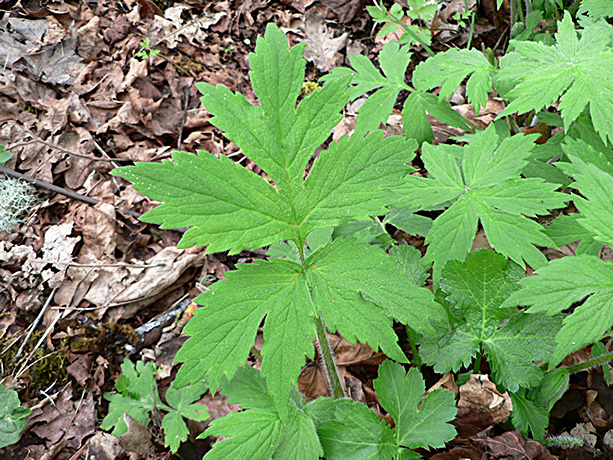
The Pacific Waterleaf (Hydrophyllum tenuipes) is a soft-textured woodland groundcover and one of the region's little-known native vegetables, its broad, soft-hairy leaves spreading by rhizome into lush green carpets in the deepest, moistest shade.4
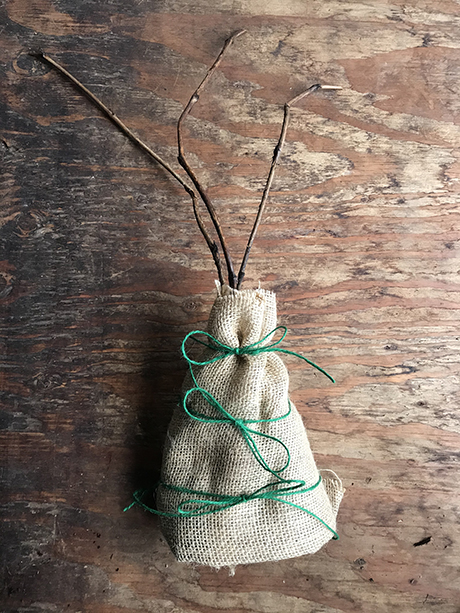
Offered as a bundle of 3 bare-root plants — see the Planting Guide tab for bare-root handling.
NOTE: Bare-root plants arrive dormant (no leaves) and without soil.
Edible & Medicinal Uses
Pacific Waterleaf is a genuine spring green. The young leaves and stems are eaten raw in salads or cooked like any potherb, with a mild flavor reminiscent of spinach or young nettle, and the young rhizomes are crisp and watery, a little like a bean sprout. Young growth is best, before the leaves toughen; the young roots are traditionally eaten as well.3, 4
Ornamental Qualities
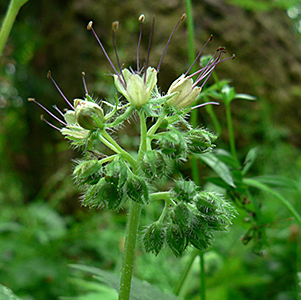
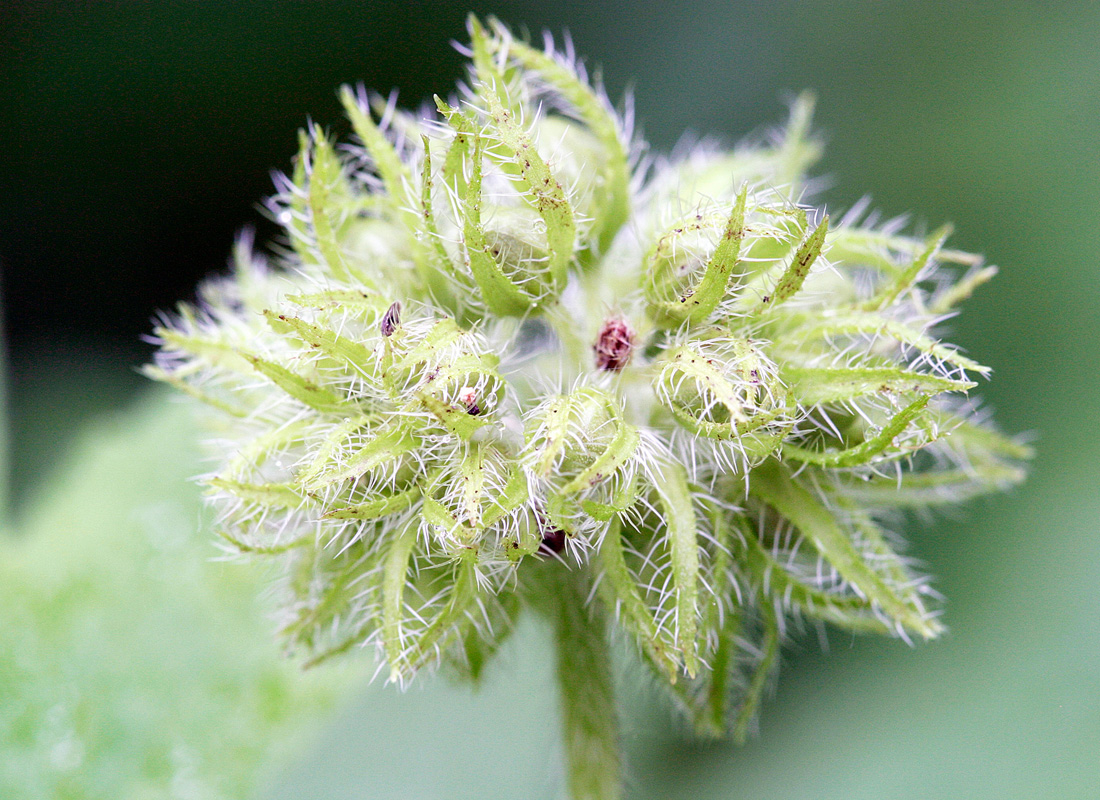
As foliage it is quietly beautiful — soft, hand-shaped leaves forming a thick, textural groundlayer about a foot tall, topped in mid to late spring by intricate greenish-white to lavender flowers that bumblebees adore. It fills shaded ground beautifully alongside Lady Fern, Spreading Wood Fern, Redwood Sorrel, and Salal.2, 4
Environment & Culture
Ecology: Common in the westside forests and coastal woodlands of the Pacific Northwest, from British Columbia to northern California and west of the Cascades, at low to middle elevations in moist, shaded ground. Its spring flowers are a favorite of bumblebees, and it hosts native leaf-mining insects, weaving itself into the forest-floor food web.2, 4
Culture: Known and used as a food plant by Northwest peoples — the Cowlitz among them eat its roots — Pacific Waterleaf is part of the region's deep tradition of woodland foraging. We offer it with respect for that knowledge and invite support for Indigenous-led restoration through our Charitable Giving page.4
In the Kitchen
Treat it like a wild spinach: wilt the tender young leaves in a hot pan with olive oil and garlic, fold them into a spring soup or frittata, or use them raw to bulk out a foraged salad. The crisp young rhizomes are a fun raw nibble, sprout-like and mild. Young growth is sweetest — older leaves get coarse. (Growing and harvest details are on the Planting Guide tab.)
Attributes
- Native Range: British Columbia to northern California; west of the Cascades4
- USDA Zones: ~7–93
- Light: Partial to full shade4
- Water: Moist; woodland conditions3
- Soil: Moist, humus-rich, well-drained3
- Habit: Herbaceous rhizomatous groundcover, ~12 in4
- Bloom: Greenish-white to lavender, mid–late spring4
- Edible: Young leaves, stems (raw/cooked); young rhizomes3
References
- USDA PLANTS Database / U.S. Fish & Wildlife Service, Hydrophyllum tenuipes.
- Pojar, J. & MacKinnon, A., Plants of the Pacific Northwest Coast, 2014.
- Plants For A Future (PFAF) Database, Hydrophyllum tenuipes.
- Sparrowhawk Native Plants / Portland Plant List; Moerman, D., Native American Ethnobotany, 1998.