

Boysenberry (thornless)
- Current Stock:
- 0
- Other Names:
- Boysen Berry, Thornless Boysen
- Latin Name:
- Rubus hybrid (Boysenberry)
The boysenberry is a West Coast legend: a huge, deep-maroon berry with a sweet-tart, winey flavor that tastes like a blackberry crossed with a raspberry—because it is. Found on Rudolph Boysen’s California farm in the 1920s and rescued by Walter Knott and USDA’s George Darrow, it built Knott’s Berry Farm and is still a beloved Oregon crop [1][2]. Our plants are the thornless form, so you get the famous flavor without the scratches.
Note: Boysenberry is a trailing berry that fruits on second-year canes and needs a trellis or fence. It is self-fruitful—one plant will bear on its own [3].
Edible Uses
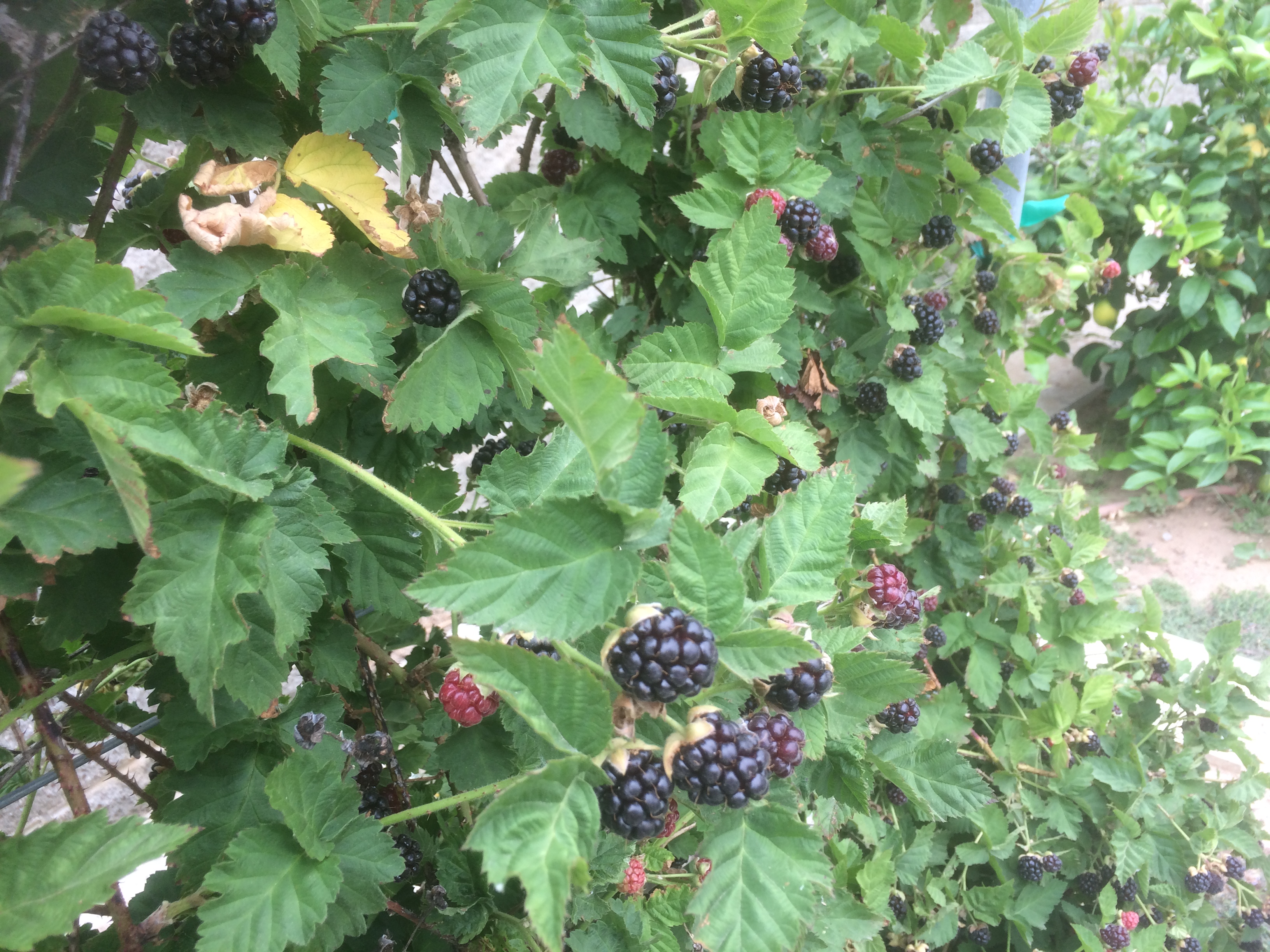
Very large, juicy, deep-maroon berries with soft flesh, thin skin and noticeable seeds [1][2]. They are too delicate to ship well, which is why you rarely see them fresh in stores—and why a backyard plant is the best way to taste one [2]. Superb in pies, jam, syrup, juice and ice cream. Blackberry-family fruit is naturally rich in anthocyanins and other phenolics [5].
Ornamental Qualities
White spring flowers and lush, smooth canes. Trained along a fence or two-wire trellis, a thornless boysenberry makes a soft, productive edible screen that is safe beside paths and play areas.
Environment and Culture
Boysenberry’s exact parentage is unknown, but it is thought to be a loganberry crossed with a trailing blackberry [1][4]—placing it squarely in the family of Pacific Coast berries descended from our native Pacific Blackberry (Rubus ursinus). By the late 1930s Oregon had about 2,000 acres of it [4], and Oregon still leads U.S. production [1]. Thornless boysenberries were later developed for easier growing [2]. Like other trailing berries, it prefers mild maritime winters. (Learn more & how to help on our Charitable Giving page.)
Harvest, Care, and Preparation
Site & soil: Full sun; fertile, well-drained loam, pH about 5.6–6.5 [2].
Training & pruning: Tie new canes along wires in year one; after harvest, cut out the canes that fruited and tie in next year’s [3].
Water: Even moisture through bloom and fruit fill; mulch to keep roots cool [2][3].
Pollination: Self-fruitful; bees are the main pollinators [2].
Harvest: July in Oregon [1]. Pick when the berries turn from red to deep maroon-black and slip off easily; check every other day and use or freeze within a day or two, since ripe fruit is soft [2].
(See Planting Guide in next tab for more info.)
In the Kitchen
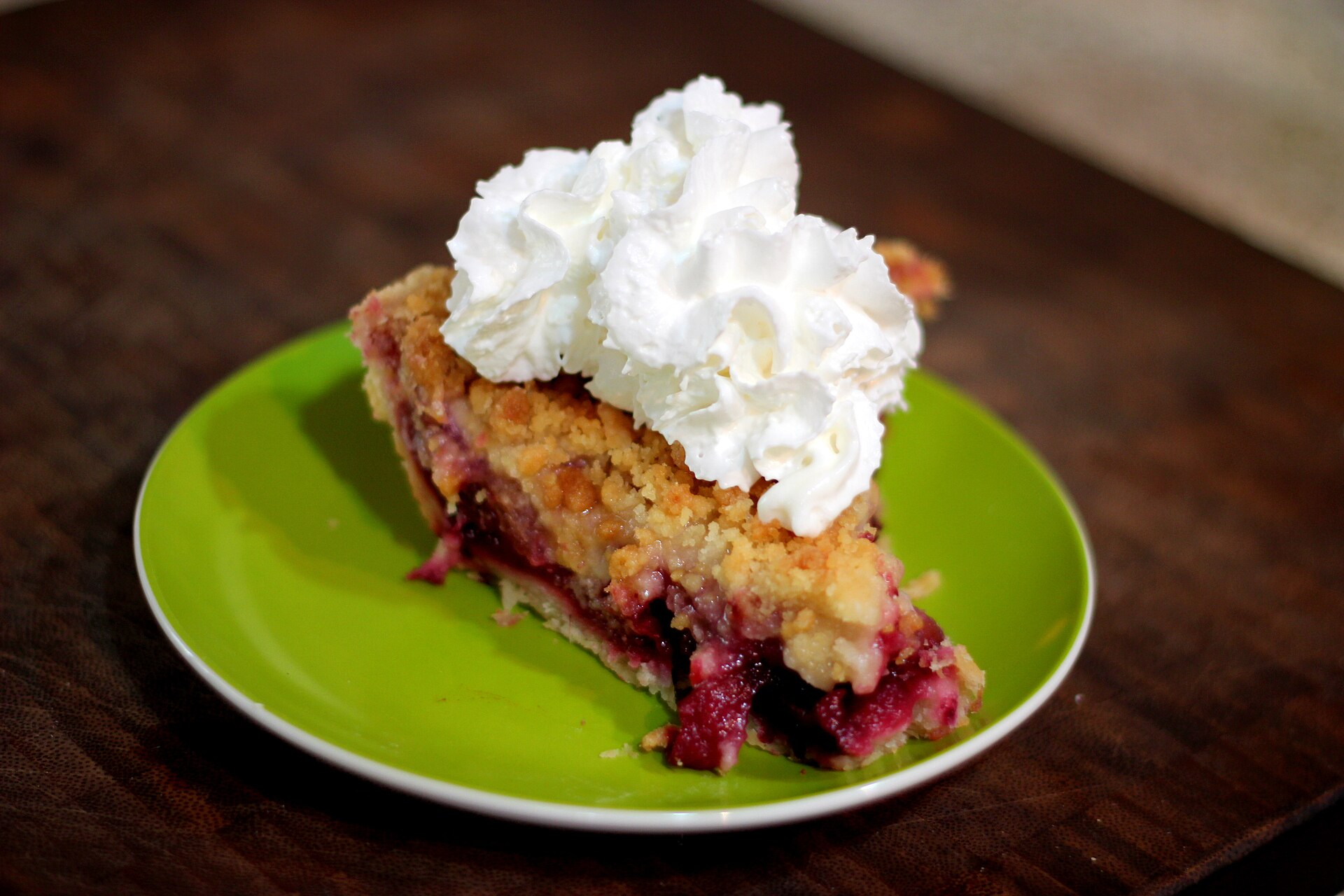
Bake the classic boysenberry pie, cook down a deep purple jam or pancake syrup, churn it into ice cream, or freeze it for smoothies. Strain the seeds for a silky sauce or sorbet.
Attributes
Type: Thornless trailing hybrid berry (Rubus hybrid; loganberry × trailing blackberry suspected) [1][4]
USDA Zones: ~7–9 (trailing; protect canes in colder sites)
Ease of Care: Moderate (needs a trellis and yearly cane pruning)
Thorns: None (thornless form)
Light Requirements: Full sun [2]
Soil Type: Fertile, well-drained loam; pH ~5.6–6.5 [2]
Water Requirements: Even moisture during bloom and fruit fill
Pollination: Self-fruitful [2][3]
Bearing Age: Second year (fruits on second-year canes) [3]
Plant Spacing: ~4–6 ft in the row; 8–10 ft between rows [3]
Bloom Time: Spring
Harvest Time: July (Oregon) [1]
Primary Uses: Pies, jam, syrup, juice, ice cream, fresh eating
References
[1] Oregon Raspberry & Blackberry Commission — “Boysenberry” (origin, fruit, Oregon harvest season). oregon-berries.com
[2] “Boysenberry” — history (Rudolph Boysen, Walter Knott and USDA’s George Darrow), New Zealand thornless selections, fruit and culture. Wikipedia
[3] OSU Extension — Growing Blackberries in Your Home Garden (trellis, training, pruning, spacing; self-fruitful pollination).
[4] Finn, C.E. & Strik, B.C. 2016. “Blackberry production in the Pacific northwestern US.” Acta Horticulturae (cultivar histories and pedigrees; trailing blackberry cold hardiness). PDF
[5] Siriwoharn, T. et al. 2004. Blackberry anthocyanins, phenolics and antioxidant properties across cultivars. J. Agric. Food Chem.
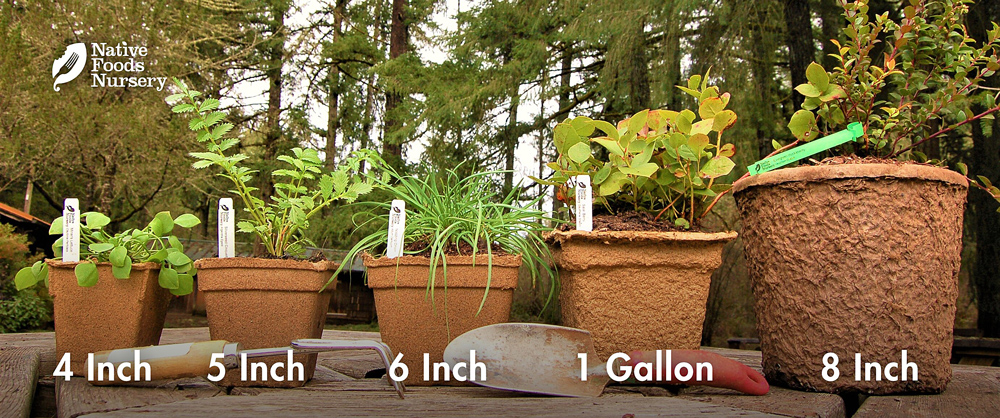
Pot Sizing Guide
Planting Guide: Boysenberry (thornless) (Rubus hybrid)
Tip: Give it a fence or two-wire trellis in full sun, and pick every other day in July — ripe boysenberries are soft and don’t wait.
When Your Plant Arrives
Open the box promptly and lift your plant out gently, holding the pot rather than the stem. Leave it in its pot for now — the roots are settled and don’t need disturbing yet. Give it a slow, thorough drink until water runs through the bottom, then set it somewhere bright but sheltered, out of harsh afternoon sun, drying wind, and frost. Let it rest and acclimate there for a few days before planting. If anything doesn’t look right, please contact customer service within 7 days of delivery and we’ll take care of you.
Choosing a Site
Light: Full sun (best yields with 6–8+ hours of sun).
Soil: Well-drained loam or sandy loam enriched with compost; avoid waterlogging. Slightly acidic to neutral soils are ideal.
Space: 4–6 ft between plants on a trellis; 8–10 ft between rows.
Support: Set up a simple two-wire trellis (wires at about 3 and 5 ft) or use a sturdy fence before canes get long.
Planting Steps
Timing: Plant in early spring as soil becomes workable, or in fall where winters are mild.
Prepare: Dig a wide hole; blend native soil with compost or leaf mold for drainage and moisture retention.
Set: Plant at the same depth as in the pot; spread roots, backfill, and water deeply to settle.
Mulch: 2–3 inches of wood chips or leaves, kept a few inches off the crown.
Watering & Care
Establishment (years 0–2): Keep soil evenly moist, especially during bloom and fruit fill.
After establishment: Steady summer moisture (drip is ideal) keeps berries large and juicy.
Feeding: Top-dress with compost each spring; avoid heavy nitrogen, which pushes leaves over fruit.
Training & Pruning
This is a summer-bearing, trailing berry that fruits on second-year canes (floricanes).
- Year 1 (primocanes): Guide new canes along the trellis wires.
- Year 2 (floricanes): Fruiting side shoots develop; tie canes securely.
- After harvest: Cut the canes that fruited to the ground; keep 6–10 of the best new canes and tie them in for next year.
- Thorns: None — this is the thornless form.
Pollination & Bloom
Self-fruitful; one plant will bear. Bees are the main pollinators.
Protection
Winter: Trailing berries are the least cold-hardy blackberries. Where winters dip below about 10 °F, leave new canes on the ground under mulch or row cover over winter and tie them up in late winter.
Wildlife: Birds love ripe fruit — use lightweight netting as berries color. Protect young plants from deer browse.
Airflow & sanitation: Remove spent canes and fallen fruit after harvest to limit disease.
Harvest Basics
Timeline: First real crop in the second summer after planting.
Season: July in Oregon. Pick when berries turn from red to deep maroon-black and slip off easily.
Kitchen: Chill promptly or process the same day. Excellent fresh, frozen, or cooked into jams, syrups, pies, and crisps.
PNW Notes
West of the Cascades, dry summers make mulch and drip irrigation valuable for steady fruit fill. Train canes in mild weather, when they bend easily; cold canes crack.
References
- Oregon Raspberry & Blackberry Commission — Boysenberry.
- OSU Extension — Growing Blackberries in Your Home Garden (training, trellis, pruning, spacing).
- Finn, C.E. & Strik, B.C. (2016). Blackberry production in the Pacific northwestern US. Acta Horticulturae.
