





Woodland Strawberry
- Current Stock:
- 0
- Other Names:
- Wood Strawberry, Alpine Strawberry, Wild Strawberry
- Latin Name:
- Fragaria vesca
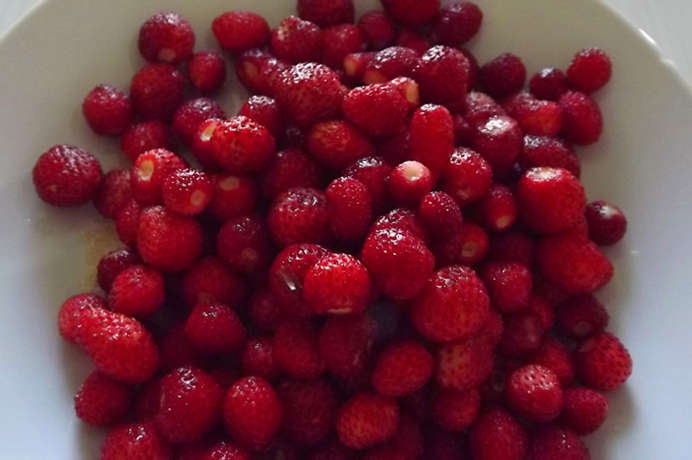
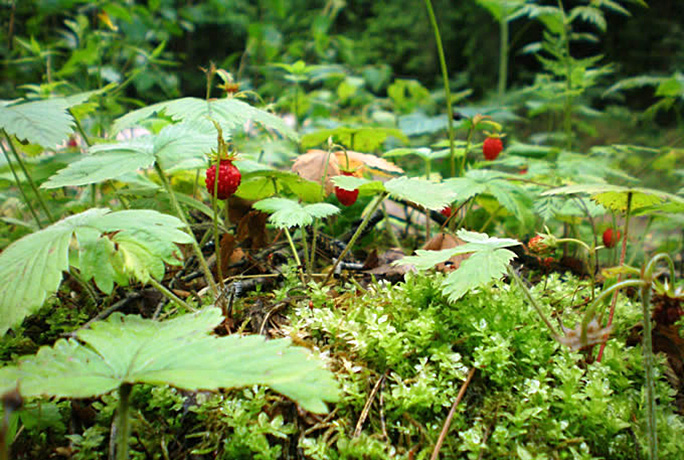
The Woodland Strawberry (Fragaria vesca) is the dainty wild strawberry of forest edges and clearings — delicate three-part leaves, starry white flowers, and tiny, fragrant red berries with a flavor far bigger than their size.2, 4
Edible & Medicinal Uses
The little conical berries are the essence of strawberry — aromatic and sweet, if a touch drier and seedier than the beach strawberry. They're a delight fresh, wonderful in jam and baked into pies (a classic paired with rhubarb), and the leaves make a mild, pleasant tea long valued as a gentle tonic. Wild strawberries have been gathered as a seasonal treat across the Northwest for generations.1, 4
Ornamental Qualities
A charming, low deciduous groundcover, Woodland Strawberry weaves bright green trifoliate foliage and white flowers through shady and dappled spots, spreading gently by runners. It's perfect softening a woodland path or bed and combines beautifully with Redwood Sorrel, Lady Fern, and the violets.4
Environment & Culture
Ecology: Native across temperate North America and Eurasia, Woodland Strawberry grows along woodland edges, clearings, and open slopes, often on warm south-facing ground. Its flowers feed early pollinators and its fruit is relished by birds and small mammals.1, 2
Culture: Wild strawberries are gathered fresh and dried as a seasonal food by many peoples, and the leaves used as a mild medicinal tea. We offer it with respect for that knowledge and invite support for Indigenous-led restoration through our Charitable Giving page.4
In the Kitchen
These are a forager's reward — sun-warm and eaten on the spot, they're pure concentrated strawberry. If you can gather enough, they make a jam of remarkable fragrance and pair famously with rhubarb in a pie. Dry the leaves for a soothing woodland tea. (Growing and harvest details are on the Planting Guide tab.)5
Attributes
- Native Range: Temperate N. America & Eurasia; woodland edges & clearings1
- USDA Zones: ~5–93
- Light: Part shade to sun (tolerates more shade than beach strawberry)4
- Water: Moderate; moist woodland conditions4
- Soil: Humus-rich, well-drained4
- Habit: Low deciduous groundcover; spreads by runners4
- Bloom: White, spring4
- Edible: Small, fragrant, sweet berries; leaves for tea4
References
- WNPS, "Three Wild Strawberries of the PNW"; USDA PLANTS, Fragaria vesca.
- Pojar, J. & MacKinnon, A., Plants of the Pacific Northwest Coast, 2014.
- USDA PLANTS Database, Fragaria vesca.
- Portland Nursery; Native Plants PNW, Fragaria vesca.
- "Edible Native Berries," Habitat Horticulture PNW.
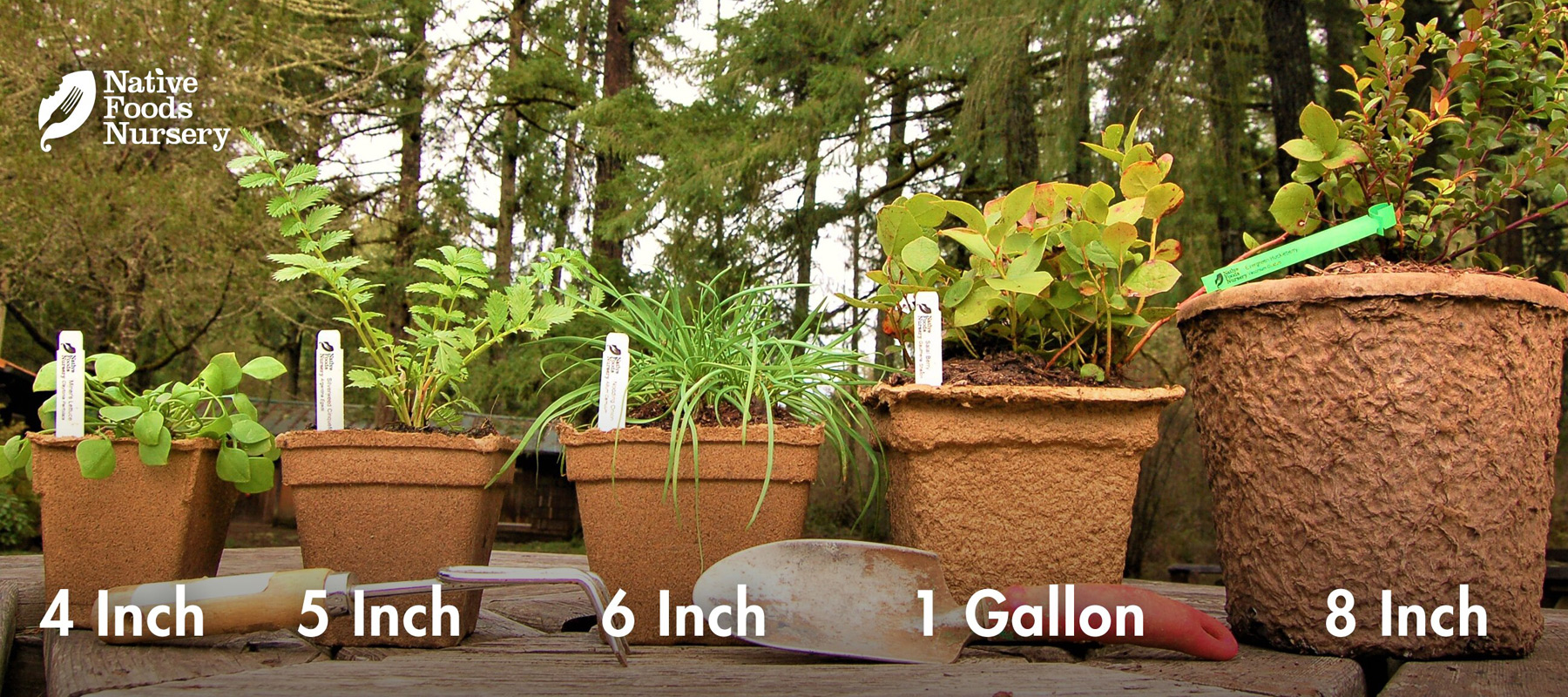
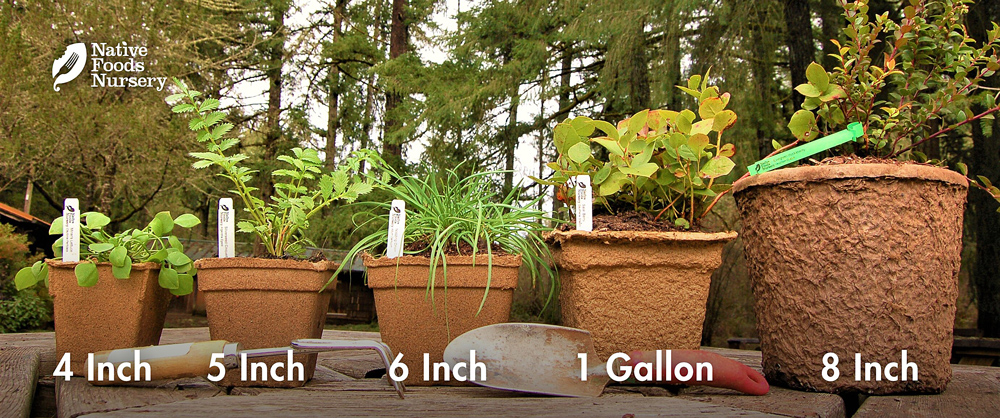
Pot Sizing Guide
Planting Guide: Woodland Strawberry (Fragaria vesca)
Tip: Tuck it under shrubs and along shady paths as an edible groundcover — it spreads gently by runners and returns bigger every year, with tiny berries of outsized flavor.
When Your Plant Arrives
Open the box promptly and lift your plant out gently, holding the pot rather than the stem. Leave it in its biodegradable eco-pot for now — the roots are settled and don’t need disturbing yet. Give it a slow, thorough drink until water runs through the bottom, then set it somewhere bright but sheltered, out of harsh afternoon sun, drying wind, and frost. Let it rest and acclimate there for a few days before planting, so the move from our greenhouse to your garden is a gentle one. If anything doesn’t look right, please contact customer service within 7 days of delivery and we’ll take care of you.
Choosing a Site
Light: Part shade to sun.
Soil: Humus-rich, well-drained, evenly moist.
Space: 12 in apart; it fills in by runners.
Planting Steps
Plant in fall or spring.
If it came in a biodegradable eco-pot, plant it pot and all — the pot is pressed from composted cow manure, so it melts into the soil and gives the young roots their first feed. No need to remove it.
Set the crown at soil level, firm gently, water in, and mulch with leaf litter.
Watering & Care
Establishment: Keep evenly moist the first season.
After establishment: Wants moderate moisture; tolerates dry shade with less fruit.
Maintenance: Let runners root to spread; thin if crowded.
Protection
Deer: Sometimes nibbled.
Wildlife: Early flowers for pollinators; fruit for birds.
Companions: Redwood sorrel, lady fern, violets.
Harvest Basics
Season: Late spring to summer.
Use: Tiny, aromatic, and intensely flavored — best fresh; superb jam, classic with rhubarb in pie; leaves for tea.
