Wildflower Medley Guild
- Current Stock:
- 0
- Example of a Native Plant Guild:
- ***For Reference Only - Not For Purchase***
Turn a corner of the yard into a living bouquet, straight out of the wild meadows of the West — and most of it edible.
What Is a Guild?
A guild is an idea borrowed from nature and from permaculture: a community of plants chosen to support one another. Instead of a lonely row of a single crop, a guild layers a central tree or shrub with companions that feed the soil, draw in pollinators, cover bare ground, and yield food — each sharing light, water, and nutrients the way a small patch of wild woodland or meadow does. Plant one, and you're not just gardening; you're starting a little ecosystem.
The Wildflower Medley Guild
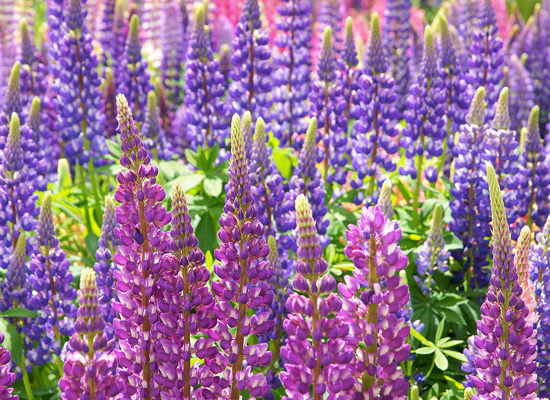
These spring gems are a rare sight even on a hillside hike now. Drop the daffodils and plant a medley of native wildflowers instead — a shifting palette of blues, purples, oranges, whites, and pinks, many of them First-Food roots and corms, just outside your kitchen window.
Plants in This Guild
- Great Camas — edible corm — First Food
- Common Camas — edible corm — First Food
- Tiger Lily — edible bulb wildflower
- Chocolate Lily — edible corm (rice root)
- Harvest Brodiaea — edible corm
- Hooker's Onion — edible wild onion
- Fool's Onion — edible corm
- Nodding Onion — edible wild onion
- Giant White Fawn Lily — creamy woodland-edge wildflower
- Henderson's Checkermallow — edible mallow wildflower
- California Compassplant — wildflower / edible seed
- Lupine (Broadleaf) — nitrogen-fixing companion — not for eating
These are the plants we'd reach for — mix, match, and add your own. See each plant's own page for full details, and the Planting Guide tab for how to lay the guild out.
Ecology & Design
A meadow is more than pretty: camas, brodiaea, and lily corms were dug, pit-cooked, and traded as staple foods, and their flowers feed native bees and butterflies through the spring.1 Plant the corms in drifts, let the whole patch go summer-dry as a wild meadow would, and it will return and multiply for years.
References
- Pojar, J. & MacKinnon, A., Plants of the Pacific Northwest Coast, 2014; Moerman, D., Native American Ethnobotany, 1998.
Planting Guide: Wildflower Medley Guild
Tip: Plant the corms and bulbs in drifts in fall, and let the whole patch go summer-dry like a wild meadow — it returns and multiplies on its own.
Design & Layout
Drifts, not rows: Scatter each species in natural-looking clusters.
Layer bloom: Mix early and late bloomers for a long show.
Companion: Tuck lupine through for soil and structure.
Plan on roughly a 10-ft circle (or a sunny strip).
Choosing a Site
Light: Full sun to part shade.
Soil: Well-drained; moist in spring, dry in summer.
Water: Spring moisture, then a dry summer rest.
Planting Steps
Plant dormant corms and bulbs in fall, a few inches deep.
Firm in and water once; let winter rain do the rest.
Let foliage die back in summer — that's normal.
Care & Establishment
Year one: Water deeply but infrequently to build deep roots; then wean off — these plants want a dry summer.
Mulch: Mulch bare soil (leaf mold, wood chips) until the groundcovers close in.
Weeding: Keep weeds down the first season or two; after that the guild largely mulches itself.
Patience: Trees, corms, and shrubs settle over a few seasons — the guild fills in and improves each year.
Guild Notes
Gophers/mice: Love the corms — protect with hardware cloth if they're a problem.
Multiply: Leave clumps undisturbed and they'll spread by offsets and seed.
First Foods: Camas and lily corms can be dug once patches are well established — always leaving plenty.