




Red Alder
- Current Stock:
- 0
- Other Names:
- Oregon Alder, Pacific Coast Alder; Klallam: s'ko'niltc; Quinault: malp
- Latin Name:
- Alnus rubra
The Red Alder (Alnus rubra) is the fast-growing, nitrogen-fixing "hero tree" of the Pacific Northwest — first to green a disturbed hillside, and the classic wood for smoking salmon.2, 4
Edible & Medicinal Uses
Red Alder offers several modest foods. The catkins (male flowers) are edible raw or cooked and rich in protein, though quite bitter — best cooked and seasoned. The inner bark can be eaten cooked, but must be dried first (it's emetic when fresh); dried and ground, it becomes a thickener for soups or an addition to bread. The sap, run in late winter, is sweet and can be used like a light maple syrup — it flows best on a warm day after a freezing night. Alder bark is also a longstanding medicine (antibiotic, and a source of salicin, the basis of aspirin). Note: harvesting bark and sap wounds the tree, so treat these as occasional or lean-times foods.1, 4
Ornamental Qualities
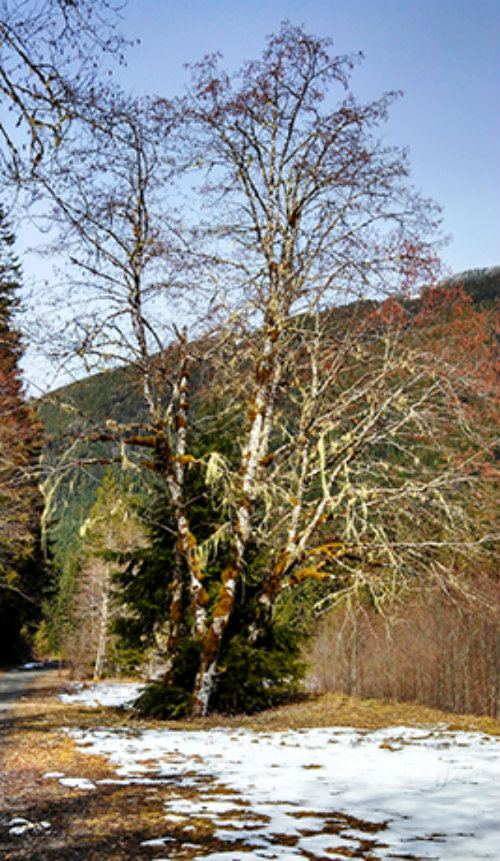
A graceful, fast tree reaching 45–50 ft (to 90 ft in ideal spots), Red Alder has smooth gray bark dappled with white lichen, long reddish catkins in early spring, and small woody "cones" that hold seed through winter. It's the first choice for greening a wet, marshy, or disturbed corner in a hurry.1
Environment & Culture
Ecology: Red Alder hosts nitrogen-fixing bacteria in its roots, so it enriches poor and disturbed soil and prepares the ground for longer-lived conifers — a keystone of PNW succession. Its nitrogen-rich leaves make excellent mulch, its catkins feed early pollinators, and its seeds feed birds.1, 2
Culture: Red Alder is deeply woven into Northwest Coast life: its wood is second only to cedar for carving bowls, spoons, and masks and is the preferred fuel for smoking salmon; its inner bark yields a red-orange dye (used to color fishnets invisible to fish, and baskets and canoes); and its bark is an important medicine. Coast Salish, Klallam (s'ko'niltc), Quinault (malp), and many others continue to use and steward it. We offer it with respect for that living knowledge and invite support for Indigenous-led restoration through our Charitable Giving page.4
In the Kitchen
Most cooks reach for alder not as an ingredient but as a fuel — split, seasoned alder gives salmon its classic smoky sweetness on the grill or in the smoker. If you do forage it, cook and season the bitter catkins, dry the inner bark before use, and tap the sweet late-winter sap sparingly. (Growing and harvest details are on the Planting Guide tab.)
Attributes
- Native Range: SE Alaska to California; streambanks, moist woods, disturbed sites1
- USDA Zones: ~5–103
- Light: Full sun1
- Water: Moist to wet; not drought-tolerant1
- Soil: Any; fixes its own nitrogen, enriches poor ground1
- Habit: Fast deciduous tree, 45–50 ft (to 90 ft); short-lived2
- Edible/Use: Catkins, dried inner bark, sap; premier smoking wood; dye; medicine4
References
- Native Foods Nursery field notes; Native Plants PNW, Alnus rubra.
- Pojar, J. & MacKinnon, A., Plants of the Pacific Northwest Coast, 2014.
- USDA PLANTS Database, Alnus rubra.
- Mount Pisgah Arboretum; Moerman, D., Native American Ethnobotany, 1998.
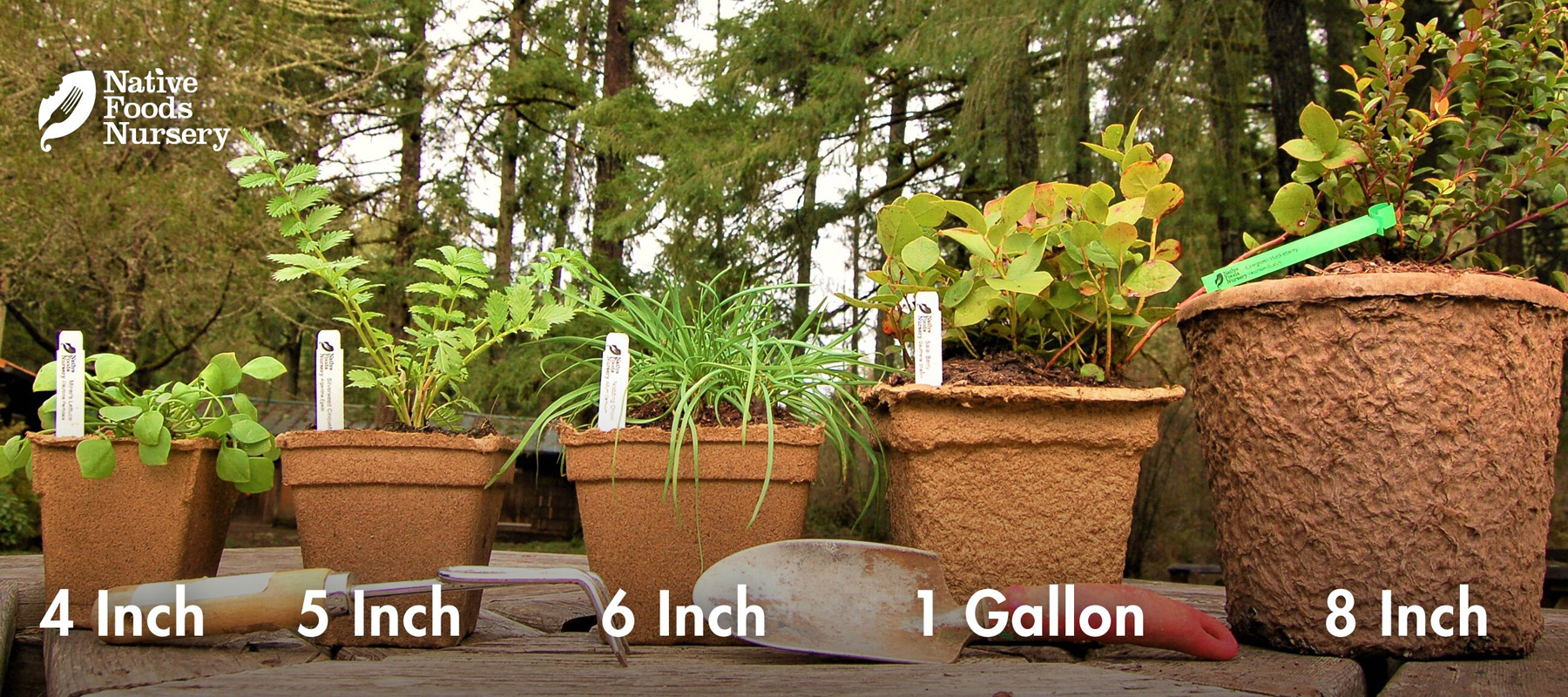
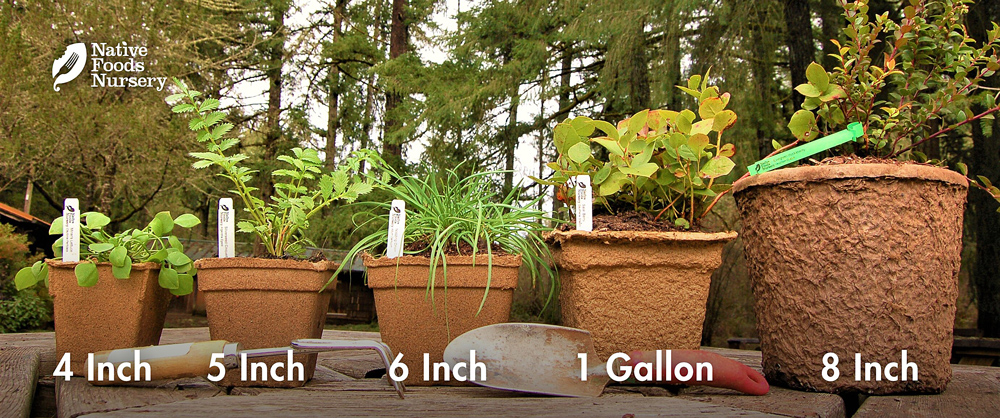
Pot Sizing Guide
Planting Guide: Red Alder (Alnus rubra)
Tip: Plant it where it can be wet — marshy, streamside, or seasonally flooded ground suits it, and it will green a bare or disturbed site fast while enriching the soil with nitrogen.
When Your Plant Arrives
Open the box promptly and lift your plant out gently, holding the pot rather than the stem. Leave it in its biodegradable eco-pot for now — the roots are settled and don’t need disturbing yet. Give it a slow, thorough drink until water runs through the bottom, then set it somewhere bright but sheltered, out of harsh afternoon sun, drying wind, and frost. Let it rest and acclimate there for a few days before planting, so the move from our greenhouse to your garden is a gentle one. If anything doesn’t look right, please contact customer service within 7 days of delivery and we’ll take care of you.
Choosing a Site
Light: Full sun.
Soil & water: Moist to wet; not drought-tolerant. Any soil — it fixes its own nitrogen.
Space: 15–25 ft apart; fast-growing into a tree.
Planting Steps
Plant in fall or spring into moist ground.
If it came in a biodegradable eco-pot, plant it pot and all — the pot is pressed from composted cow manure, so it melts into the soil and gives the young roots their first feed. No need to remove it.
Set at the depth it grew, firm, and water in; keep moist as it establishes.
Watering & Care
Establishment: Keep consistently moist.
After establishment: Vigorous and fast; needs steady moisture.
Maintenance: A short-lived, fast pioneer that builds soil and nurses other plants; it coppices well.
Protection
Wildlife: Catkins for early pollinators; seeds for birds; a soil-building nitrogen-fixer.
Note: Bark and sap harvest wound the tree — take only sparingly.
Harvest Basics
Season: Catkins and sap in early spring; inner bark in spring; wood any time.
Use: The male catkins are edible (protein-rich but bitter — best cooked and seasoned), and the inner bark can be dried and ground as a survival flour — these are modest, mostly survival foods. Alder wood is prized for smoking fish.
