Evergreen Garden Guild
- Current Stock:
- 0
- Example of a Native Plant Guild:
- ***For Reference Only - Not For Purchase***
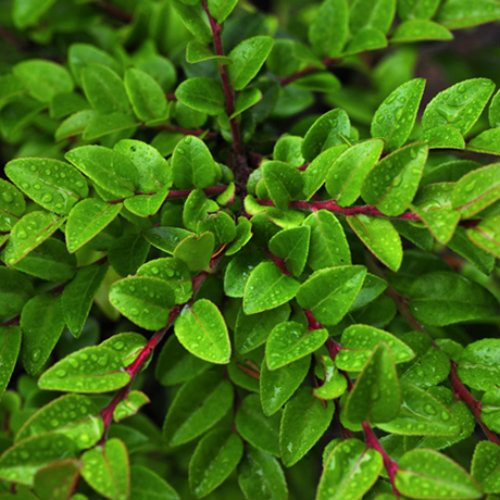
Green all year: ten handsome, edible, (mostly) evergreen natives that never leave the garden bare.
What Is a Guild?
A guild is an idea borrowed from nature and from permaculture: a community of plants chosen to support one another. Instead of a lonely row of a single crop, a guild layers a central tree or shrub with companions that feed the soil, draw in pollinators, cover bare ground, and yield food — each sharing light, water, and nutrients the way a small patch of wild woodland or meadow does. Plant one, and you're not just gardening; you're starting a little ecosystem.
The Evergreen Garden Guild
Love year-round green? California Bay Laurel stands at the center — aromatic and evergreen — surrounded by Evergreen Huckleberry, Salal, and Red Huckleberry, with the companion nitrogen-fixer Blue Blossom Ceanothus. Beneath grow ferns, strawberry, and edible violets, so the bed keeps its structure and color through the grey months.
Plants in This Guild
- California Bay Laurel — centerpiece evergreen tree
- Evergreen Huckleberry — evergreen berry shrub
- Salal Berry — evergreen berry groundcover
- Red Huckleberry — berry shrub
- Fiddlehead Fern — edible fern
- Licorice Fern — winter-green sweet-rhizome fern
- Redwood Sorrel — evergreen woodland green
- Woodland Strawberry — fruiting groundcover
- Henderson's Checkermallow — edible mallow
- Oregon Stonecrop — evergreen succulent groundcover
- Blue Blossom Ceanothus — nitrogen-fixing evergreen companion
These are the plants we'd reach for — mix, match, and add your own. See each plant's own page for full details, and the Planting Guide tab for how to lay the guild out.
Ecology & Design
An evergreen framework keeps a garden alive in winter — shelter for birds, structure for the eye, and food that doesn't vanish with the first frost. The bay and ceanothus give height and year-round leaf, salal and huckleberry hold the middle, and the ferns, sorrel, and stonecrop carpet the floor. The ceanothus fixes nitrogen as a bonus.1
References
- USDA NRCS Plant Guides (nitrogen-fixing natives: Ceanothus, Shepherdia, Lupinus, Trifolium).
Planting Guide: Evergreen Garden Guild
Tip: Design for winter structure: place the evergreens so the bed still reads as full and green when everything deciduous has dropped.
Design & Layout
Center: California Bay Laurel for evergreen height.
Middle: Evergreen huckleberry, salal, red huckleberry, and ceanothus.
Floor: Ferns, sorrel, strawberry, and stonecrop for evergreen groundcover.
Plan on roughly a 20-ft circle.
Choosing a Site
Light: Full sun to part shade.
Soil: Rich, well-drained; slightly acidic suits the huckleberries.
Water: Moderate.
Planting Steps
Plant the bay and shrubs in fall or spring for the evergreen backbone.
Fill beneath with ferns and groundcovers.
Mulch and water in.
Care & Establishment
Year one: Water regularly while everything roots in, even drought-tolerant plants.
Mulch: Mulch bare soil (leaf mold, wood chips) until the groundcovers close in.
Weeding: Keep weeds down the first season or two; after that the guild largely mulches itself.
Patience: Trees, corms, and shrubs settle over a few seasons — the guild fills in and improves each year.
Guild Notes
Winter interest: The evergreens carry the garden through the grey months and shelter birds.
Licorice Fern: Winter-green — lush when much else sleeps (summer-dormant, which is normal).
Companion: Blue Blossom Ceanothus fixes nitrogen and blooms blue in spring.