



Wild Blue Flax
- Current Stock:
- 0
- Other Names:
- Lewis Flax, Prairie Flax, Blue Flax, Lewis's Wild Flax
- Latin Name:
- Linum lewisii
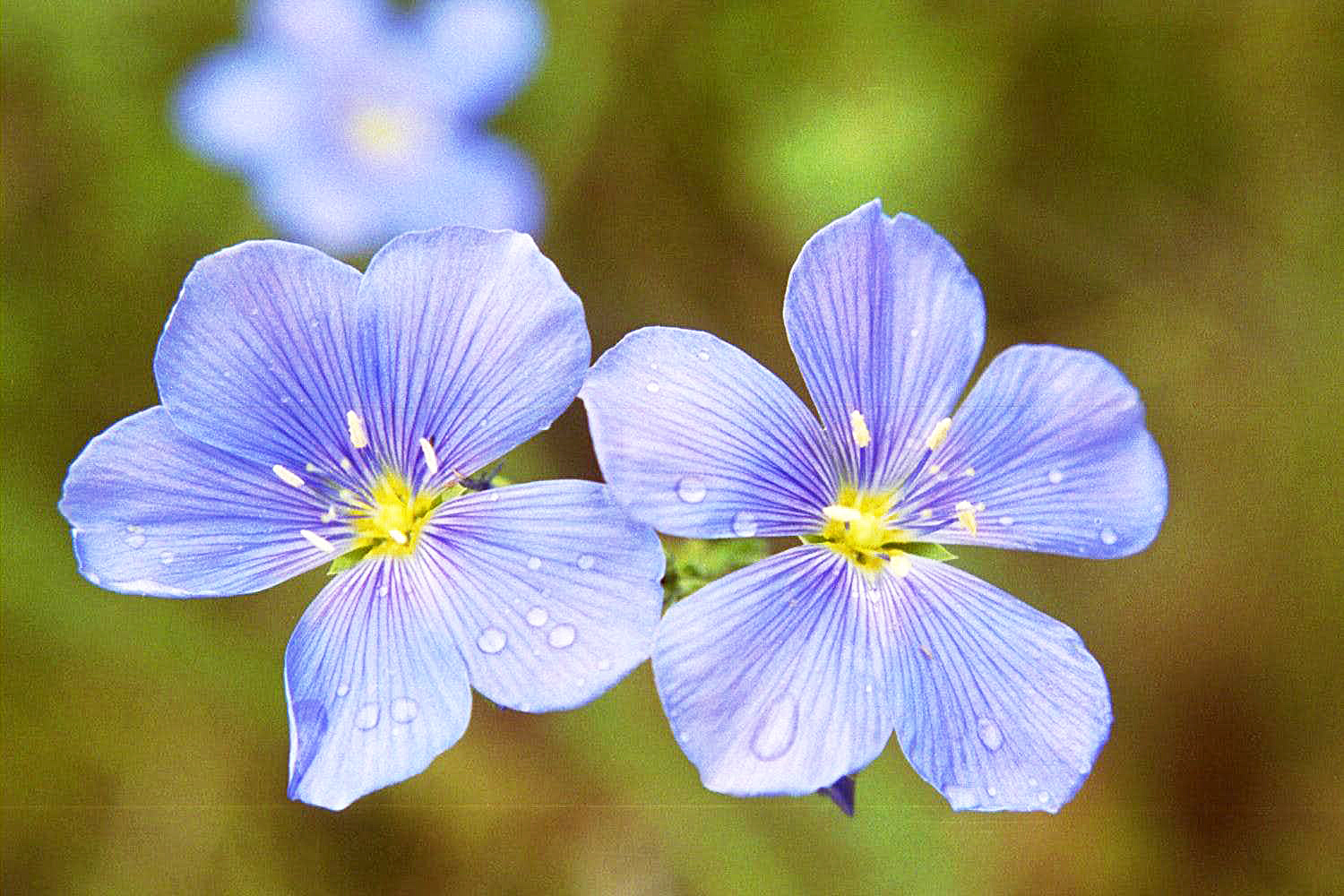
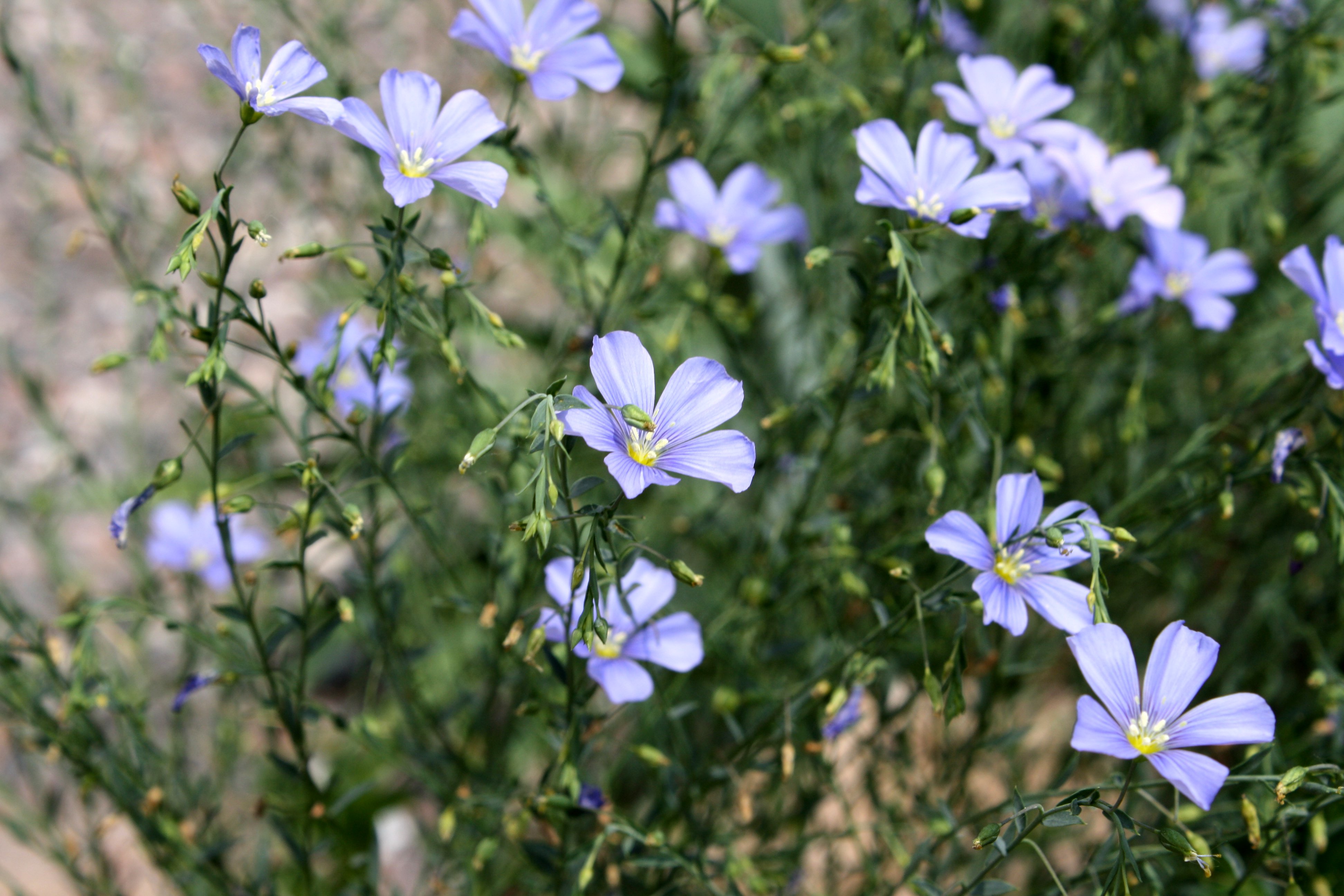
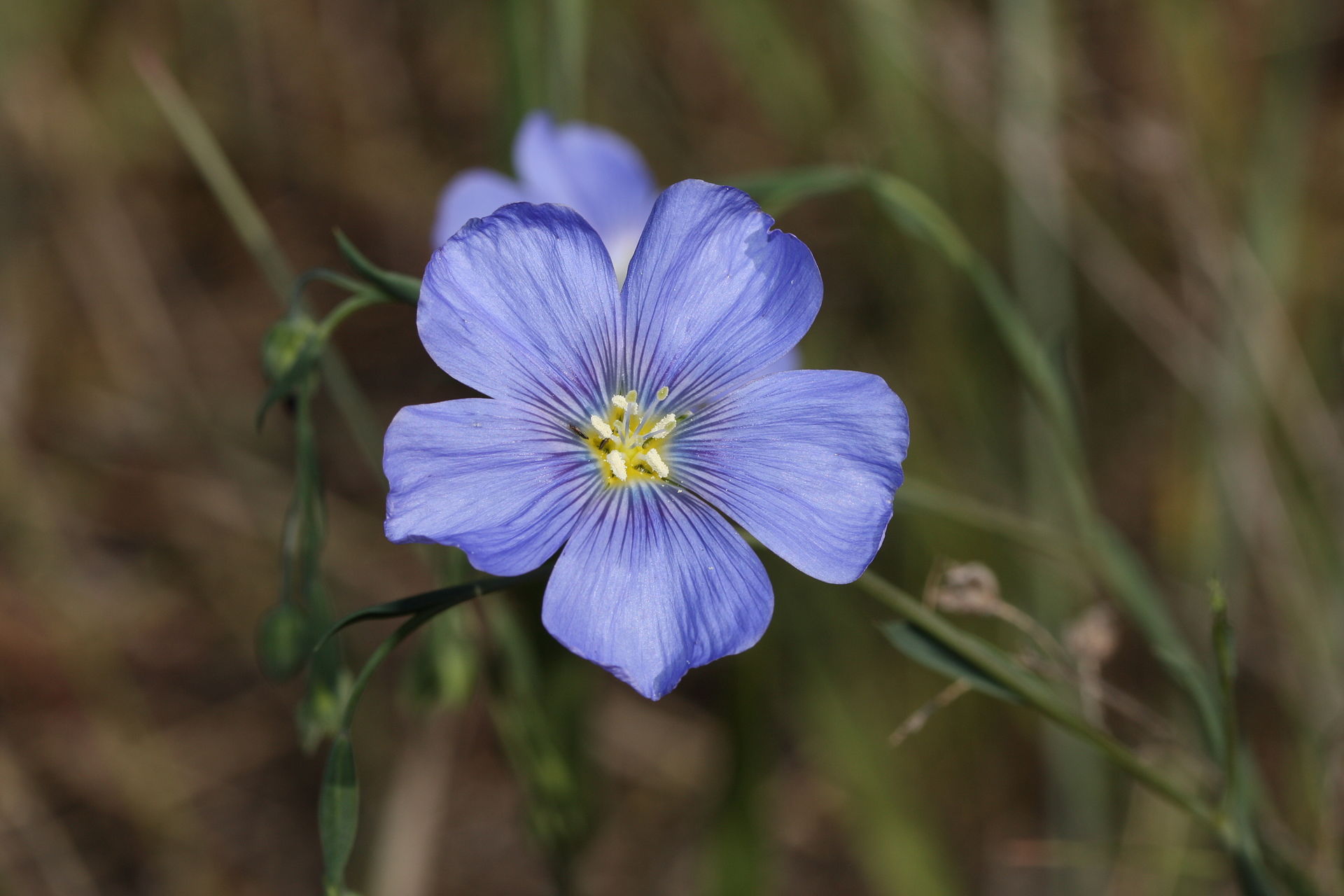
Wild Blue Flax (Linum lewisii) is an airy, elegant native wildflower — sky-blue flowers dancing on slender stems over weeks of early summer — with nutritious seeds and strong, useful fiber.2, 4
NOTE: Native wildflowers are dormant (no leaves/flowers) Summer–Fall.
Edible & Medicinal Uses
Wild Blue Flax seeds are edible when cooked, with a pleasing nutty flavor and high oil content that lends richness to other dishes. Like cultivated flax, they're a good source of omega-3 fatty acids, lignans, and both soluble and insoluble fiber. Important: the seeds should not be eaten raw in large quantities — they contain trace cyanogenic compounds that are destroyed by cooking. The tough stem fibers also have a long history of use for cordage and textiles (the plant honors explorer Meriwether Lewis).1, 4
Ornamental Qualities
Delicate and long-blooming, Wild Blue Flax opens fresh sky-blue to lavender flowers each morning on wiry, waving stems, over a four-to-six-week stretch in early summer. The fine foliage stays green through the dry season, adding cool color and movement to a dryland garden, and it works beautifully in fire-resistant "greenstrip" plantings and for erosion control.1
Environment & Culture
Ecology: Native across the West, Wild Blue Flax is a drought-hardy, self-sowing perennial of dry meadows and slopes. Its flowers feed native bees and other pollinators, and its seeds feed birds; it's a favorite in wildflower and restoration seed mixes.1, 2
Culture: Flax is a longstanding source of food and fiber, the cooked seeds eaten and the strong stem fibers twisted into cord, nets, and cloth. We offer it with respect for that living knowledge and invite support for Indigenous-led restoration through our Charitable Giving page.4
In the Kitchen
Cook the seeds before eating — toast or simmer them and stir into porridge, baking, or dressings for a nutty, omega-rich boost, just as you would flax/linseed. Skip eating them raw in quantity. (Growing and harvest details are on the Planting Guide tab.)
Attributes
- Native Range: Across the West; dry meadows, slopes, openings1
- USDA Zones: ~3–93
- Light: Full sun1
- Water: Low; drought-tolerant1
- Soil: Well-drained; adaptable, tolerates lean ground1
- Habit: Wiry perennial wildflower; sky-blue flowers, early summer2
- Edible: Seeds (cooked) — not raw in quantity; also a fiber plant1
References
- Native Foods Nursery field notes; USDA NRCS, Linum lewisii.
- Pojar, J. & MacKinnon, A., Plants of the Pacific Northwest Coast, 2014.
- USDA PLANTS Database, Linum lewisii.
- Moerman, D., Native American Ethnobotany, 1998.
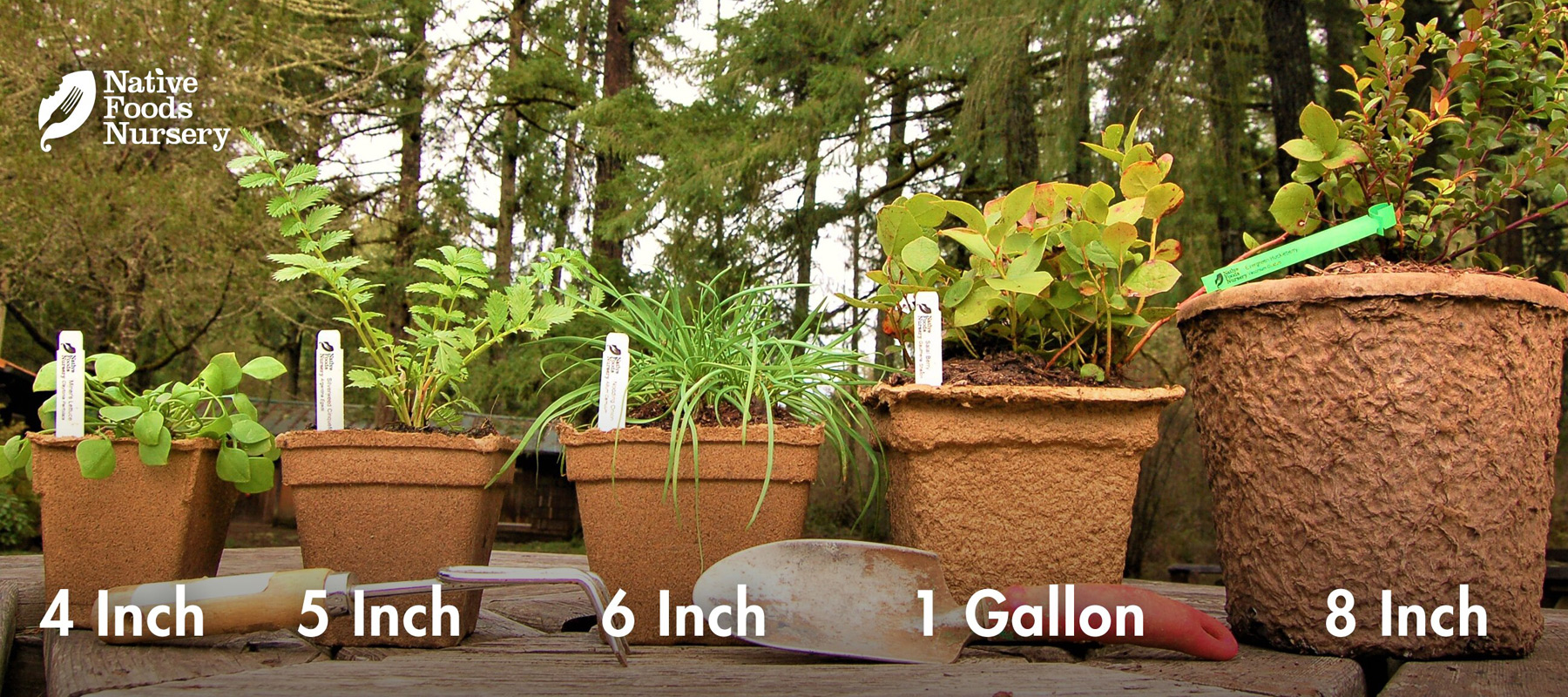
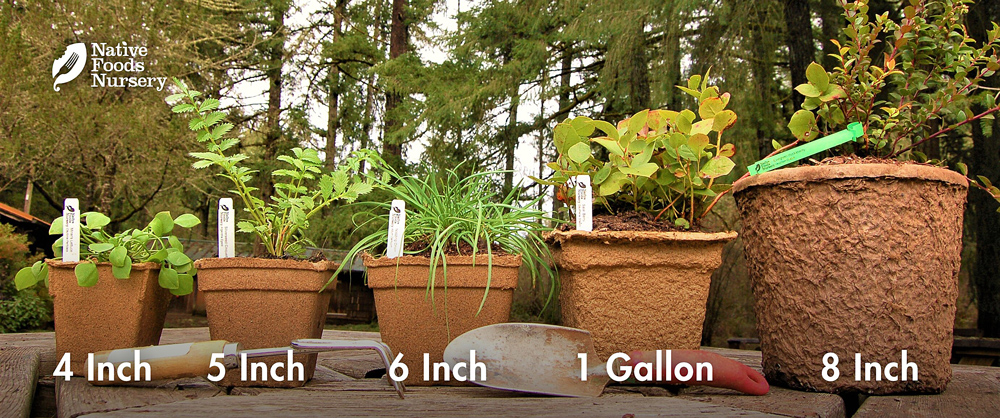
Pot Sizing Guide
Planting Guide: Wild Blue Flax (Linum lewisii)
Tip: Give it full sun and sharp drainage and it rewards you with weeks of morning-fresh blue flowers — and it self-sows, so let some seed drop to keep the display going.
When Your Plant Arrives
Open the box promptly and lift your plant out gently, holding the pot rather than the stem. Leave it in its biodegradable eco-pot for now — the roots are settled and don’t need disturbing yet. Give it a slow, thorough drink until water runs through the bottom, then set it somewhere bright but sheltered, out of harsh afternoon sun, drying wind, and frost. Let it rest and acclimate there for a few days before planting, so the move from our greenhouse to your garden is a gentle one. If anything doesn’t look right, please contact customer service within 7 days of delivery and we’ll take care of you.
Choosing a Site
Light: Full sun.
Soil: Well-drained; lean is fine; avoid soggy ground.
Space: 8–12 in apart, or broadcast in a meadow.
Planting Steps
Sow seed in fall or early spring, or plant plugs.
If it came in a biodegradable eco-pot, plant it pot and all — the pot is pressed from composted cow manure, so it melts into the soil and gives the young roots their first feed. No need to remove it.
Barely cover the seed; keep moist until up, and thin as needed.
Watering & Care
Establishment: Light water while young.
After establishment: Drought-tolerant; little care.
Maintenance: Let some plants set seed to self-sow.
Protection
Wildlife: Sky-blue flowers for native bees; seeds for birds.
Companions: Meadow wildflowers and bunchgrasses.
Harvest Basics
Season: Seed capsules ripen after the early-summer bloom.
Safety & use: Like cultivated flax, cook the seeds before eating — raw flax seed contains cyanogenic compounds that cooking neutralizes, so don’t eat them raw in quantity. Cooked, they are pleasantly nutty and oil-rich. The fibrous stems also make excellent cordage.
