
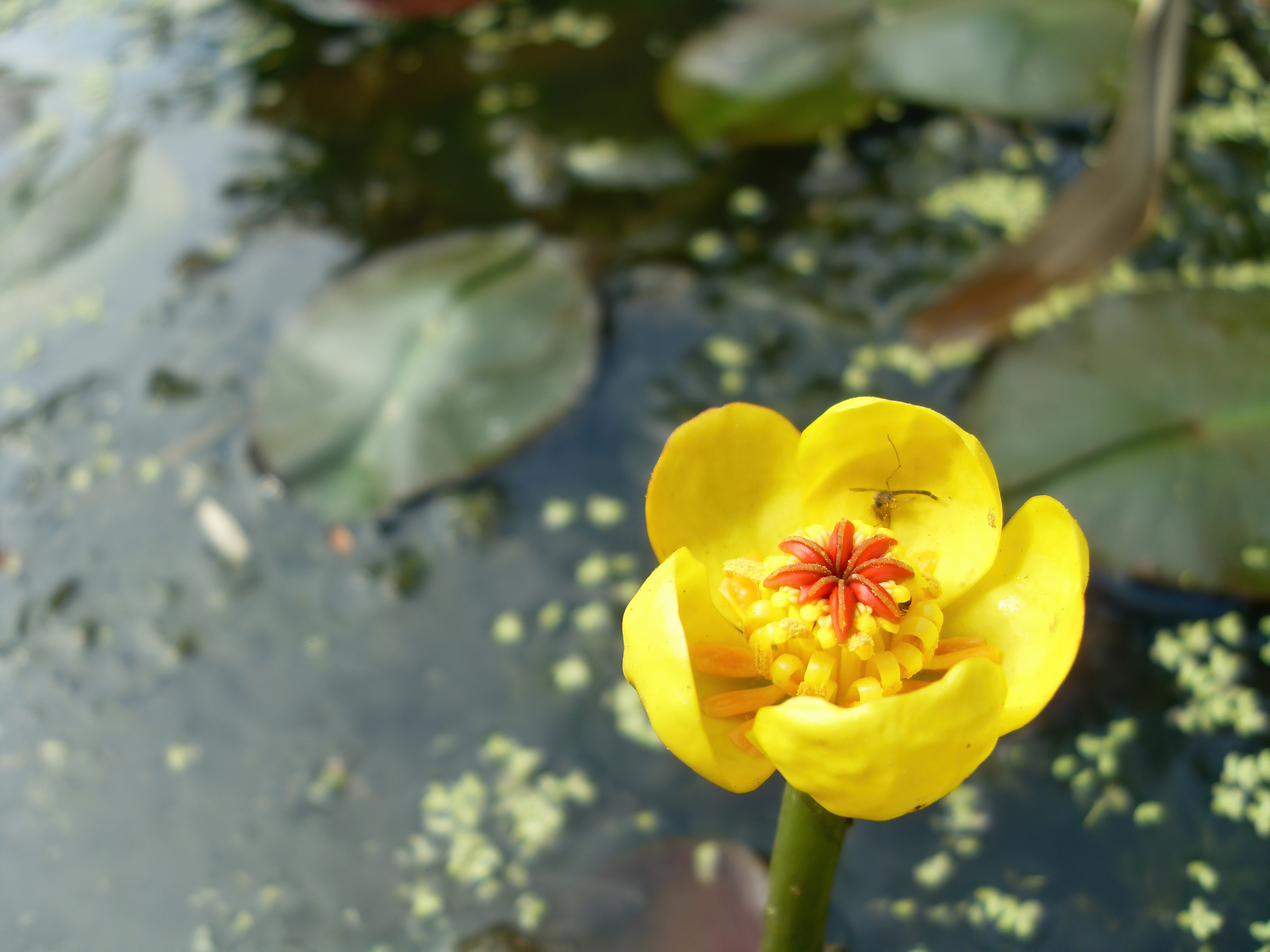

Great Yellow Pond-lily
- Current Stock:
- 0
- Other Names:
- Wokas, Wocus, Spatterdock, Rocky Mountain Pond-lily
- Latin Name:
- Nuphar polysepala
The Great Yellow Pond-lily (Nuphar polysepala) — wokas — is a magnificent native water lily whose big leathery leaves and golden, brandy-scented globe-flowers float on still water, and whose seeds are one of the great First Foods of the Klamath Basin.1, 3
NOTE: Be prepared to submerge potted plant upon arrival.
NOTE: Be ready to submerge plant upon arrival.
Edible & Medicinal Uses
The prize is the seed — wokas — a celebrated, carbohydrate-rich wild food. Ripe pods are gathered, sun-dried, and pounded to free the seeds, which are then parched until they pop like tiny popcorn, or ground into meal for mush, gruel, soup, and bread.3 The seeds were once gathered by canoe from thousands of acres of marsh. Young leaves can be added to soups, and the flowers steeped as a tea.1
A note on the rhizome: unlike the seeds, the thick rhizome is astringent and has been used more as medicine than food — some ate it cooked, while others found it unpalatable or avoided it entirely. Traditionally the rootstock is steeped as a gargle for sore throats and made into poultices for boils and swelling.4 Approach the rhizome with caution and enjoy the seeds for eating — traditional use, not medical advice.
Ornamental Qualities
Bold and beautiful on the water, Great Yellow Pond-lily lifts glossy, leathery, heart-shaped leaves — six to eighteen inches across — that float and stand just above the surface, with waxy, cup-shaped, deep-yellow flowers (faintly scented of brandy) rising on stout stalks all summer, followed by flask-shaped green pods.1 It's a dramatic centerpiece for a pond or a large water container.2
Environment & Culture
Ecology: Native across western North America, from Alaska and the Yukon south to California and the Rockies, it grows in ponds, shallow lakes, oxbows, and slow streams with mucky bottoms.1 Pollinated by flies and beetles, it's a keystone of pond life — its leaves shade and shelter fish, its rhizomes feed beavers and muskrats, and the whole stand hosts aquatic insects and waterfowl.2
Culture: Wokas remains central to Klamath and Modoc foodways, and the Klamath Tribes actively steward and restore their wocus beds, including with traditional burning.3 We offer this plant with respect for that living knowledge and invite support for Indigenous-led restoration through our Charitable Giving page.
In the Kitchen
The classic treat: parch the dried seeds in a hot, dry pan until they pop like miniature popcorn, or grind them into a nutty meal for porridge and flatbread. Add the young leaves to soups. (Stick to the seeds — leave the astringent rhizome to the herbalists.) Growing details are on the Planting Guide tab.
Attributes
- Native Range: Alaska/Yukon to California & the Rockies; ponds, lakes, slow streams1
- USDA Zones: ~4–92
- Light: Full sun (tolerates part shade)2
- Water: Aquatic — still or slow water, ~1–3 ft deep1
- Soil: Mucky pond bottom; heavy loam or clay2
- Habit: Aquatic perennial; big floating leaves, yellow globe flowers1
- Edible: Seeds ("wokas") — popped or ground3
References
- Wikipedia & Flora of North America, Nuphar polysepala; Calscape.
- Pojar, J. & MacKinnon, A., Plants of the Pacific Northwest Coast, 2014; Washington Native Plant Society.
- Turner & Szczawinski; The Klamath Tribes, Restoration Plan for Wocus; Moerman, D., Native American Ethnobotany, 1998.
- E-Flora BC; Schofield, Discovering Wild Plants (rhizome medicine & cautions).
Planting Guide: Great Yellow Pond-lily (Nuphar polysepala)
Tip: This is a true aquatic — it lives in a pond or a large, water-filled container in the sun. Plant it in a submerged pot of heavy soil and let the leaves reach the surface; never let it dry out.
When Your Plant Arrives
Open the box the moment it arrives and submerge the plant right away — pond-lilies must not be allowed to dry out, even briefly. Settle it into a bucket or tub of water, or straight into its planting position, and keep it cool and shaded until then. If anything looks amiss, please contact customer service within 7 days of delivery and we’ll make it right.
Choosing a Site
Light: Full sun (tolerates part shade).
Water: Still or slow-moving, about 1–3 ft deep once established.
Soil: Heavy loam.
Planting Steps
Pot the plant into a wide, no-hole container of heavy garden soil and top with a layer of gravel so the soil doesn’t cloud the water.
Lower it so the crown sits under 1–3 ft of water; submerge it right away and never let it dry.
Watering & Care
Water: Keep it submerged at all times — never let the pot dry out.
Vigor: Give it room, or divide every few years in spring.
Protection
Wildlife: Beavers, muskrats, and deer graze it; fish and frogs shelter beneath — welcome, but protect small starts.
Containment: Give it room in a large pond, or grow it in a container in a small one.
Harvest Basics
Seeds (wokas): Gather ripe pods in late summer; dry them, free the seeds, then parch and pop (like popcorn) or grind into meal — a celebrated, carbohydrate-rich wild food.
Rhizome: Astringent — edible only after long cooking and leaching, and best left in favor of the seeds.
Water quality: As with any water-grown food, harvest edible parts only from clean water you would be comfortable eating from — wetland plants take up whatever is in the water.
