





Golden Currant

- Current Stock:
- 0
- Other Names:
- Clove Currant, Buffalo Currant, Golden Flowering Currant
- Latin Name:
- Ribes aureum
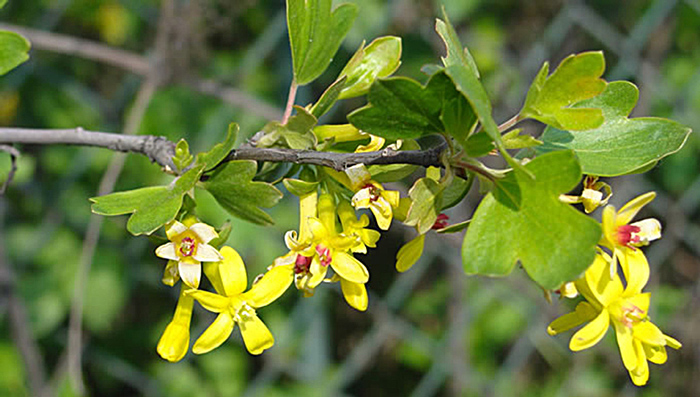
The Golden Currant (Ribes aureum) is a cheerful, thornless native shrub that rings in spring with sprays of bright golden-yellow flowers scented of cloves and vanilla, followed by edible berries and fiery fall foliage.2, 4
Edible & Medicinal Uses
Golden Currant is one of the most palatable of the native currants. Its round berries ripen from amber to red to purple-black and are sweet and flavorful, delicious fresh and excellent in jams, jellies, pies, and dried. Like all currants they're rich in vitamin C. The sweet berries can be dried and pressed into cakes, or mixed with dried meat and fat to make pemmican.1, 4
Ornamental Qualities
A tidy, thornless, deciduous shrub 3–8 ft tall, Golden Currant earns its place on looks alone: clove-scented golden flowers that age to orange and red, blue-green gooseberry-like leaves turning crimson in fall, and colorful fruit. Hummingbirds and butterflies flock to the blooms. It's superb in an edible hedgerow with Black Gooseberry, Blue Elderberry, and the Rubus brambles.1
Environment & Culture
Ecology: Widespread across western North America, Golden Currant is one of the most adaptable native currants, tolerating a broad range of soils and moisture from streambanks to dry slopes. Its early flowers are a valuable nectar source for hummingbirds and native bees, and its fruit feeds many birds.1, 4
Culture: The sweet berries are an important food for many nations — among them the Lakota, Shoshone, Paiute, and Ute — eaten fresh, dried, and worked into pemmican, while the inner bark sees medicinal use. We offer it with respect for that knowledge and invite support for Indigenous-led restoration through our Charitable Giving page.4
In the Kitchen
Eat the ripe purple-black berries out of hand, or gather a bowlful for a fragrant currant jam or jelly — their natural pectin and bright flavor set beautifully. They fold into pies and quick breads, and dry well for winter. For a nod to tradition, dry them and grind into a fruit-and-nut cake. (Growing and harvest details are on the Planting Guide tab.)5
Attributes
- Native Range: Widespread across western N. America1
- USDA Zones: ~4–83
- Light: Full sun to part shade1
- Water: Low to moderate; drought-tolerant once established1
- Soil: Adaptable — most well-drained soils1
- Habit: Thornless deciduous shrub, 3–8 ft2
- Bloom: Golden-yellow, clove-scented, spring1
- Edible: Sweet berries (amber to purple-black); high in vitamin C4
References
- USDA Forest Service, Plant of the Week, Ribes aureum; CalScape.
- Pojar, J. & MacKinnon, A., Plants of the Pacific Northwest Coast, 2014.
- USDA PLANTS Database, Ribes aureum.
- Discover Lewis & Clark; Moerman, D., Native American Ethnobotany, 1998.
- "Golden Currant Tarts," Las Pilitas Nursery.
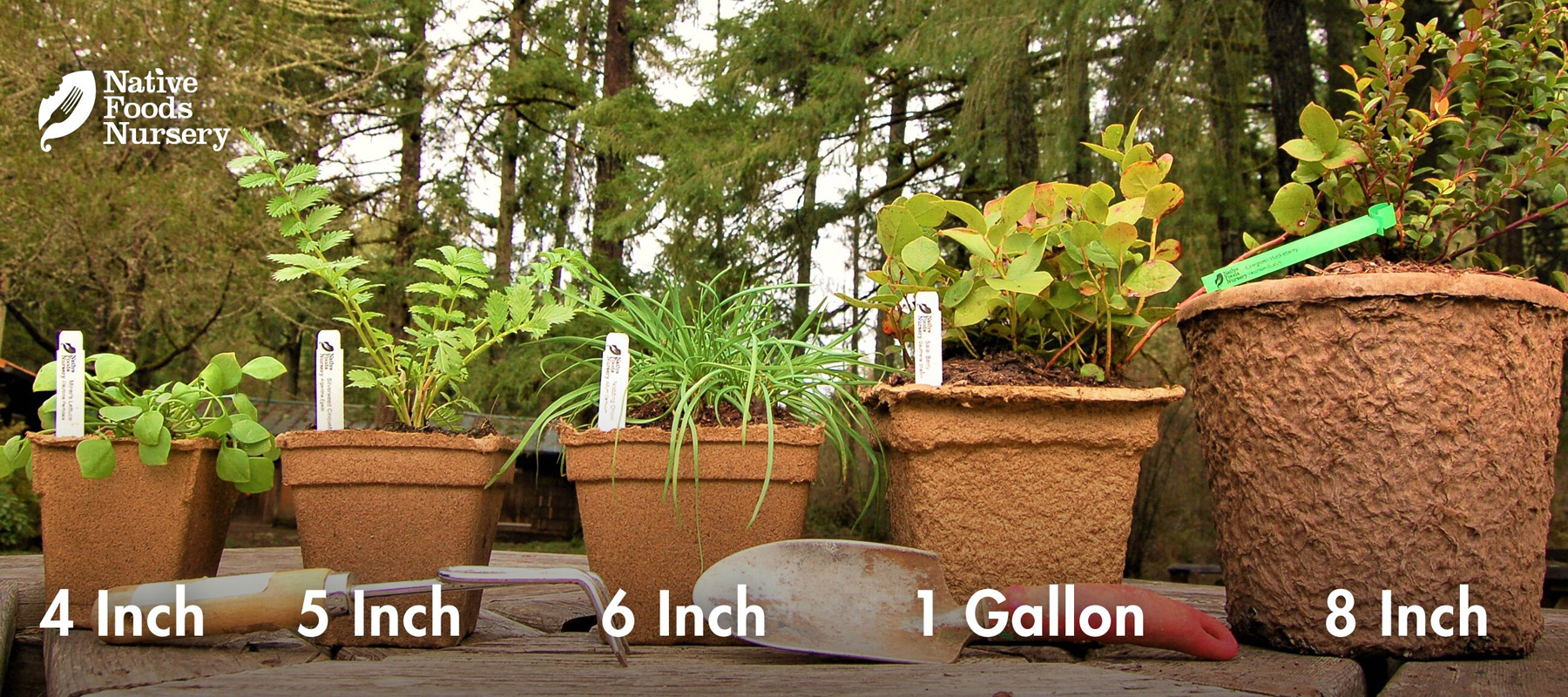
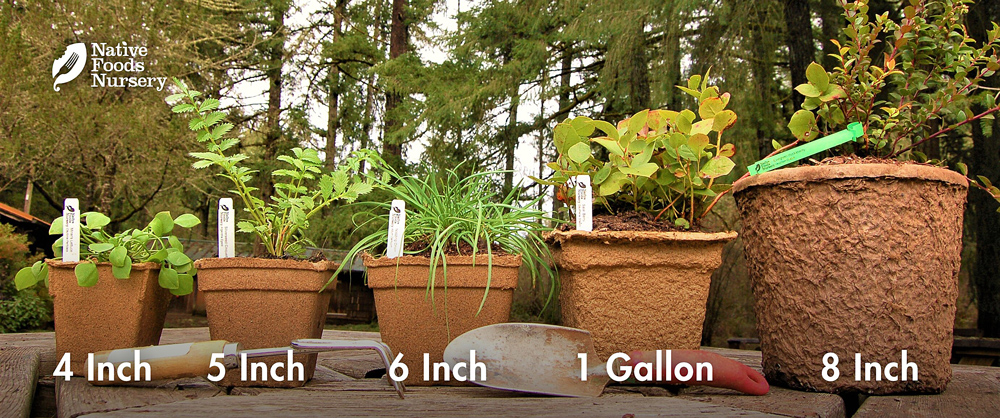
Pot Sizing Guide
Planting Guide: Golden Currant (Ribes aureum)
Tip: One of the easiest native edibles — give it sun and decent drainage and it rewards you with fragrant flowers, sweet fruit, and fall color for almost no effort.
When Your Plant Arrives
Open the box promptly and lift your plant out gently, holding the pot rather than the stem. Leave it in its biodegradable eco-pot for now — the roots are settled and don’t need disturbing yet. Give it a slow, thorough drink until water runs through the bottom, then set it somewhere bright but sheltered, out of harsh afternoon sun, drying wind, and frost. Let it rest and acclimate there for a few days before planting, so the move from our greenhouse to your garden is a gentle one. If anything doesn’t look right, please contact customer service within 7 days of delivery and we’ll take care of you.
Choosing a Site
Light: Full sun to part shade (most fruit in sun).
Soil: Wonderfully adaptable — any well-drained soil.
Space: 4–6 ft apart.
Planting Steps
Plant in fall or spring while dormant.
If it came in a biodegradable eco-pot, plant it pot and all — the pot is pressed from composted cow manure, so it melts into the soil and gives the young roots their first feed. No need to remove it.
Set at the depth it grew, backfill, firm, and water in; mulch to conserve moisture.
Watering & Care
Establishment: Water through the first dry season.
After establishment: Drought-tolerant; a little summer water improves the fruit.
Pruning & propagation: Thin the oldest canes in winter to keep it productive; easy from hardwood cuttings.
Protection
Deer: Sometimes browsed.
Wildlife: Spicy-sweet spring flowers are early nectar for hummingbirds and bees; songbirds take the fruit.
White pine blister rust: As a currant/gooseberry (a Ribes) it can host white pine blister rust, which harms five-needle (white) pines. It is harmless to the shrub, but check local rules and keep it away from white pines if they grow nearby.
Harvest Basics
Season: Midsummer, as the berries turn from amber through red to sweet purple-black.
Use: One of the tastiest native currants — fresh, or into jam, jelly, pie, and dried fruit.
