



California Bay Laurel
- Current Stock:
- 0
- Other Names:
- Oregon Myrtle, California Laurel, Pepperwood, Myrtlewood, Bay Nut Tree, Headache Tree
- Latin Name:
- Umbellularia californica
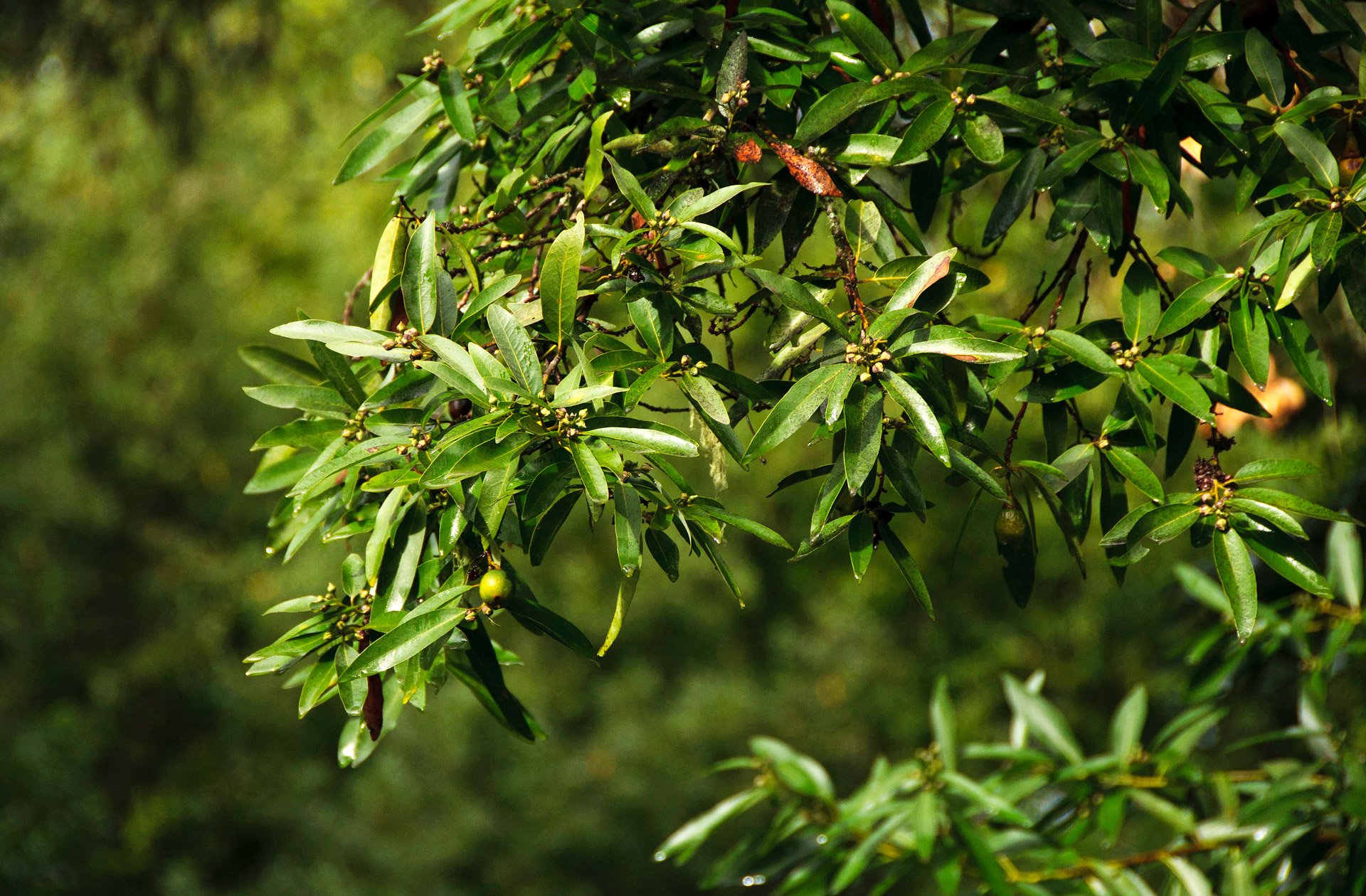
The California Bay Laurel (Umbellularia californica), also known as Oregon Myrtle or Pepperwood, is a glossy-leaved native evergreen tree whose aromatic leaves flavor food much like a Mediterranean bay leaf — only stronger — and whose roasted "bay nuts" were a treasured traditional food.2, 4
Edible & Medicinal Uses
The fragrant leaves are used like bay leaves to season soups, stews, and braises — but they are noticeably more potent (a spicier, camphor-cinnamon note), so use about half as much as you would culinary bay, and remove the leaf before serving. The tree also bears small, avocado-like fruits whose inner seed — the "bay nut" — is traditionally roasted dark and eaten whole or ground into a rich drink tasting of dark chocolate or coffee. Leaves have a long history of medicinal use for headaches and colds.1, 4
Ornamental Qualities
A shapely broadleaf evergreen, Bay Laurel carries dense, glossy, deep-green aromatic foliage on a form that ranges from a large shrub to a stately tree (commonly 20–60 ft, more in time), with creamy-yellow spring flower clusters. It makes a handsome specimen, screen, or fragrant hedge, and is drought-tolerant once established.1
Environment & Culture
Ecology: Native to the coastal forests and foothills of California and southwestern Oregon (and easily grown north to British Columbia), Bay Laurel thrives in a range of sites from streamsides to dry slopes. Its early flowers feed pollinators and its fruit feeds birds and mammals.1, 2
Culture: The roasted bay nut is a valued food, the pungent leaves a seasoning, medicine, and insect repellent (tucked among stored acorns and bedding). We offer this tree with respect for that living knowledge and invite support for Indigenous-led restoration through our Charitable Giving page.4
In the Kitchen
Use a leaf (fresh or dried) as you would bay — but sparingly, since it's stronger — to perfume soups, stocks, beans, and braises, fishing it out before serving. For the bay nuts, roast the seeds until deep chocolate-brown to mellow their pungency, then eat them whole or grind them into a cocoa-like powder for a warm, roasty drink.5 (Growing and harvest details are on the Planting Guide tab.)
Attributes
- Native Range: California & SW Oregon; grows well north to British Columbia1
- USDA Zones: ~7–93
- Light: Full sun to part shade1
- Water: Drought-tolerant once established; takes moisture too1
- Soil: Well-drained, humus-rich; adaptable1
- Habit: Broadleaf evergreen, large shrub to tree, 20–60+ ft1
- Edible: Aromatic leaves (use sparingly, stronger than bay); roasted bay nuts1
References
- CalScape; Wikipedia, Umbellularia californica.
- Pojar, J. & MacKinnon, A., Plants of the Pacific Northwest Coast, 2014.
- Oregon State University Landscape Plants, Umbellularia californica.
- Native American Ethnobotany (Moerman, 1998); ethnobotanical records.
- "Bay Laurels," The Northwest Cuisine Project.
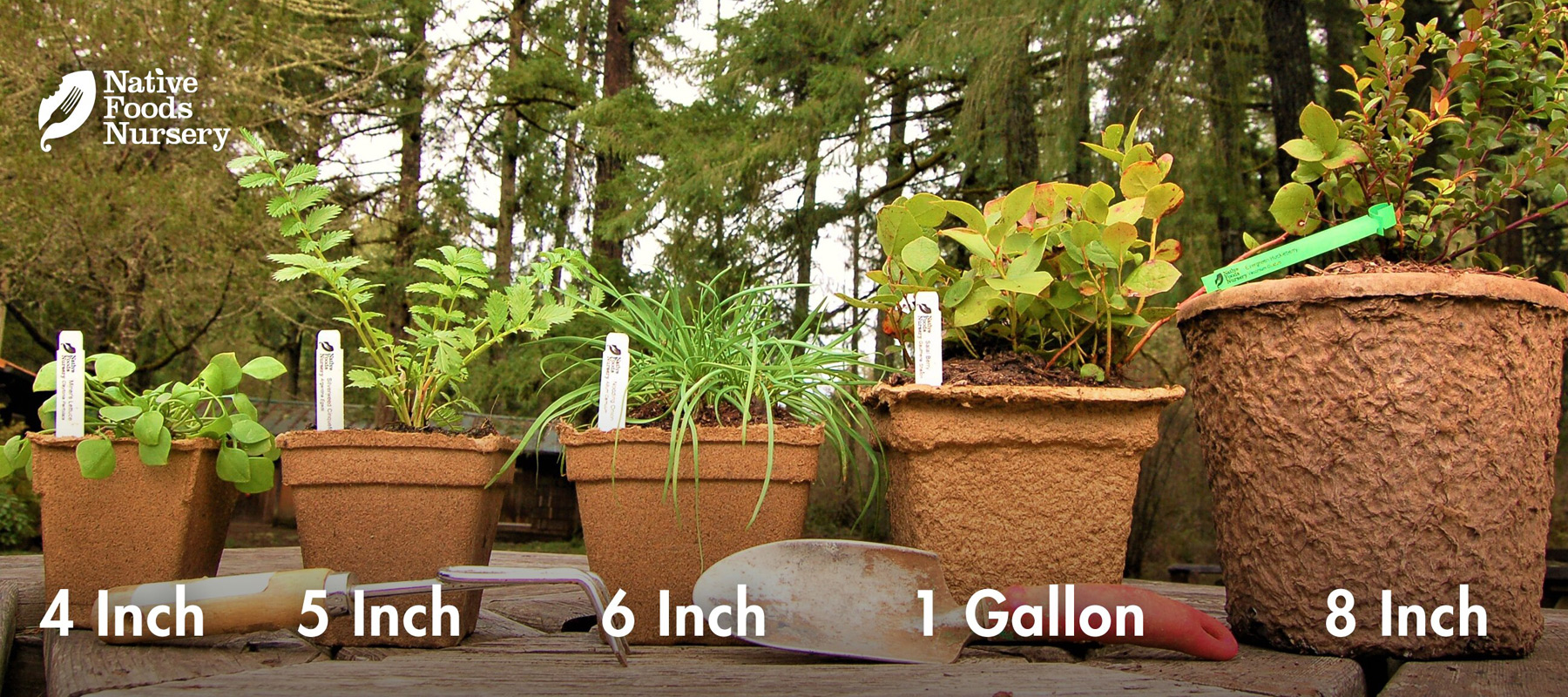
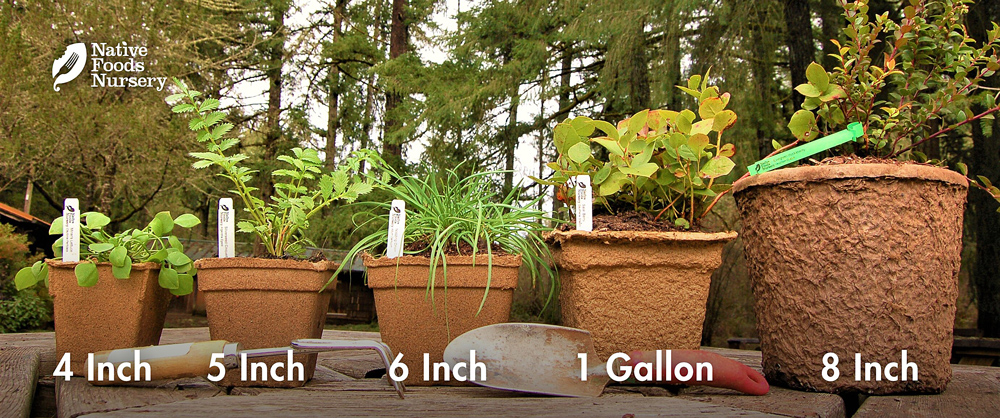
Pot Sizing Guide
Planting Guide: California Bay Laurel (Umbellularia californica)
Tip: Plant it where you can brush past the fragrant foliage — a specimen, screen, or hedge — and keep a few leaves drying in the kitchen for a stronger-than-store bay.
When Your Plant Arrives
Open the box promptly and lift your plant out gently, holding the pot rather than the stem. Leave it in its biodegradable eco-pot for now — the roots are settled and don’t need disturbing yet. Give it a slow, thorough drink until water runs through the bottom, then set it somewhere bright but sheltered, out of harsh afternoon sun, drying wind, and frost. Let it rest and acclimate there for a few days before planting, so the move from our greenhouse to your garden is a gentle one. If anything doesn’t look right, please contact customer service within 7 days of delivery and we’ll take care of you.
Choosing a Site
Light: Full sun to part shade.
Soil: Well-drained, humus-rich; adaptable.
Space: 10–20 ft as a tree; closer for a clipped hedge.
Planting Steps
Plant in fall or spring.
If it came in a biodegradable eco-pot, plant it pot and all — the pot is pressed from composted cow manure, so it melts into the soil and gives the young roots their first feed. No need to remove it.
Set at the depth it grew, backfill, firm, water in, and mulch. It takes shearing well if you want a hedge.
Watering & Care
Establishment: Water through the first dry season or two.
After establishment: Drought-tolerant; grows faster with occasional water.
Pruning: Prune or shear to shape any time in the growing season.
Protection
Deer: Usually avoided (aromatic foliage).
Wildlife: Spring flowers for pollinators; fruit for birds.
Note: Crushed fresh leaves are intensely aromatic — a strong whiff can trigger a headache in some people (its nickname is the “headache tree”), so crush them outdoors or with good ventilation.
Harvest Basics
Season: Leaves any time; bay-nut fruits in mid-to-late fall.
Use (leaves): Season soups, stews, and braises like bay leaf, but sparingly — it is much stronger and spicier (camphor-cinnamon) than culinary bay, so one leaf often does the work of several.
Use (nuts): Roast the seeds inside the fruits dark, for a chocolate/coffee-like treat; raw they are pungent.
