




Buffaloberry

- Current Stock:
- 0
- Other Names:
- Silver Buffaloberry, Bull Berry, Silverberry
- Latin Name:
- Shepherdia argentea
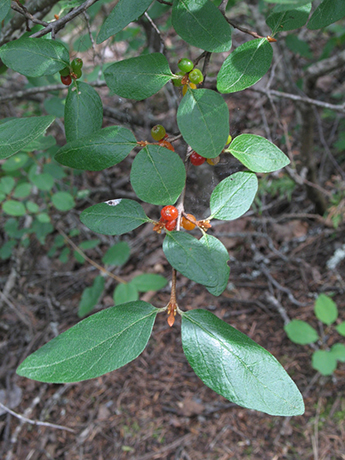
The Buffaloberry (Shepherdia argentea) is a silvery, nitrogen-fixing shrub hung with bright red, tart-sweet berries — a hardy native food that sweetens after the first frost.2, 4
Edible & Medicinal Uses
The scarlet berries are tart but pleasant, turning noticeably sweeter after a frost. Eat them raw or cooked, or fold them into compotes, jams, and preserves; they're rich in vitamin C, fiber, and antioxidants. Buffaloberries have long flavored bison and other meats, and their close cousin the soapberry (S. canadensis) is famously whipped with water into a frothy confection often called "Indian ice cream." A note of care: raw berries hold a little natural saponin (poorly absorbed, and broken down by cooking), so if you're new to them, start with a small taste to see how you respond.1, 4
Ornamental Qualities
Silver-leaved and tough, Buffaloberry forms a handsome 6–12 ft shrub of narrow, frosty-gray foliage lit by clusters of jewel-red fruit in late summer — a striking hedge, screen, or wildlife thicket that thrives where little else will.1
Environment & Culture
Ecology: A nitrogen-fixer, Buffaloberry enriches poor soil and shrugs off drought, cold, and salt. Its early flowers feed pollinators and its abundant berries are prized by birds and other wildlife. Note: Buffaloberry is dioecious — it has separate male and female plants, and you need both for fruit. We don't sex our plants, so plant several to ensure a mix.1, 2
Culture: The berries are a valued food across the northern Plains and Interior West, eaten fresh and dried and used to flavor meat. We offer it with respect for that living knowledge and invite support for Indigenous-led restoration through our Charitable Giving page.4
In the Kitchen
Pick the berries after a frost for the sweetest flavor, then cook them down into a tart-bright jelly or compote (their natural pectin and acidity make a fine set), or simmer into a sauce for game and roasts. Start with a small amount raw the first time. (Growing and harvest details are on the Planting Guide tab.)
Attributes
- Native Range: Northern Plains & Interior West; prairies, streambanks1
- USDA Zones: ~2–7 (very cold-hardy)3
- Light: Full sun1
- Water: Low; drought- and salt-tolerant once established1
- Soil: Lean, well-drained; fixes its own nitrogen1
- Habit: Deciduous shrub, 6–12 ft; silvery leaves — dioecious2
- Edible: Berries (raw sparingly, or cooked) — sweeter after frost4
References
- Native Foods Nursery field notes; USDA NRCS Plant Guide, Shepherdia argentea.
- Pojar, J. & MacKinnon, A., Plants of the Pacific Northwest Coast, 2014.
- USDA PLANTS Database, Shepherdia argentea.
- Turner & Burton, "Soapberry"; The Canadian Encyclopedia, "Wild Berries."
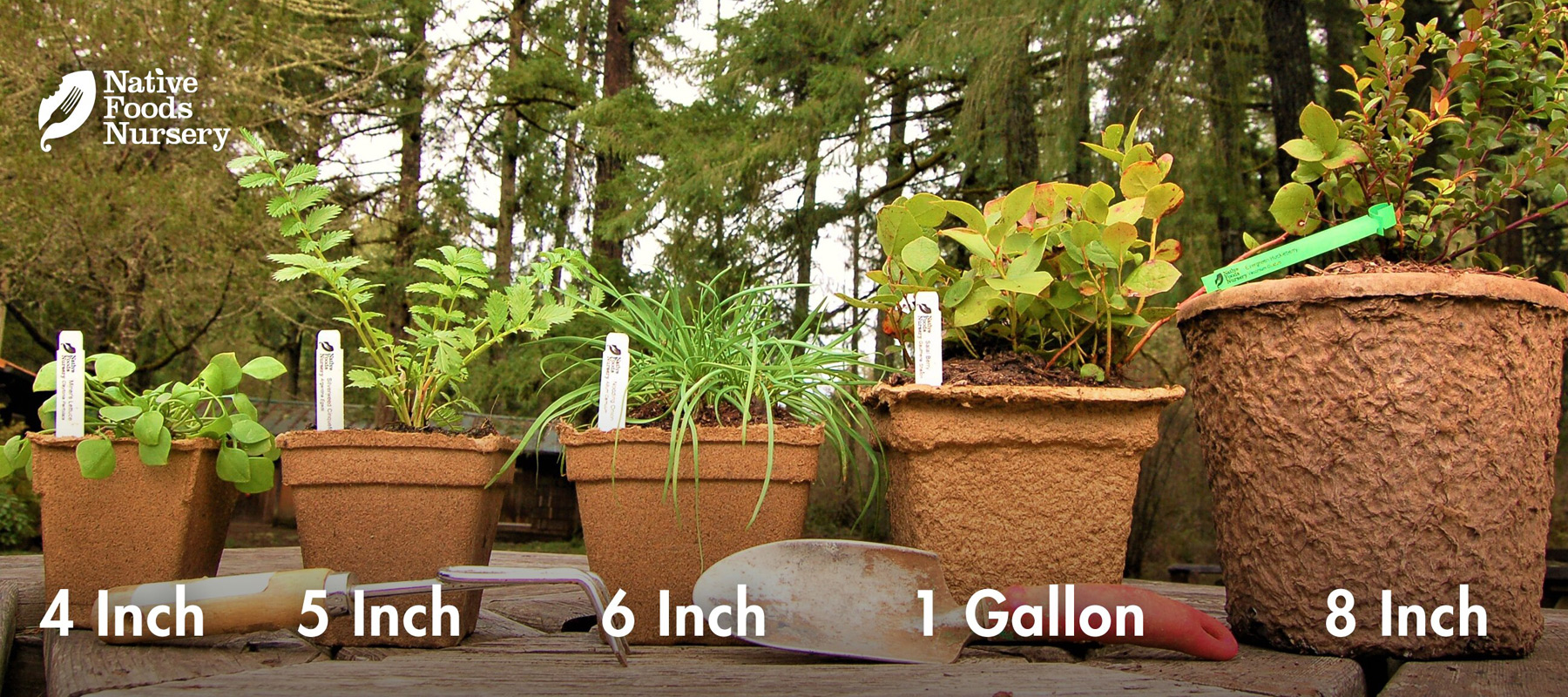
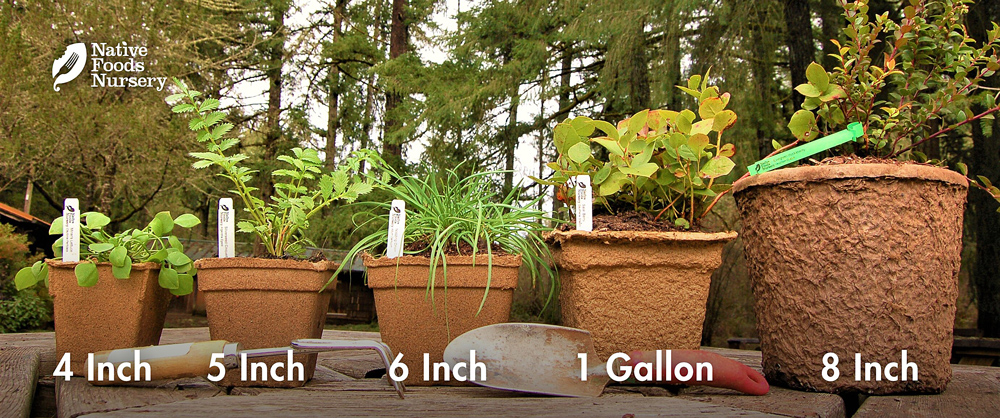
Pot Sizing Guide
Planting Guide: Buffaloberry (Shepherdia argentea)
Tip: Plant several together — it's dioecious and needs both male and female plants for fruit, and since we don't sex our plants, a small group is your best bet for berries.
When Your Plant Arrives
Open the box promptly and lift your plant out gently, holding the pot rather than the stem. Leave it in its biodegradable eco-pot for now — the roots are settled and don’t need disturbing yet. Give it a slow, thorough drink until water runs through the bottom, then set it somewhere bright but sheltered, out of harsh afternoon sun, drying wind, and frost. Let it rest and acclimate there for a few days before planting, so the move from our greenhouse to your garden is a gentle one. If anything doesn’t look right, please contact customer service within 7 days of delivery and we’ll take care of you.
Choosing a Site
Light: Full sun.
Soil: Lean, well-drained; tolerates poor, dry, even salty ground.
Space: 6–10 ft apart; plant a group.
Planting Steps
Plant in fall or spring.
If it came in a biodegradable eco-pot, plant it pot and all — the pot is pressed from composted cow manure, so it melts into the soil and gives the young roots their first feed. No need to remove it.
Set at the depth it grew, firm, and water in. Group several plants so you have both sexes (see Protection).
Watering & Care
Establishment: Light water the first year.
After establishment: Very drought-, cold-, and salt-tolerant.
Maintenance: Minimal — and as a nitrogen-fixer it quietly enriches the soil.
Protection
Deer: Generally tolerant.
Wildlife: Early flowers for pollinators; berries for birds.
Pollination: Dioecious — you need both a male and a female plant for fruit, so plant a group.
Harvest Basics
Season: Berries in late summer, sweetest after the first frost.
Use: The scarlet berries are tart but pleasant — eat sparingly raw, or cook into jelly, compote, and preserves.
Note: They are rich in saponins and foam when whipped (traditionally made into a frothy “Indian ice cream”), which makes them a touch soapy raw — so enjoy in moderation, cooked and sweetened.
