



Sugar Pine
- Current Stock:
- 0
- Other Names:
- Sugarcone Pine, Lambert's Pine, Big-cone Pine, Sugar Tree, Sweet Pine, Natele (Umpqua)
- Latin Name:
- Pinus lambertiana
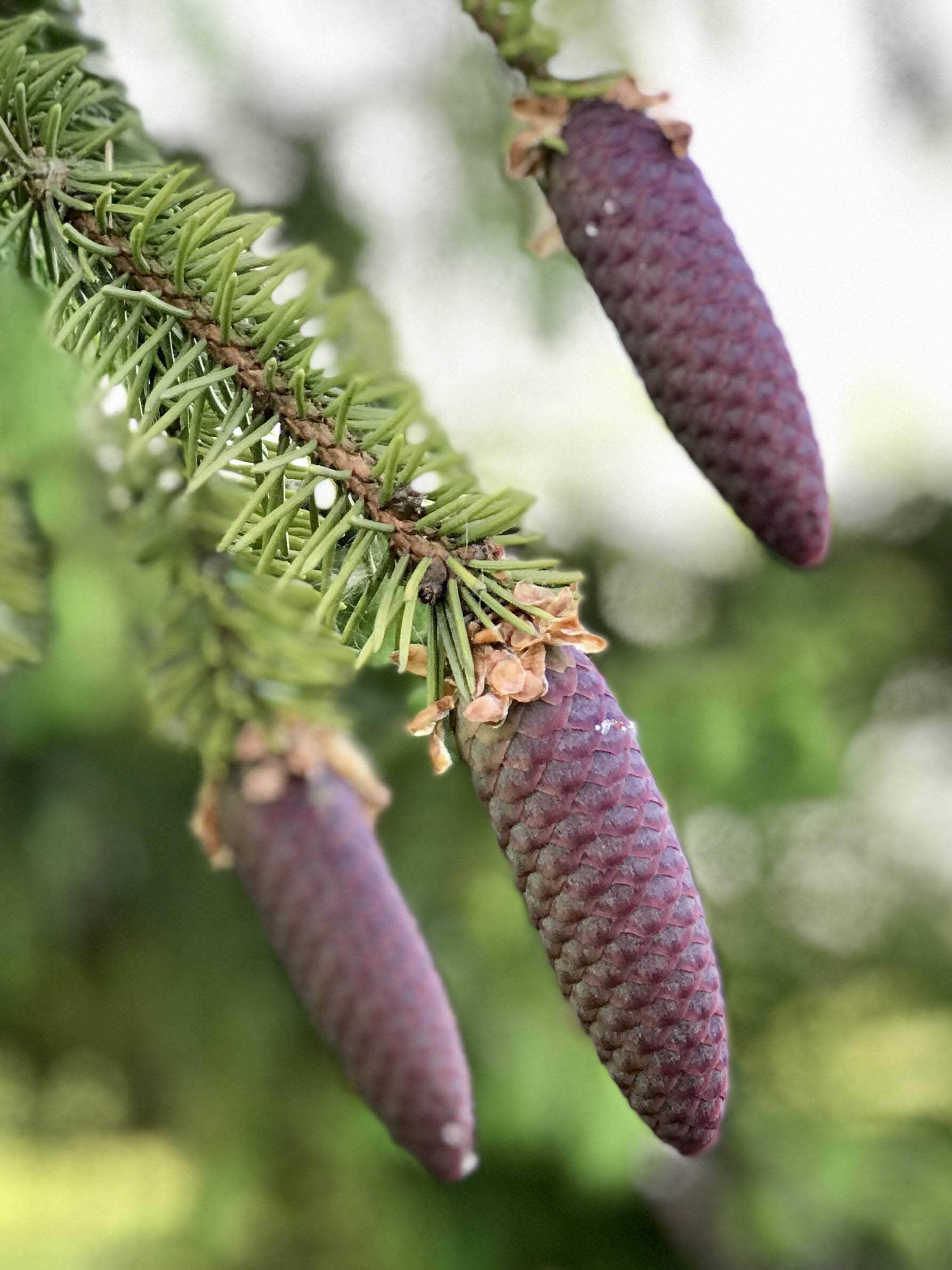
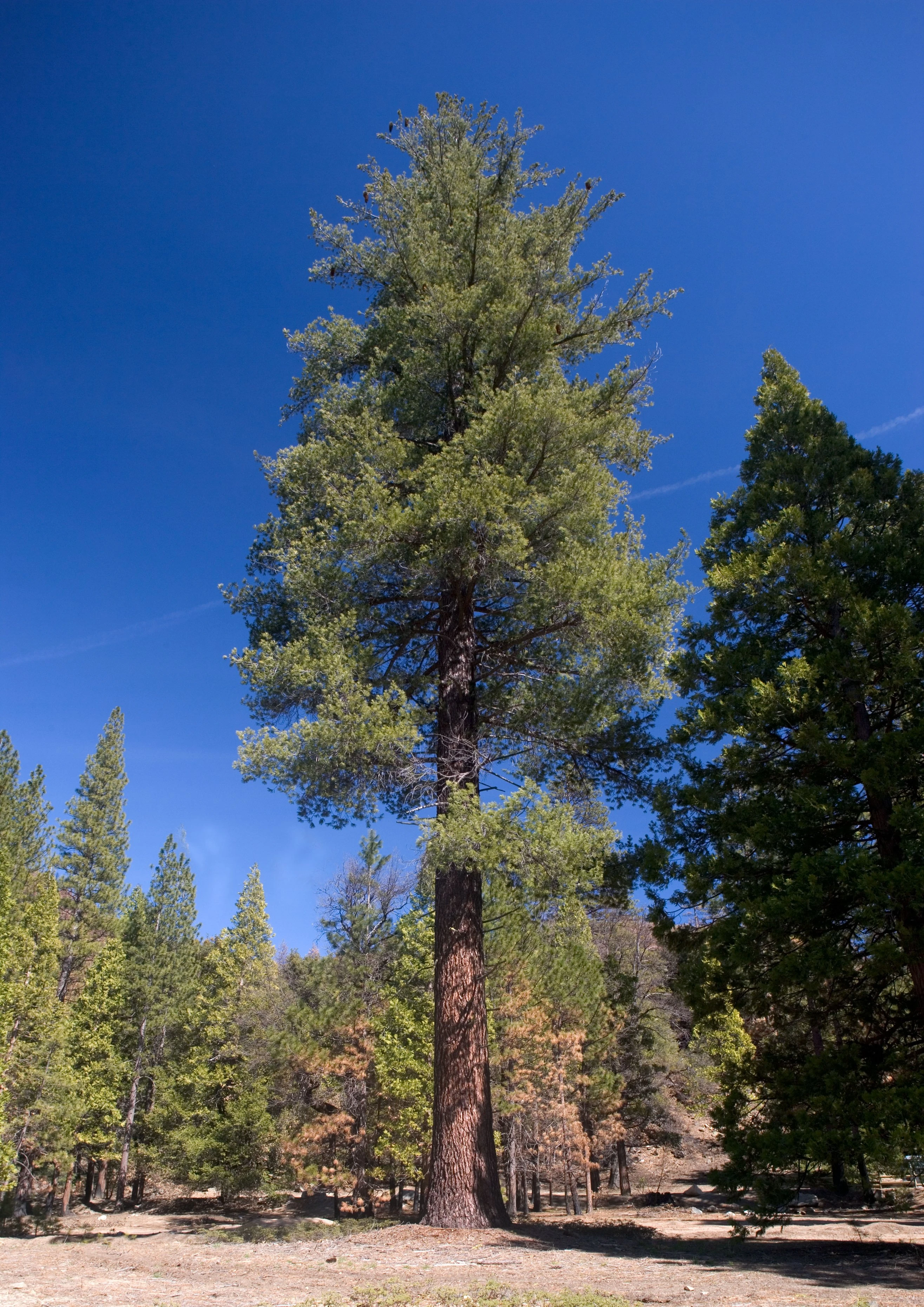
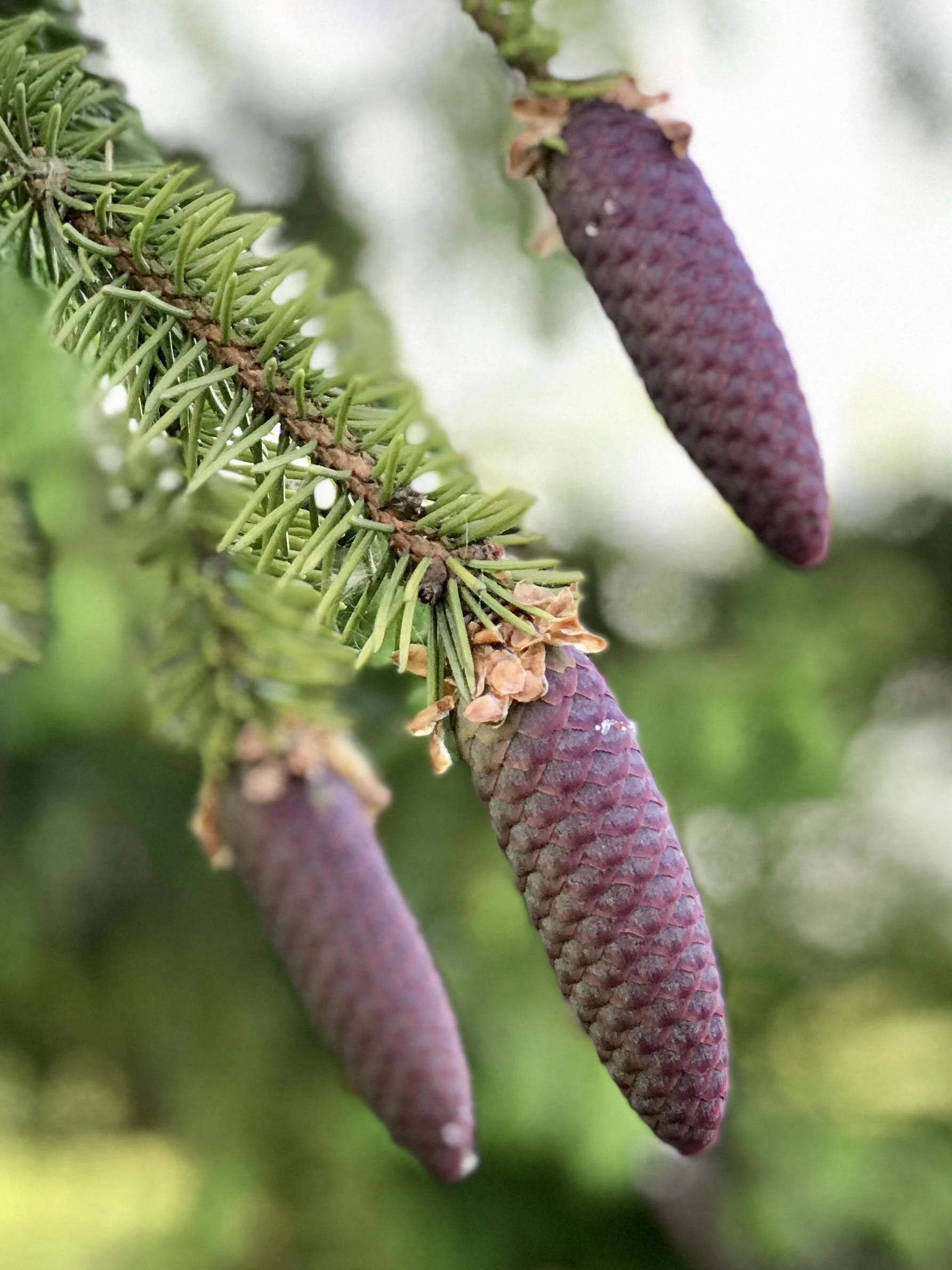
The tallest of all pines and a legend of the Western mountains, Sugar Pine bears sweet, oily, highly edible seeds and those spectacular extra-long cones that captivate every passerby. In food forests it complements pinyons and gray pine—offering excellent nut quality with the stature of a grand shade tree [1][2][6]. A climate-change-ready PNW permaculture all-star!
Notes: Seed source - Southern Oregon. See comparison table of all our nut pines HERE. If you're ordering more than 20 nut trees for restoration, please contact us first (we can grow as many as you'd like, but it may take a season).
Edible Uses
Sugar Pine seeds are sweet, rich, and pleasantly oily, excellent raw, roasted, or ground; they’ve long been gathered as a mountain staple food and compare favorably in flavor with pinyon nuts (though cones are higher and harvests more intermittent) [2][5][9].
The tree’s name comes from its sweet, amber-colored resin, which is eaten raw or dissolved in water as a natural candy and mild medicinal tonic. In a pinch, thin shavings of the inner bark (spring cambium) can be eaten fresh or lightly roasted; it can also be dried and pounded to extend flours—take only small vertical strips so you don’t girdle the tree [5][9].
Ornamental Qualities
Graceful, upswept branches; needles in fives with a soft blue-green cast; and iconic very long cones make Sugar Pine a showstopper in large landscapes [1][2]. For drought-savvy, habitat-rich plantings, pair with other Native Foods Nursery species like Oregon White Oak, California Black Oak, Serviceberry, Ceanothus (nitrogen-fixer), and native bunchgrasses to create an open, climate-resilient savanna edge [3][6][10].
Environment and Culture
Native to the Sierra Nevada, southern Cascades, and coastal ranges of CA–OR, Sugar Pine anchors montane mixed-conifer forests with deep winter moisture and dry summers [1][2]. It’s susceptible to white pine blister rust (Cronartium ribicola), but rust-tolerant selections and silvicultural practices (airflow, site choice) support establishment and longevity [4][6][7].
In the Pacific Northwest, Sugar Pine grows very well in dry foothills, rocky uplands, and rain-shadow slopes, but struggles in wet, heavy, lowland soils.
It’s a worthy climate-resilient species for long-term restoration and nut forestry—provided you give it drainage and space.
Indigenous communities continue to harvest and tend pine nuts as living food traditions, sustaining relationships with place and with these trees today. Honoring Indigenous stewardship is essential; see our Charitable Giving page for ways to support ongoing cultural and ecological work [5][9].
Harvest, Care, and Preparation
Choose full sun and excellent drainage (benches, mounds, or rocky slopes mimic mountain soils). Water regularly for 2–3 years; reduce thereafter—Sugar Pine is drought-tolerant once established in suitable climates [2][6]. Minimal pruning beyond structural training. Cones ripen late summer to fall; many drop naturally—collect promptly (wildlife competition is intense). Expect longer juvenile periods than pinyons; nut production typically begins ~20–30 years from planting in good sites [2][6][8].
In the Kitchen
Sweet and oily, sugar-pine seeds are excellent raw, roasted, or ground into meal for baking; toast them for salads and pestos as you would any pine nut. The tree's sweet amber resin was even eaten as a natural candy. (Gather the enormous cones as they open.)
Attributes
- Native Range: CA–OR mountains (Sierra Nevada, S. Cascades, coastal ranges) [1][2][3]
- USDA Zones: 5–8 (best in montane, winter-moist summer-dry climates) [2][6]
- Ease of Care: Moderate (easy after establishment; needs good drainage) [2][6]
- Deer Resistance: Moderate (protect young trees) [6]
- Light Requirements: Full sun [2]
- Soil Type: Well-drained, rocky/loamy mountain soils; avoid waterlogging [2][6]
- Water Requirements: Moderate during establishment, then low; drought-tolerant in suitable sites [2][6]
- Pollination: Wind-pollinated; monoecious (male/female cones on same tree) [2]
- Bearing Age: ~20–30 years in good sites (later than pinyons) [2][6][8]
- Size at Maturity: 120–200+ ft; broad crown with age [1][2]
- Plant Spacing: 25–40+ ft (allow for crown spread and roots) [6]
- Bloom/Pollen Time: Late spring–early summer (region dependent) [2]
- Harvest Time: Late summer–fall as cones mature/drop [2][6]
- Notes: Susceptible to white pine blister rust; choose airy sites, monitor health; consider rust-tolerant stock where available [4][7
References
[1] USDA PLANTS Database — Pinus lambertiana (taxonomy, range, morphology).
[2] Flora of North America — P. lambertiana treatment (habitat, characters, ecology).
[3] Jepson eFlora (California) — distribution, habitat notes.
[4] USFS Forest Health / White Pine Blister Rust — host susceptibility & management context.
[5] Moerman, Native American Ethnobotany — food uses of Sugar Pine (seeds, pitch, inner bark).
[6] USFS Silvics/Plant Guides — growth, ecology, silviculture, drought notes.
[7] Rust-resistance literature (USFS/PNW Station & program reports) — breeding/tolerance summaries.
[8] Native Plant Network / Extension — cultivation guidance; bearing timelines in plantings.
[9] Turner & other ethnobotany works — Indigenous food use & tending.
[10] Pojar & MacKinnon, Plants of the Pacific Northwest Coast — community associates & natural history.
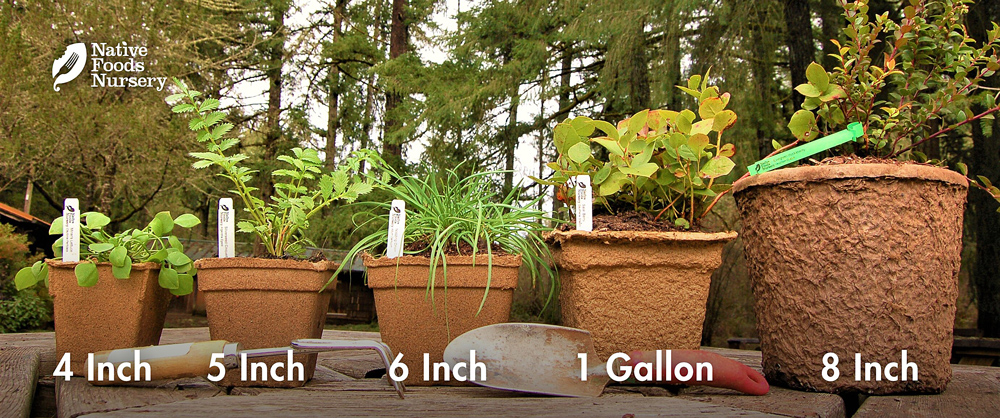
Pot Sizing Guide
Planting Guide: Sugar Pine (Pinus lambertiana)
Tip: Think “mountain edge.” Prioritize excellent drainage, full sun, and a roomy site; plant young stock to minimize transplant shock.
When Your Plant Arrives
Open the box promptly and lift your plant out gently, holding the pot rather than the stem. Leave it in its biodegradable eco-pot for now — the roots are settled and don’t need disturbing yet. Give it a slow, thorough drink until water runs through the bottom, then set it somewhere bright but sheltered, out of harsh afternoon sun, drying wind, and frost. Let it rest and acclimate there for a few days before planting, so the move from our greenhouse to your garden is a gentle one. If anything doesn’t look right, please contact customer service within 7 days of delivery and we’ll take care of you.
Choosing a Site
Light: Full sun.
Soil: Deep and well-drained — excellent drainage is essential. In the PNW especially, give it a dry, open, sunny site: it matters for disease resistance as much as for the roots (see Protection).
Space: Plenty of room; it grows into one of the tallest of all pines. Keep it well away from structures and lines.
Planting Steps
Plant in fall or early spring.
If it came in a biodegradable eco-pot, plant it pot and all — the pot is pressed from composted cow manure, so it melts into the soil and gives the young roots their first feed. No need to remove it.
Set at the depth it grew, backfill, firm, water in, and mulch off the trunk.
Watering & Care
Establishment: Water through the first dry summers as the soil dries between soakings.
After establishment: Drought-tolerant once deep-rooted; give it excellent drainage.
Protection
White pine blister rust: Sugar pine is a five-needle white pine and susceptible to white pine blister rust, a serious disease in the cool, moist Pacific Northwest. The rust needs an alternate host to complete its cycle — currants and gooseberries (Ribes) — so keep sugar pine well away from them. Cut the risk further by planting on a warm, dry, open, well-drained site with good air movement (infection is favored by cool, damp, stagnant conditions), pruning off the lowest branches as the tree grows, and choosing rust-resistant stock where you can find it.
Deer: Browse young trees — protect until above browse height.
Wildlife: The enormous cones (the longest of any conifer) and rich seeds feed birds and squirrels.
Note: A future giant — site with room to soar.
Harvest Basics
Season: Fall, as the long cones ripen and open.
Prep: Shake or pry the large seeds from opened cones and crack the shells.
Use: Sweet, rich, and oily — excellent raw, roasted, or ground; a traditional mountain staple. The crystallized sugary sap that names the tree is edible in tiny amounts but mildly laxative in quantity, and tapping harms the tree, so enjoy the seeds instead.
