


Licorice Fern
- Current Stock:
- 0
- Other Names:
- Many-footed Fern, Sweet-root Fern
- Latin Name:
- Polypodium glycyrrhiza
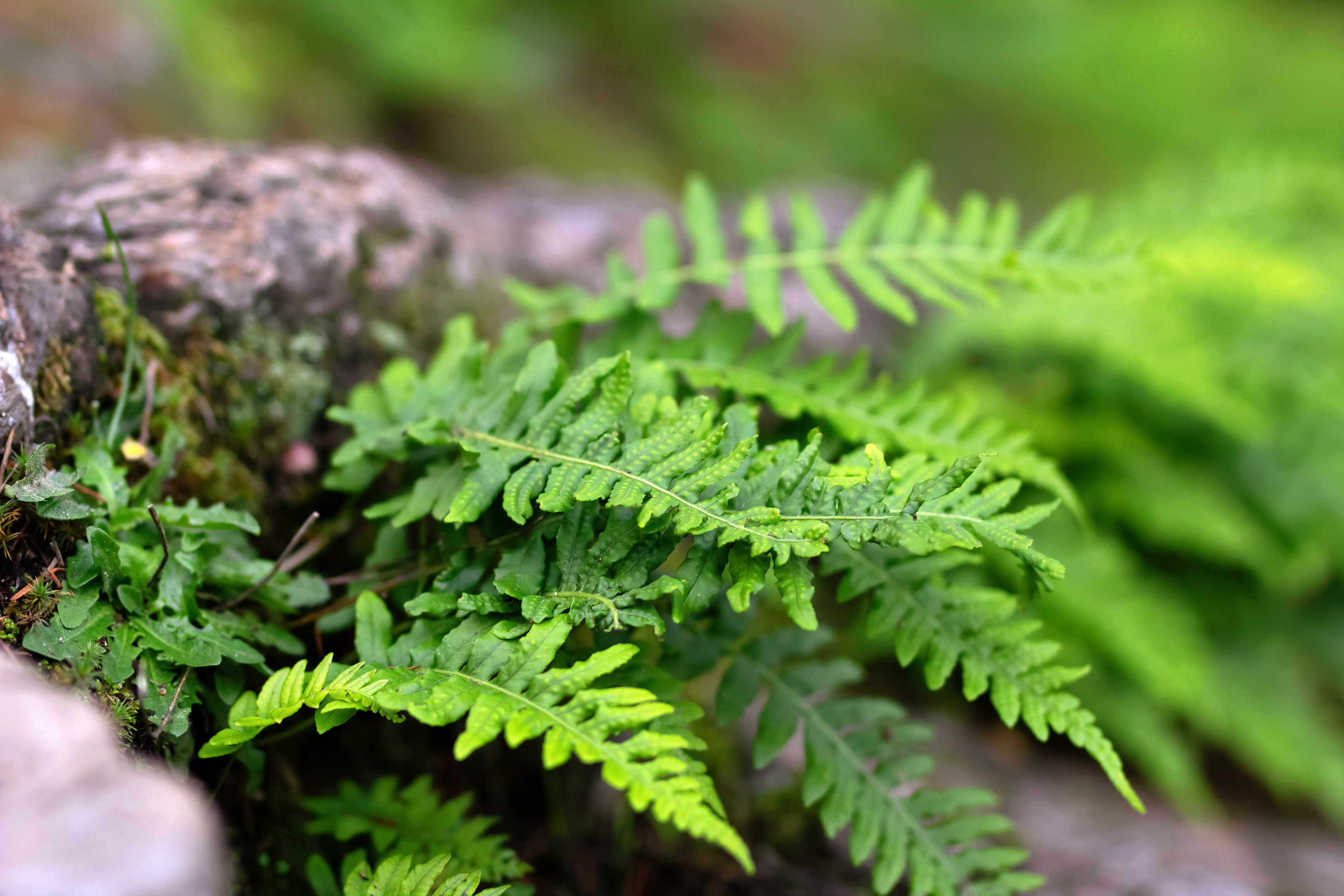
The Licorice Fern (Polypodium glycyrrhiza) is a charming little evergreen fern of the mossy Northwest woods — arching, deep-green fronds that spring straight from tree trunks, logs, and rocks — whose creeping rhizome tastes vividly of sweet licorice.1, 2
Reminder: They are dormant (no leaves) during the Summer.
NOTE: Ferns may arrive with fronds dormant or trimmed — fresh growth follows.
Edible & Medicinal Uses
The reddish, creeping rhizome tastes of sweet licorice and anise — the name glycyrrhiza means "sweet root."4 It has long been chewed as a sweet woodland treat and breath-freshener, used to sweeten foods and to mask bitter medicines, and valued as a remedy for coughs, colds, and sore throats — the cough drop of its day, used raw, boiled, or baked. Modern herbalists use it in much the same way.3 It's a flavoring and a medicine more than a staple food — traditional use, not medical advice.
Ornamental Qualities
Licorice Fern forms lush mats of gracefully arching, triangular, once-divided fronds, ten to twelve inches long (sometimes to two feet), with finely toothed leaflets.1 It's a winter-green wonder: fresh and green from fall through spring, then summer-deciduous, dying back in the dry season and reviving with the autumn rains. It's magical draped over a mossy log, stump, rock wall, or shady nook — and a lovely container or bark-mounted subject.2
Environment & Culture
Ecology: Native to moist coastal forests from Alaska to central California and the Columbia Gorge, at low elevations, Licorice Fern is famously an epiphyte on the mossy trunks and branches of bigleaf maple — and also grows on logs, stumps, rocks, and mossy ground.1 Its winter-green habit brings life to the forest through the grey, wet months.2
Culture: Licorice Fern is chewed and valued by many coastal peoples — among them the Squamish, shishalh (Sechelt), Comox, Nuxalk, Haida, and Kwakwaka'wakw — for its sweet rhizome and as a medicine for coughs and sore throats.4 Because the mossy beds it grows in are fragile, growing your own is far kinder than harvesting from the wild. We offer it with respect for that living knowledge and invite support for Indigenous-led restoration through our Charitable Giving page.3
In the Garden & Kitchen
Grow it on a mossy log or shaded rock for its beauty, and for a taste, slice a small piece of the sweet rhizome to chew like nature's own licorice, or steep it into a mild, sweet, throat-soothing tea. A little goes a long way. (Growing details are on the Planting Guide tab.)
Attributes
- Native Range: Alaska to central California & Columbia Gorge; moist coastal forest1
- USDA Zones: ~6–92
- Light: Part shade to full shade1
- Water: Moist fall–spring; summer-dormant (dislikes stagnant "wet feet")2
- Soil: Humus-rich, well-drained; mossy logs, rocks, or ground1
- Habit: Semi-evergreen fern, ~1 ft; creeping rhizome2
- Edible/Medicinal: Sweet licorice rhizome (chew, tea, flavoring)4
References
- Wikipedia & Flora of the Pacific Northwest, Polypodium glycyrrhiza; Washington Native Plant Society.
- Pojar, J. & MacKinnon, A., Plants of the Pacific Northwest Coast, 2014; CalFlora Nursery.
- Moerman, D., Native American Ethnobotany, 1998.
- Calflora / University of Puget Sound Natural History (glycyrrhiza = "sweet root"; Indigenous use).
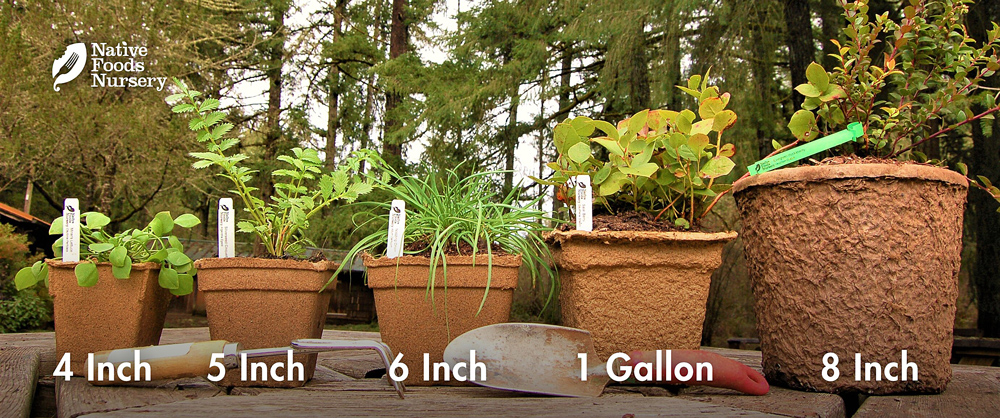
Pot Sizing Guide
Planting Guide: Licorice Fern (Polypodium glycyrrhiza)
Tip: Think "mossy log in the shade." Give it shade, humusy moisture in the cool season, and sharp drainage — it hates stagnant water, and it naturally goes summer-dormant, so don't panic when it rests.
When Your Plant Arrives
Open the box promptly and lift your plant out gently, holding the pot rather than the stem. Leave it in its biodegradable eco-pot for now — the roots are settled and don’t need disturbing yet. Give it a slow, thorough drink until water runs through the bottom, then set it somewhere bright but sheltered, out of harsh afternoon sun, drying wind, and frost. Let it rest and acclimate there for a few days before planting, so the move from our greenhouse to your garden is a gentle one. If anything doesn’t look right, please contact customer service within 7 days of delivery and we’ll take care of you.
Choosing a Site
Light: Part shade to full shade.
Soil: Humus-rich, well-drained, slightly acidic; a mossy log, stump, or rock is ideal — it is a natural epiphyte.
Space: Tuck into moss or humus; it creeps to form patches.
Planting Steps
Plant in fall or spring, while it is in active growth.
If it came in a biodegradable eco-pot, plant it pot and all — the pot is pressed from composted cow manure, so it melts into the soil and gives the young roots their first feed. No need to remove it.
Nestle the rhizome just at the surface of mossy, humusy soil, or tuck it into a mossy log or rock crevice; keep it snug and water in.
Watering & Care
Fall–spring: Keep evenly moist while it is green and growing.
Summer: Let it dry and go dormant — this is normal; it revives with the fall rains, so don’t summer-water it.
Protection
Deer: Resistant.
Wildlife: Fronds add cool-season greenery and shelter.
Harvest Basics
Season: The reddish, creeping rhizome is at its sweetest in the cool months.
Use: Slice a small piece to chew for its sweet licorice-anise flavor, or steep it as a tea — a woodland nibble and flavoring, not a staple. Take little and leave the rest, and enjoy in moderation.
