


Pacific Blackberry
- Current Stock:
- 0
- Other Names:
- Pacific Dewberry, california Blackberry, california Dewberry
- Latin Name:
- Rubus ursinus
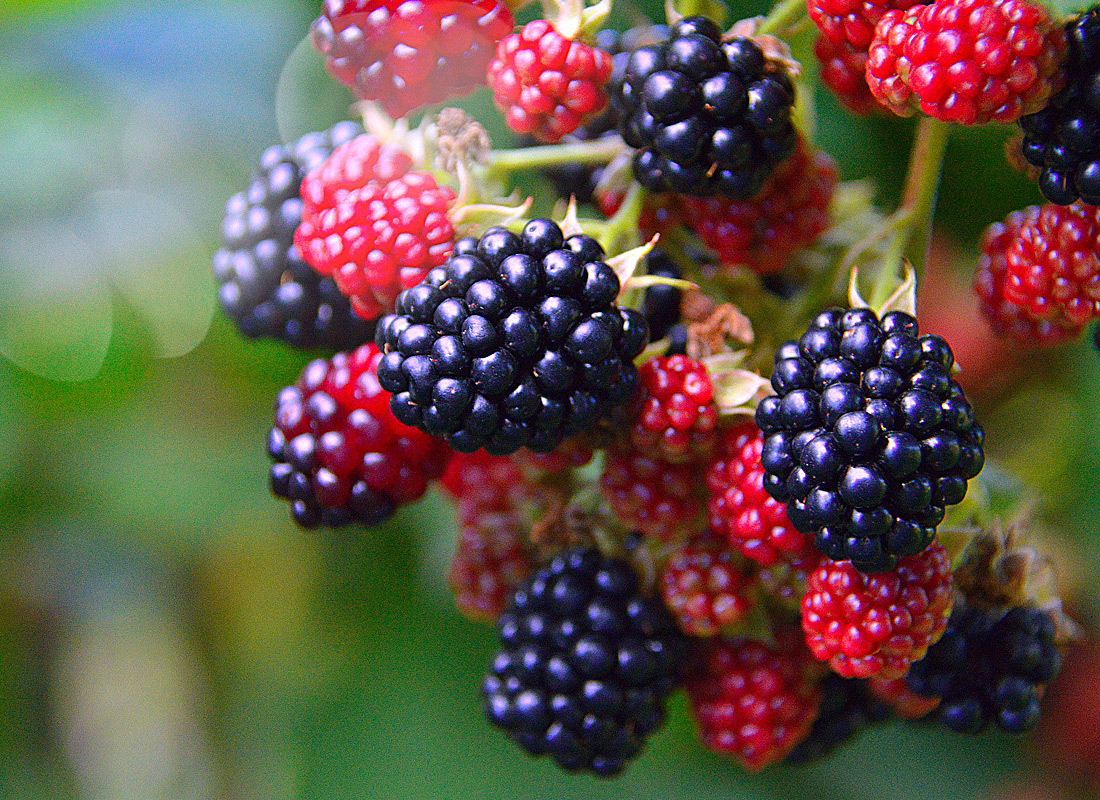
Pacific Blackberry (Rubus ursinus) is the Pacific Northwest’s own wild trailing blackberry—small, intensely aromatic berries on graceful, vining canes, prized for flavor and for the wildlife it feeds. It is the native parent behind nearly every famous Northwest berry, from Loganberry to Marionberry. Let it ramble as a woodland edge or train it on a trellis for easier picking. [1][3]
Note: Pacific Blackberry is mostly dioecious—male and female flowers grow on separate plants, and only females fruit. We ship unsexed plants, so plant 2–3 to ensure fruiting. [2] Looking for a thornless, self-fruitful berry? See our Thornless Blackberry (‘Columbia Star’).
Edible Uses
Smaller berries, big flavor—fragrant and richly sweet-tart. Eat fresh, dry, or cook into jams, syrups, and pies. Traditional foods include dried cakes and beverages; young shoots can be eaten raw or steamed; leaves are used for teas. Blackberry fruit is naturally rich in anthocyanins and other phenolics with notable antioxidant capacity. [3][4][5]
Ornamental Qualities
White, lightly fragrant spring flowers lead to ruby-to-black fruit against lush summer foliage. Let it trail and weave as a wildlife-friendly understory or living edge, or train it on a simple trellis alongside Red Flowering Currant and Evergreen Huckleberry for a multi-season native edible border. [1][3]
Environment and Culture
Rubus ursinus ranges from British Columbia through California and inland to Idaho; its flowers support pollinators and its fruit feeds birds and mammals. Native trailing blackberry genetics run through the region’s famous cultivars—‘Marion’ is about 44% R. ursinus. Indigenous communities continue to harvest and tend Pacific Blackberry as living food and medicine. [3][5][6] These strong and recovering peoples and plants deserve our respect, gratitude, and reparations. (Learn more & how to help on our Charitable Giving page.)
Harvest, Care, and Preparation
Site & soil: Full sun to part shade; well-drained, organic-rich soil. Keep even moisture for best berry size. [1]
Pruning: Fruits on second-year canes (floricanes). Tie new canes to wires in year one; after harvest, remove the canes that fruited. [1]
Pollination: Females need pollen from male plants—plant multiples. [2]
Harvest: Mid-summer into early fall, picked singly as berries blacken and detach easily. Pick the young, tender shoots in early spring and steam them or add to soups like a vegetable. [3]
(See Planting Guide in next tab for more info.)
In the Kitchen
Cook the intense Pacific blackberry into jam, syrup, cobbler, and pie, or dry it into fruit cakes. Steam the tender young shoots as a spring vegetable, and steep the leaves into a mild tea.
Attributes
Native Range: BC to CA; inland to ID (also into northern Mexico) [3]
USDA Zones: ~6–9 (provenance dependent; trailing types are less cold-hardy than erect forms) [1]
Ease of Care: Easy once established
Deer Resistance: Moderate (protect new growth)
Light Requirements: Full sun to part shade
Soil Type: Best in well-drained, organic-rich soils; adaptable
Water Requirements: Low–moderate; summer moisture improves crops
Pollination: Mostly dioecious (male/female plants); only females fruit [2]
Bearing Age: ~2 years
Size at Maturity: Low mound 2–5 ft high; trailing canes 6–20 ft (trellis recommended) [3]
Plant Spacing: 2–4 ft (closer for hedging)
Bloom Time: Spring (region dependent) [3]
Harvest Time: Mid/late summer (varies by site) [3]
References
[1] OSU Extension — Growing Blackberries in Your Home Garden (training, trellis, pruning).
[2] Flora of North America — Rubus ursinus (dioecy; morphology).
[3] USFS Fire Effects Information System — Rubus ursinus (distribution; ecology; season).
[4] Washington Native Plant Society — Rubus ursinus (ethnobotany, uses).
[5] Siriwoharn et al., 2004 — Blackberry anthocyanins/phenolics; antioxidant metrics.
[6] Oregon Encyclopedia — “Marionberry” (pedigree ≈44% R. ursinus).
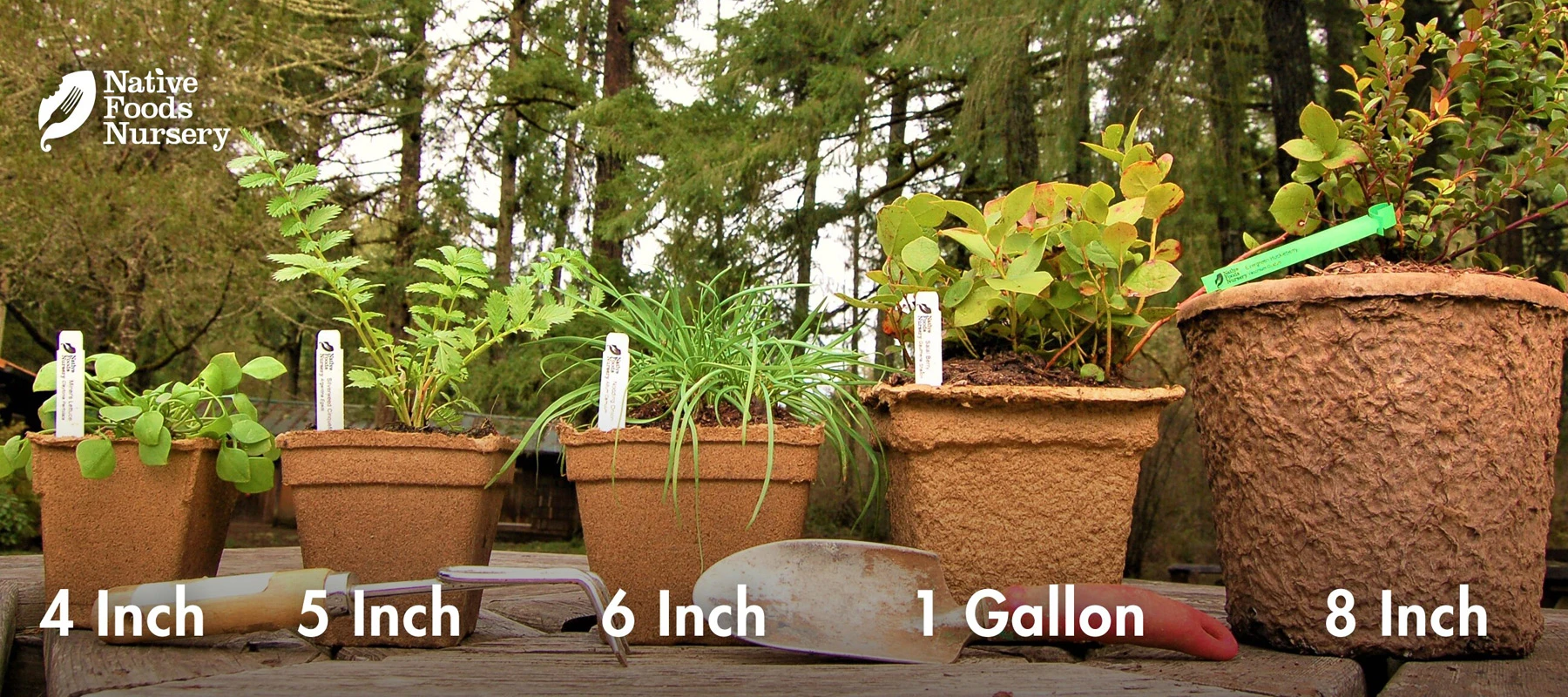
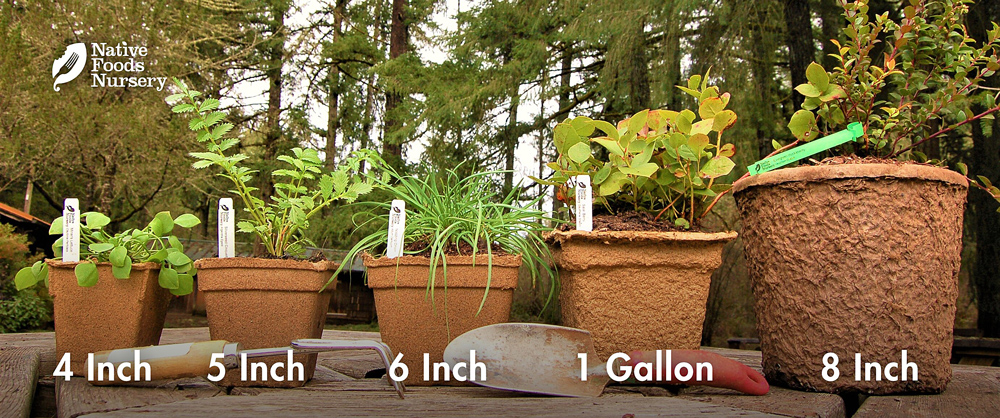
Pot Sizing Guide
Planting Guide: Pacific Blackberry (Rubus ursinus)
Tip: Think “woodland edge” — or a simple two-wire trellis for easy picking. Give full sun, well-drained organic soil, and steady summer moisture for plump berries. Train canes on wires for easy picking; mulch yearly to keep roots cool and weeds down.
When Your Plant Arrives
Open the box promptly and lift your plant out gently, holding the pot rather than the stem. Leave it in its biodegradable eco-pot for now — the roots are settled and don’t need disturbing yet. Give it a slow, thorough drink until water runs through the bottom, then set it somewhere bright but sheltered, out of harsh afternoon sun, drying wind, and frost. Let it rest and acclimate there for a few days before planting, so the move from our greenhouse to your garden is a gentle one. If anything doesn’t look right, please contact customer service within 7 days of delivery and we’ll take care of you.
Choosing a Site
Light: Full sun to light shade (best yields with 6–8+ hours of sun).
Soil: Well-drained loam or sandy loam enriched with compost; avoid waterlogging. Slightly acidic to neutral soils are ideal.
Space: 2–4 ft for a naturalized edge or trained row; give room for trailing canes.
Planting Steps
Timing: Plant in early spring as soil becomes workable, or in fall where winters are mild.
If it came in a biodegradable eco-pot, plant it pot and all — the pot is pressed from composted cow manure, so it melts into the soil and gives the young roots their first feed. No need to remove it.
Prepare: Dig a wide hole; blend native soil with composted bark/leaf mold for drainage and moisture retention.
Set: Place at the same depth as in the pot; spread roots, backfill, and water deeply to settle.
Mulch: 2–3 inches of wood chips or leaves (keep mulch a few inches off the crowns).
Watering & Care
Establishment (years 0–2): Keep soil evenly moist—especially during bloom and fruit fill.
After establishment: Moderate water needs; consistent summer moisture improves berry size, firmness, and flavor.
Feeding: Top-dress with compost each spring; avoid heavy nitrogen (excess vegetative growth can reduce fruiting).
Training & Pruning
Pacific Blackberry is a summer-bearing, trailing blackberry that fruits on second-year canes (floricanes).
- Year 1 (primocanes): Guide new canes along a two-wire trellis; tip lightly to encourage laterals.
- Year 2 (floricanes): Fruiting laterals develop; tie securely for support.
- After harvest: Remove spent floricanes to the base; keep 6–8 of the best new primocanes per plant for next season.
Pollination & Bloom
Mostly dioecious—only female plants fruit. Because nursery stock may be unsexed, plant 2–3 plants to improve the chance of having both sexes present.
Protection
Wildlife: Birds love ripe fruit—use lightweight netting as berries color. Deer may browse tender shoots; protect young plants as needed.
Airflow & sanitation: Space plants for airflow; remove spent canes and fallen fruit after harvest to limit disease cycles.
Weeds: Maintain a mulch ring (2–3 ft) to reduce competition and conserve moisture.
Harvest Basics
Timeline: First meaningful crops typically in the second year after planting.
Season (PNW lowlands): Mid-summer into early fall; berries ripen sequentially and detach easily when fully black and aromatic.
Kitchen: Chill promptly or process the same day. Excellent fresh, frozen, or cooked into jams, syrups, pies, and crisps.
PNW Notes
West of the Cascades, summer-dry conditions make mulch and drip irrigation valuable for steady fruit fill. In hotter interior sites, provide afternoon shade if fruit sunscald appears. Trailing canes benefit from winter training when flexible; avoid cracking cold-stiff canes.
References
- OSU Extension — Blackberry Cultivars for Oregon (trailing types, season, management).
- OSU Extension — Growing Blackberries in Your Home Garden (training, trellis, pruning, spacing).
- Flora of North America — Rubus ursinus (native PNW trailing blackberry; plant sex).
- USFS Fire Effects Information System — Rubus ursinus (distribution, ecology, phenology).
- Washington Native Plant Society — Rubus ursinus (garden notes, ethnobotany).
- Siriwoharn, T. et al. (2004). Blackberry anthocyanins/phenolics and antioxidant properties across cultivars.
