



Oregon Stonecrop
- Current Stock:
- 0
- Other Names:
- Oregon Stonecrop
- Latin Name:
- Sedum oreganum
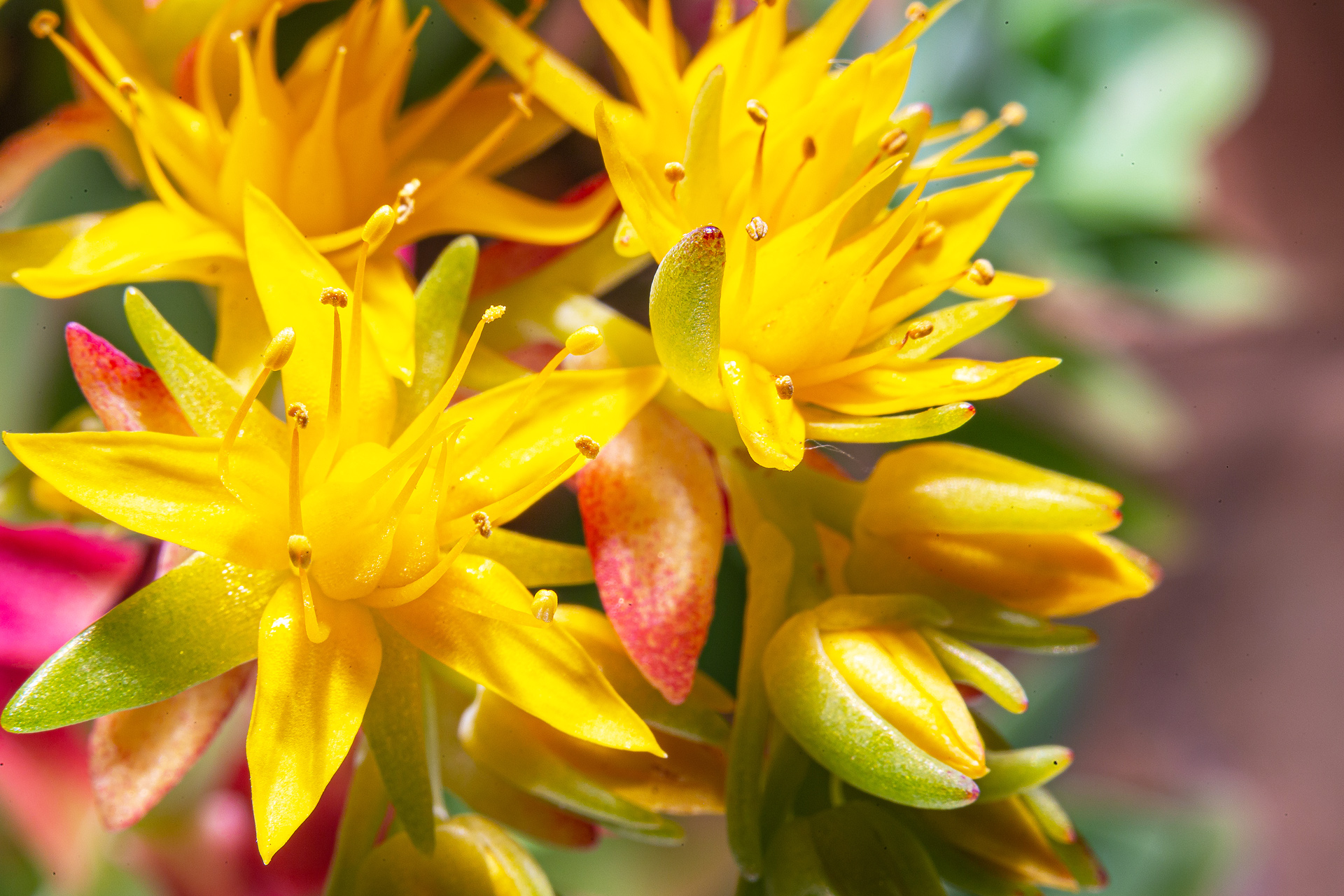
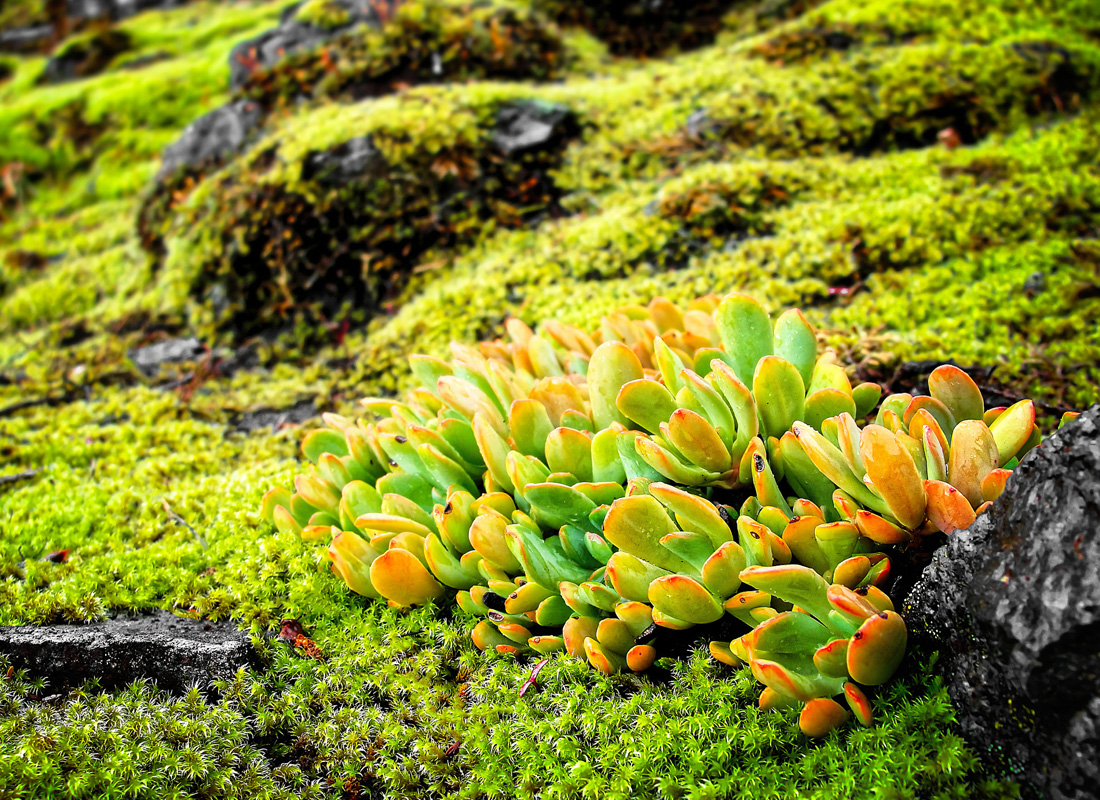
Oregon Stonecrop (Sedum oreganum) is a tough, cheerful native succulent that clads rocky ground in glossy, fleshy rosettes — green flushing to bronze-red in the sun — then lights up in summer with clusters of starry yellow flowers.2
NOTE: Native wildflowers are dormant (no leaves/flowers) Summer–Fall.
Edible & Medicinal Uses
The plump leaves and young shoots are edible — crisp and succulent with a mild, faintly sweet-tart snap that's fun in a wild salad, or lightly steamed with other greens. Like other yellow-flowered sedums it's best in modest amounts: a handful too many can upset the stomach, so treat it as a crunchy accent rather than a bulk green.3
Ornamental Qualities
A star of the rock garden, green roof, container, and dry border, Oregon Stonecrop forms a low evergreen mat that shifts from green to fiery red with sun and season, crowned by bright yellow star-flowers in summer. Drought-tolerant and deer-resistant, it thrives in the hot, lean, well-drained spots where little else will, and pairs handsomely with other sun-loving natives.2, 4
Environment & Culture
Ecology: Oregon Stonecrop grows on rocky outcrops, ledges, and gravelly slopes from sea level to about 1,500 m, across the Pacific Northwest from Oregon north to southern Alaska and from the coast to the Cascades. Its summer flowers are a nectar magnet for native bees and butterflies, and it hosts and shelters beneficial insects.1, 4
Culture: Northwest peoples value stonecrops as food and medicine — Makah women, for instance, eat the leaves medicinally. We offer this one with respect for that knowledge and invite support for Indigenous-led restoration through our Charitable Giving page.4
In the Kitchen
Snip a few tender shoots and scatter the crisp, juicy leaves raw over a summer salad or grain bowl for a succulent crunch, or drop them in at the last moment of a quick sauté of mixed greens. Their mild sweet-tart bite is a lively accent — a little goes a long way. (Growing and harvest details are on the Planting Guide tab.)
Attributes
- Native Range: Oregon to southern Alaska; coast to the Cascades1
- USDA Zones: ~5–92
- Light: Full sun to partial shade4
- Water: Dry to moderate; drought-tolerant once established4
- Soil: Gritty, lean, rocky, well-drained4
- Habit: Evergreen succulent mat, 2–6 in; spreads by rhizome4
- Bloom: Yellow stars, summer — strong pollinator draw4
- Deer Resistance: High
- Edible: Leaves & young shoots — enjoy in moderation3
References
- USDA PLANTS Database, Sedum oreganum.
- Pojar, J. & MacKinnon, A., Plants of the Pacific Northwest Coast, 2014.
- Plants For A Future (PFAF) Database, Sedum oreganum (edible use & moderation caution).
- Sparrowhawk Native Plants; Rainyside.com plant profile (ecology & ethnobotany).
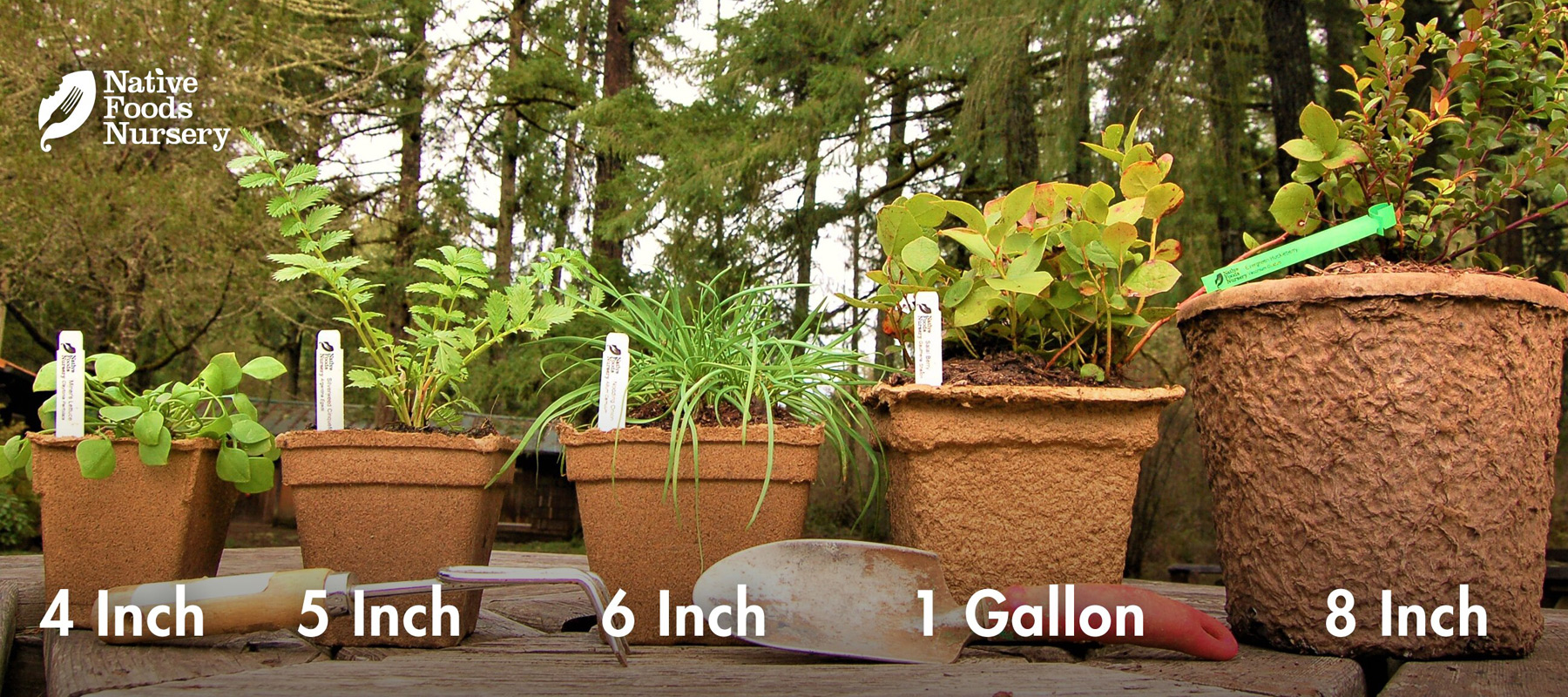
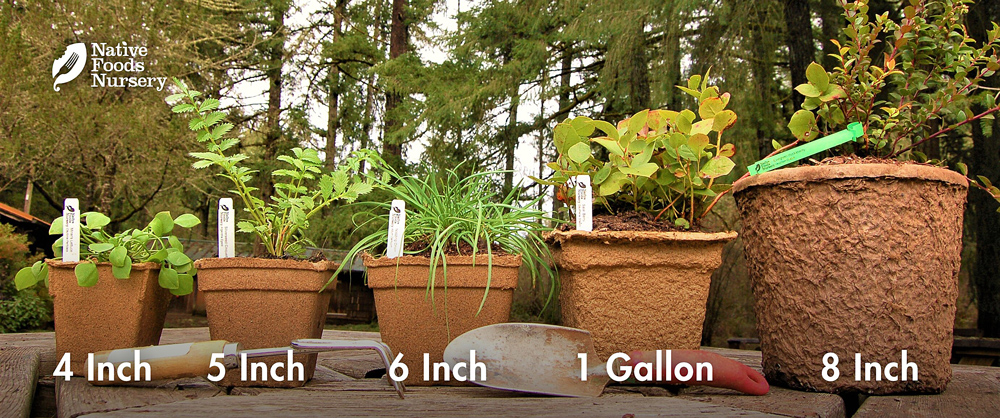
Pot Sizing Guide
Planting Guide: Oregon Stonecrop (Sedum oreganum)
Tip: Think "hot, lean, and rocky." Give it a sunny rock crevice, wall, gravel bed, or green roof and it will thrive on neglect.
When Your Plant Arrives
Open the box promptly and lift your plant out gently, holding the pot rather than the stem. Leave it in its biodegradable eco-pot for now — the roots are settled and don’t need disturbing yet. Give it a slow, thorough drink until water runs through the bottom, then set it somewhere bright but sheltered, out of harsh afternoon sun, drying wind, and frost. Let it rest and acclimate there for a few days before planting, so the move from our greenhouse to your garden is a gentle one. If anything doesn’t look right, please contact customer service within 7 days of delivery and we’ll take care of you.
Choosing a Site
Light: Full sun to partial shade (best color in sun).
Soil: Gritty, lean, rocky, sharply well-drained.
Space: About 12 in; it mats and creeps.
Planting Steps
Plant in spring or fall; set at soil level in gritty, well-drained soil.
If it came in a biodegradable eco-pot, plant it pot and all — the pot is pressed from composted cow manure, so it melts into the soil and gives the young roots their first feed. No need to remove it.
Firm gently and water in lightly — or simply press cuttings into the ground, since it roots readily.
Watering & Care
Establishment: Light water until rooted; avoid soggy soil.
After establishment: Drought-tolerant; prefers to stay dry, especially in winter.
Protection
Deer: High resistance.
Wildlife: Summer flowers are a strong nectar draw for native bees and butterflies.
Rot: The one real risk is wet feet — give it sharp drainage.
Harvest Basics
Use: Snip young shoots and leaves for a crisp, faintly sweet-tart bite in salads, or a quick saute.
Note: A yellow-flowered sedum with edible succulent leaves — enjoy in moderation.
