




Miner's Lettuce

- Current Stock:
- 0
- Other Names:
- Native Lettuce, Winter Purslane, Rooreh | Indigenous names — rooreh (Ohlone); piyada̲ (Western Mono); palsingat (Ivilyuat/Cahuilla)
- Latin Name:
- Claytonia perfoliata
Miner's Lettuce (Claytonia perfoliata) is a world-class native salad green — a tender, succulent annual whose distinctive round, cupped leaves, each pierced through the center by its own flower stalk, melt in the mouth with a mild, fresh crispness.2
Edible & Medicinal Uses
This is one of the finest wild greens on the continent: crisp, juicy, and mild, and so rich in vitamin C that Gold Rush miners ate it to stave off scurvy — the very habit that gave the plant its name. The leaves, stems, and flowers are all edible raw or lightly cooked (only the roots are left aside). Like spinach it carries some oxalates, so it's a wholesome everyday green enjoyed as part of a varied plate.1, 3
Ornamental Qualities
In the cool season Miner's Lettuce forms bright green carpets of round, succulent leaves — quietly charming as an edible groundcover and a generous self-seeder that returns on its own year after year. It fills the shady, moist gaps beneath shrubs and among Lady Fern and Redwood Sorrel.2
Environment & Culture
Ecology: A winter-and-spring annual of cool, moist, shaded ground, Miner's Lettuce ranges across western North America from Mexico to British Columbia, springing up after the rains. Its seeds feed native quail, mourning doves, and other birds.1, 2
Culture: Long gathered as food and medicine by Indigenous peoples from northern California to British Columbia — the Ohlone know it as rooreh — it is used fresh and as a soothing poultice. We offer it with respect for that knowledge and invite support for Indigenous-led restoration through our Charitable Giving page.3
In the Kitchen
It's at its best simply raw: pile the succulent rosettes into a spring salad with a bright vinaigrette, shaved radish, and a soft-boiled egg, or lay it under smoked fish. It also wilts quickly like spinach into scrambled eggs, soups, or a fast garlic sauté. Older leaves can turn bitter in summer heat, so harvest young.5 (Growing and harvest details are on the Planting Guide tab.)
Attributes
- Native Range: Western N. America, Mexico to British Columbia1
- USDA Zones: ~6–9 (grown as a cool-season annual)2
- Light: Partial sun to full shade2
- Water: Moist; cool-season growth2
- Soil: Moist, humus-rich; self-seeds readily2
- Habit: Slightly succulent annual; forms carpets1
- Nutrition: Notably high in vitamin C; also vitamin A & iron1
- Edible: Leaves, stems, flowers (raw or cooked); roots not eaten1
References
- USDA Forest Service (FEIS), Claytonia perfoliata; nutrition per Journal of the American Dietetic Association.
- Pojar, J. & MacKinnon, A., Plants of the Pacific Northwest Coast, 2014.
- Moerman, D., Native American Ethnobotany, 1998; Calflora / Jepson Herbarium (Indigenous names).
- Calflora, Claytonia perfoliata (range & description).
- "Miner's Lettuce," Forager Chef.
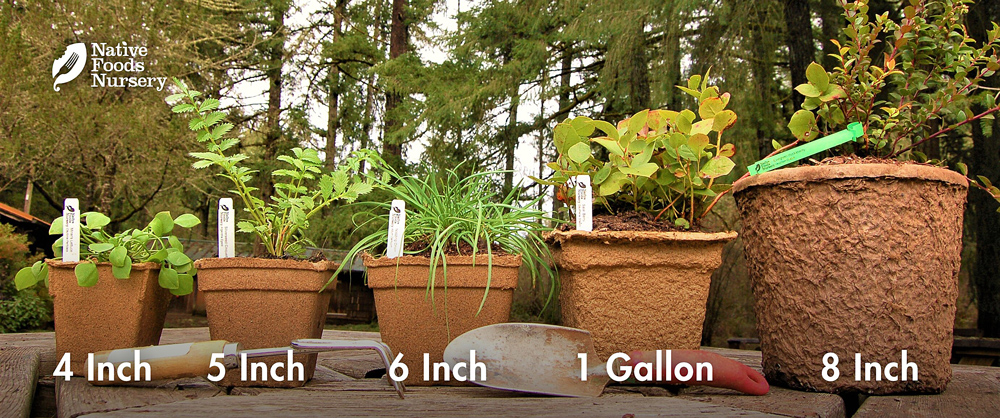
Pot Sizing Guide
Planting Guide: Miner's Lettuce (Claytonia perfoliata)
Tip: Sow it once in a cool, shaded bed and let it self-seed — it will return as a free salad-green groundcover every cool season.
When Your Plant Arrives
Open the box promptly and lift your plant out gently, holding the pot rather than the stem. Leave it in its biodegradable eco-pot for now — the roots are settled and don’t need disturbing yet. Give it a slow, thorough drink until water runs through the bottom, then set it somewhere bright but sheltered, out of harsh afternoon sun, drying wind, and frost. Let it rest and acclimate there for a few days before planting, so the move from our greenhouse to your garden is a gentle one. If anything doesn’t look right, please contact customer service within 7 days of delivery and we’ll take care of you.
Choosing a Site
Light: Partial sun to full shade.
Soil: Moist, humus-rich; keep it cool.
Space: Broadcast or thin to a few inches; it fills in and self-sows.
Planting Steps
Sow seed in fall or late winter on moist soil, or set out starts.
If it came in a biodegradable eco-pot, plant it pot and all — the pot is pressed from composted cow manure, so it melts into the soil and gives the young roots their first feed. No need to remove it.
Press seed in lightly; keep the surface damp until established.
Watering & Care
Establishment: Keep evenly moist for tender growth.
After establishment: Water in dry spells; heat and drought turn the leaves bitter and send it to seed.
Protection
Wildlife: Seeds feed quail, doves, and other birds.
Self-sows: Let some flower and seed and it returns each year.
Companions: Lady fern, redwood sorrel, shrub understories.
Harvest Basics
Season: Harvest leaves, stems, and little flowers young, before summer heat.
Use: One of the finest wild salad greens — crisp, juicy, mild, and famously high in vitamin C (Gold Rush miners ate it against scurvy). Best raw in salads; wilts like spinach when cooked.
