



Marionberry
- Current Stock:
- 0
- Other Names:
- Marion Blackberry, Blackberry Marion, Oregon Blackberry, Queen of Blackberries
- Latin Name:
- Rubus ursinus × idaeus 'Marion'
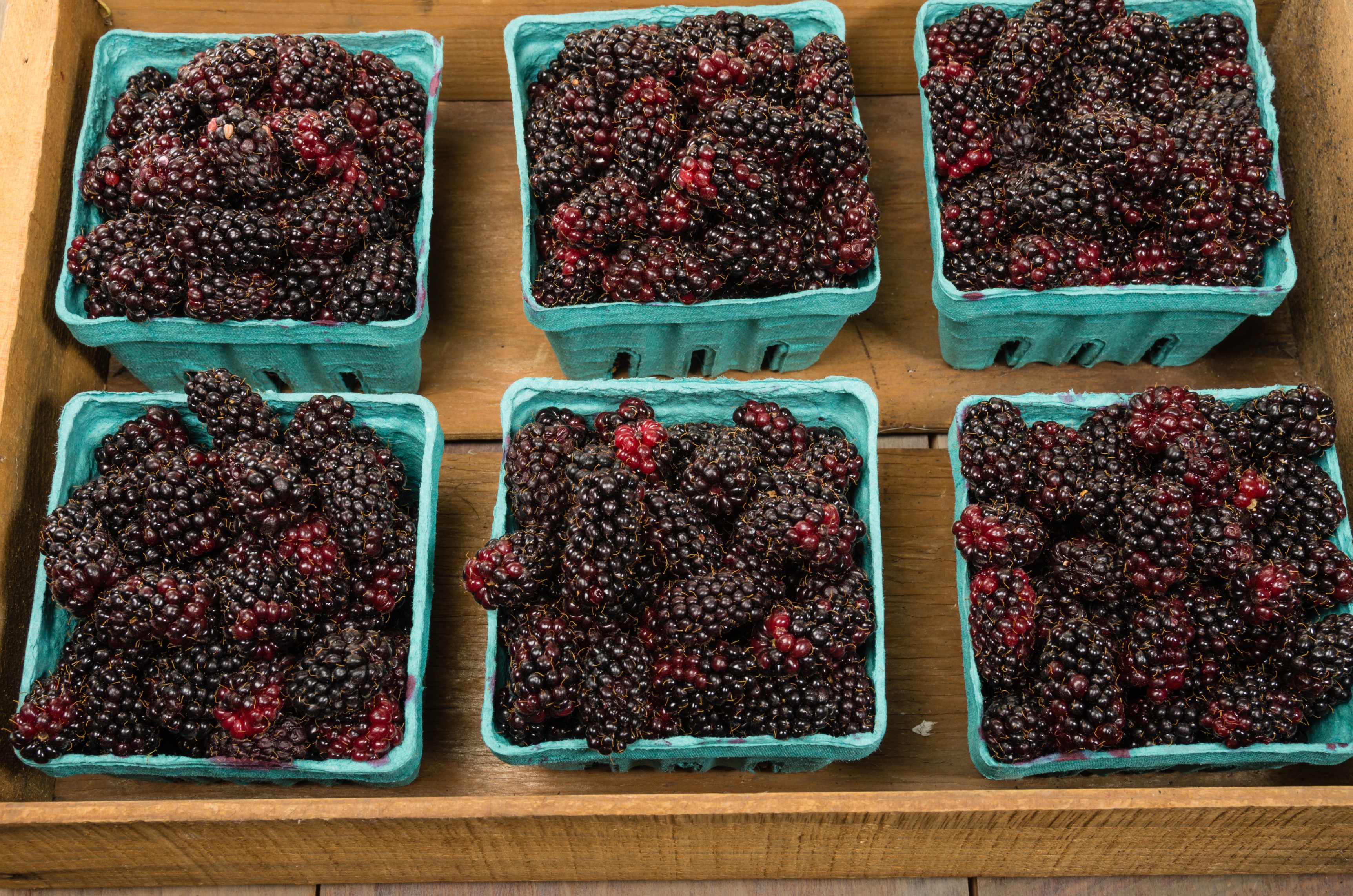
Marionberry is Oregon’s signature trailing blackberry—bred for its lush, winey aroma, vibrant sweet-tart balance, and that “wild” depth inherited from native lineage. Released in 1956 from a cross of ‘Chehalem’ × ‘Olallie’, it quickly became the processing gold standard in the Willamette Valley and a favorite for home gardens seeking peak blackberry flavor [1][2][3].
Note: ‘Marion’ is a thorny, trailing blackberry that fruits on second-year canes (floricanes) and performs best on a trellis in full sun [4][5].
Edible Uses
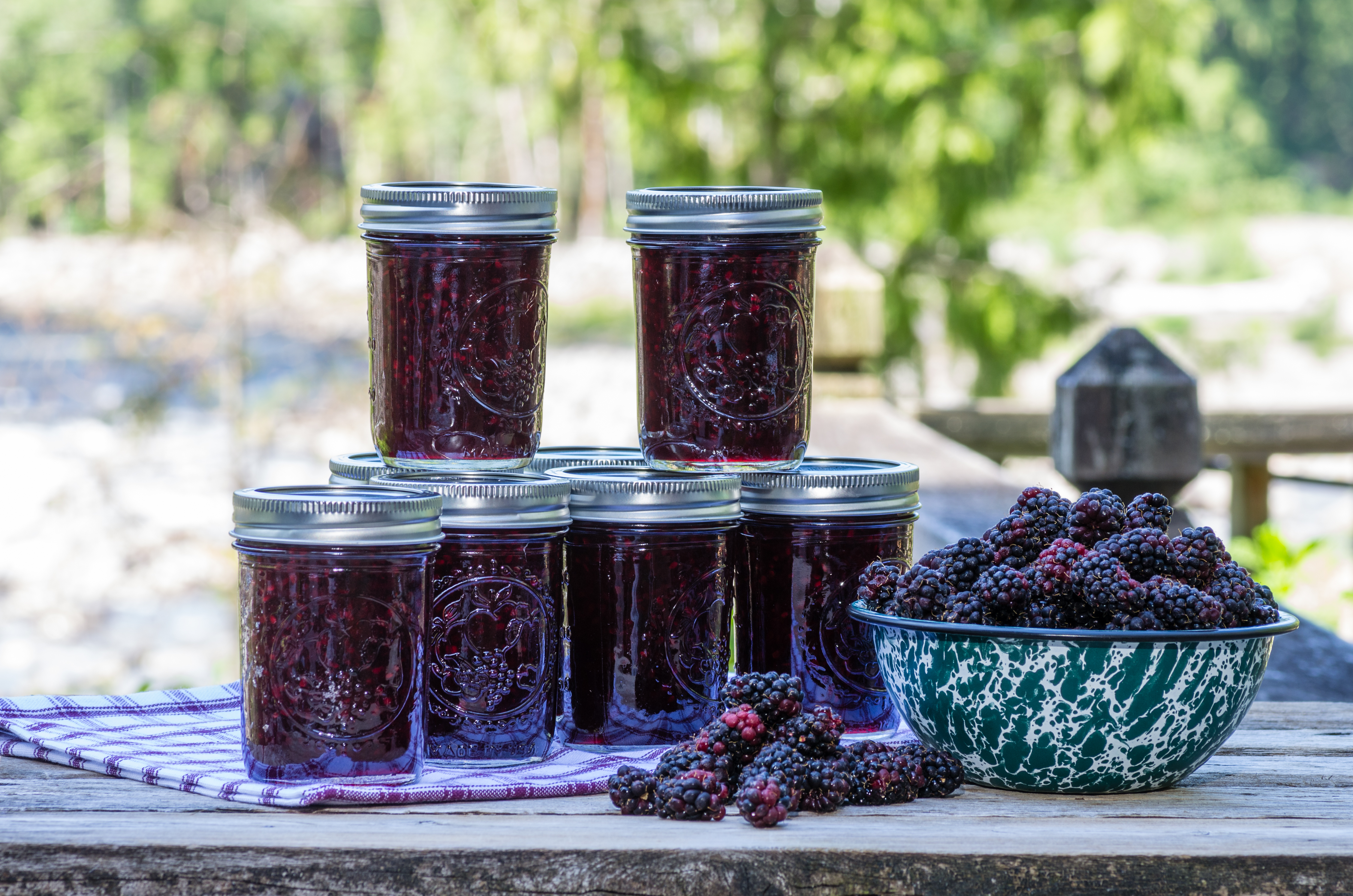
Among the finest blackberries for pies, jams, syrups, smoothies, and fresh eating, Marionberry combines aromatic complexity with relatively small seeds and excellent processing character. Blackberry fruit is naturally rich in anthocyanins and phenolics with notable antioxidant capacity; ‘Marion’ is widely cited for superior flavor and aroma in puree/IQF products [2][6][7].
Ornamental Qualities
White spring blossoms and long, arching canes make a handsome, fruiting espalier or two-wire row. On a simple trellis, ‘Marion’ brings clean structure, showy bloom, and a heavy mid-summer crop—pair nearby with Evergreen Huckleberry, Red Flowering Currant, or Serviceberry for multi-season interest and cross-promotion [4].
Environment and Culture
‘Marion’ was bred in Oregon and is tailored to the PNW’s maritime climate. Its pedigree includes substantial native trailing blackberry (Rubus ursinus) ancestry (approx. 44% R. ursinus), which underpins its “wild” flavor profile [1]. Indigenous communities continue to eat and tend R. ursinus as living food and land tradition; honoring that stewardship acknowledges the knowledge behind the flavors we prize today [8] (Learn more & how to help on our Charitable Giving page.)
Harvest, Care, and Preparation
Site & soil: Full sun; well-drained, organic-rich soil. Trailing types are the least cold-hardy blackberries; protect in colder pockets and avoid waterlogging [4].
Training & pruning: Summer-bearing; fruit on floricanes. Train new primocanes along wires in year one; after harvest, remove spent floricanes and tie in the next cycle [4][5].
Water & nutrition: Keep even moisture during bloom/fruit fill; top-dress with compost in spring (avoid heavy N) [4].
Pollination: Self-fruitful; bee activity improves set and uniformity [5].
Harvest window (PNW): Typically mid-July in the Willamette Valley; a ~4-week season depending on weather and site [4].
(See Planting Guide in next tab for more info.)
In the Kitchen
Oregon's own: bake the aromatic berries into the definitive marionberry pie or cobbler, swirl them into ice cream, cook them into jam and syrup, or blend them into smoothies. Their complex, wine-like flavor and small seeds make them the gold standard for purée and preserves.
Attributes
Type: Trailing blackberry cultivar (‘Chehalem’ × ‘Olallie’)
Native Ancestry: ~44% Rubus ursinus in pedigree [1]
USDA Zones: ~7–9 (trailing types are least cold-hardy) [4]
Ease of Care: Moderate (requires trellis; vigorous canes) [4]
Thorns: Thorny (use gloves for training/harvest) [2]
Light Requirements: Full sun (6–8+ hrs)
Soil Type: Well-drained loam/sandy loam; avoid waterlogging [4]
Water Requirements: Even moisture during bloom/fruit fill; reduce after harvest [4]
Pollination: Self-fruitful (bee activity boosts yield) [5]
Bearing Age: Year 2 on floricanes (after establishment) [5]
Cane Length: Often 16–20 ft; train on a two-wire trellis [4]
Plant Spacing: ~3–5 ft in row; ~8–10 ft between rows (home scale) [4]
Bloom Time: Spring
Harvest Time: Mid-July (PNW lowlands), ~4-week season [4]
Primary Uses: Fresh, freezing, pies, jams/syrups; premium processing quality [2]
Companions: Evergreen Huckleberry, Red Flowering Currant, Serviceberry (similar water/soil aesthetics)
References
[1] Oregon Encyclopedia. “Marionberry” — pedigree summary (≈44% R. ursinus; ‘Chehalem’ × ‘Olallie’), Oregon origin and history.
[2] USDA-ARS / OSU. Quality notes for ‘Marion’ (processed fruit flavor/aroma; thorny canes); release/history context.
[3] OSU/PNW production overview — release year (1956) and dominance in the Willamette Valley. horticulture.oregonstate.edu
[4] OSU Extension EC 1617 & EC 1303 — trailing blackberry traits (intense flavor, least cold-hardy), trellis/training, harvest window, spacing.
[5] OSU Extension EM 9180 — blackberry cane habit (floricanes), self-fruitful pollination. OSU Extension Service
[6] Siriwoharn, T. et al. 2004. “Influence of cultivar, maturity, and sampling on blackberry anthocyanins, phenolics, and antioxidant properties.” J. Agric. Food Chem. PubMed
[7] ARS volatile/quality studies highlighting ‘Marion’ flavor/aroma profile among trailing types. ARS
[8] Washington Native Plant Society — Rubus ursinus ethnobotany (ongoing food/land traditions). WNPS
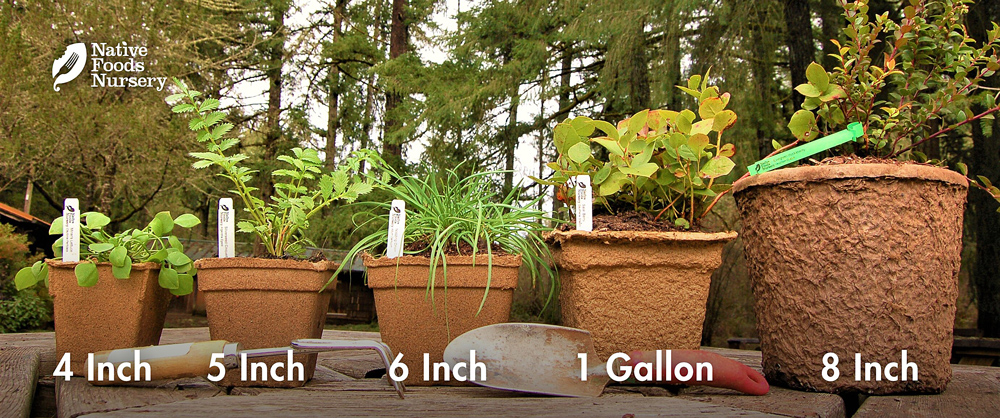
Pot Sizing Guide
Planting Guide: Marionberry (Rubus 'Marion')
Tip: Think "two-wire trellis in full sun." Marion is a vigorous, thorny trailing blackberry — give it strong support, rich well-drained soil, and steady summer water for plump, aromatic berries, and wear gloves at pruning time.
When Your Plant Arrives
Open the box promptly and lift your plant out gently, holding the pot rather than the stem. Leave it in its biodegradable eco-pot for now — the roots are settled and don’t need disturbing yet. Give it a slow, thorough drink until water runs through the bottom, then set it somewhere bright but sheltered, out of harsh afternoon sun, drying wind, and frost. Let it rest and acclimate there for a few days before planting, so the move from our greenhouse to your garden is a gentle one. If anything doesn’t look right, please contact customer service within 7 days of delivery and we’ll take care of you.
Choosing a Site
Light: Full sun (best yields with 6–8+ hours).
Soil: Well-drained loam or sandy loam enriched with compost; slightly acidic to neutral; avoid waterlogging.
Space: 4–6 ft between plants on a trellis; ~8–10 ft between rows for the long trailing canes.
Planting Steps
Timing: Plant in early spring as soil becomes workable (or fall where winters are mild).
If it came in a biodegradable eco-pot, plant it pot and all — the pot is pressed from composted cow manure, so it melts into the soil and gives the young roots their first feed. No need to remove it.
Prepare: Dig a wide hole; blend native soil with composted bark or leaf mold.
Set: Plant at the same depth as in the pot; spread roots, backfill, and water deeply.
Mulch: 2–3 in of wood chips or leaves, kept a few inches off the crown.
Watering & Care
Establishment (years 0–2): Keep evenly moist, especially during bloom and fruit fill.
After establishment: Moderate needs; steady summer moisture improves berry size and flavor.
Feeding: Top-dress with compost each spring; avoid heavy nitrogen.
Training & Pruning
Marion is a summer-bearing trailing blackberry that fruits on second-year canes (floricanes).
Year 1 (primocanes): Guide new canes along a two-wire trellis; keep them off the ground.
Year 2 (floricanes): Fruiting laterals develop — tie securely.
After harvest: Cut spent floricanes to the base; keep 4–8 of the best new primocanes per plant.
Note: Marion has thorns — wear gloves, and train canes while they are flexible.
Protection
Wildlife: Birds love ripe fruit — net as berries color; protect young shoots from deer.
Airflow & sanitation: Space for airflow; remove spent canes and fallen fruit to limit disease.
Weeds: Keep a 2–3 ft mulch ring to reduce competition.
Harvest Basics
Timeline: First meaningful crops in the second year.
Season (PNW lowlands): Mid-July, ripening in sequence.
Pick: When fully black, dull, and aromatic (they detach easily). Highly perishable — chill or process the same day.
Kitchen: The definitive marionberry pie and cobbler, plus jam, syrup, and ice cream.
