




Cow Parsnip
- Current Stock:
- 0
- Other Names:
- Indian Celery, Indian Rhubarb, American Cow Parsnip, Pushki, Common Cowparsnip
- Latin Name:
- Heracleum Maximum/Lanatum
The Cow Parsnip (Heracleum maximum), also called Indian Celery or Pushki, is a bold, architectural native perennial of moist meadows and streambanks — towering flat-topped white flower heads over huge, maple-like leaves — and one of the most important spring green vegetables of Northwest peoples.2, 4
Edible & Medicinal Uses
In spring, the young, tender leaf-stalks and budstalks are gathered before the plant flowers, peeled, and eaten raw or cooked — crisp and celery-like, they gave the plant its name "Indian celery." The peeling matters: the outer skin and the sap can irritate the mouth and skin. One caution to respect: the clear sap contains compounds that can cause a sunlight-triggered skin rash, so handle and harvest with gloves and keep the sap off your skin. Gather only young growth, always peeled; once flowering begins, the stalks turn bitter and tough.1, 4
Ornamental Qualities
Dramatic and statuesque, Cow Parsnip makes a bold accent 4–8 ft tall, its broad, deeply lobed leaves and wide white umbels bringing an almost tropical presence to a moist border, rain garden, or meadow. It's a pollinator powerhouse and a larval host for the Anise Swallowtail butterfly.4
Environment & Culture
Ecology: The only Heracleum native to North America, Cow Parsnip grows across the continent in moist meadows, streambanks, and open woods. Its big flower heads are a magnet for bees, butterflies, and beneficial insects, and it hosts the caterpillars of the Anise Swallowtail.1, 4
Culture: Cow parsnip is among the most widely used green vegetables of northwestern North America — peoples travel far in spring for the succulent peeled stalks — and the hollow stems are made into flutes and toys. We offer it with respect for that living knowledge and invite support for Indigenous-led restoration through our Charitable Giving page.4
In the Kitchen
Cut young leaf- and flower-stalks in spring before the plant blooms; wearing gloves, peel away the outer skin, then eat the crisp inner stalk raw like celery or cook it as a pot-herb — sweet and aromatic. It shines chopped into soups and sautes. Peel every piece, keep the sap off your skin, and harvest only the tender young growth.5 (Growing and harvest details are on the Planting Guide tab.)
Attributes
- Native Range: Across North America; moist meadows, streambanks, open woods1
- USDA Zones: ~3–93
- Light: Sun to part shade4
- Water: Moist; likes damp, rich ground4
- Soil: Rich, moist4
- Habit: Bold herbaceous perennial, 4–8 ft2
- Wildlife: Larval host for the Anise Swallowtail; strong pollinator draw4
- Edible: Young peeled stalks (spring, before flowering) — handle sap with care1
References
- Kuhnlein, H. & Turner, N., "Cow-Parsnip: An Indigenous Vegetable," J. Ethnobiology, 1986.
- Pojar, J. & MacKinnon, A., Plants of the Pacific Northwest Coast, 2014.
- USDA PLANTS Database; USDA NRCS Plant Guide, Heracleum maximum.
- Sutro Stewards; Lady Bird Johnson Wildflower Center, Heracleum maximum.
- "Cow Parsnip," Forager Chef.
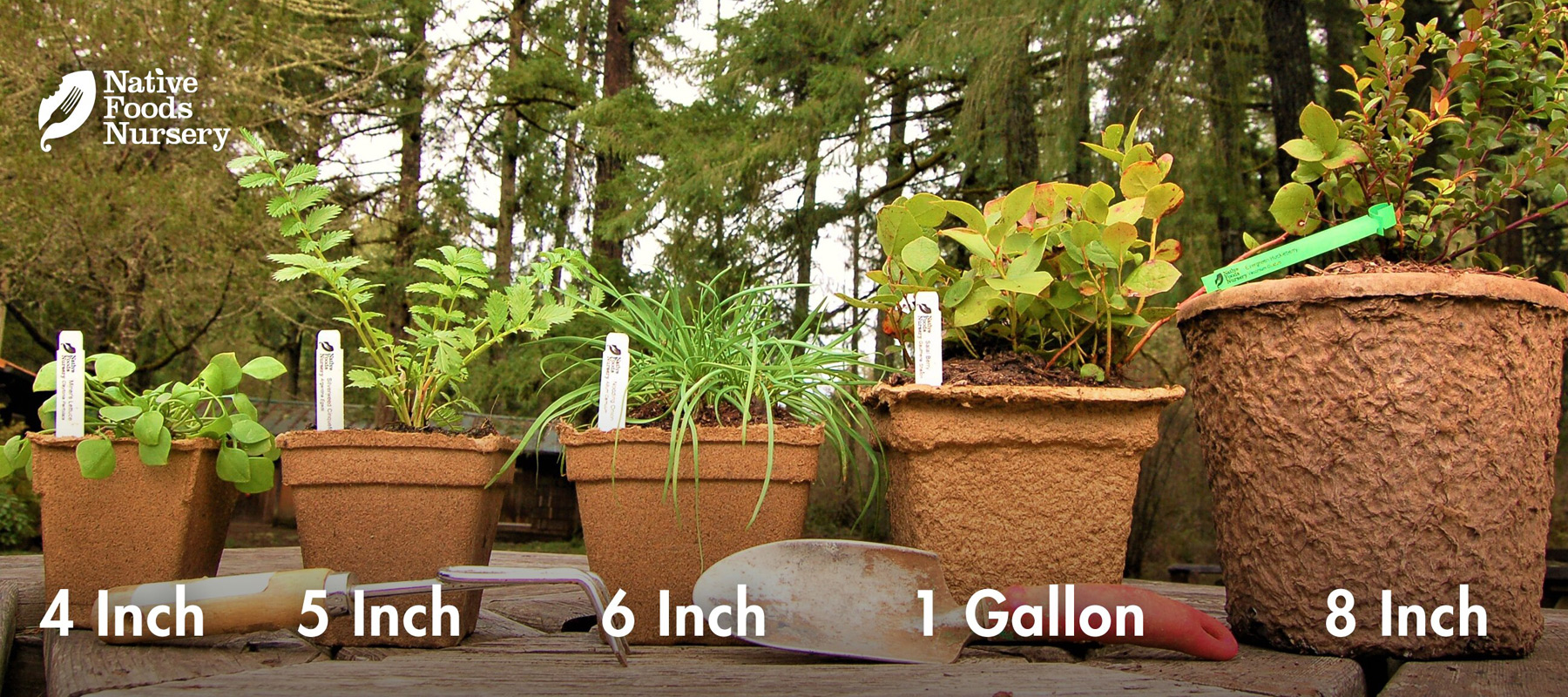
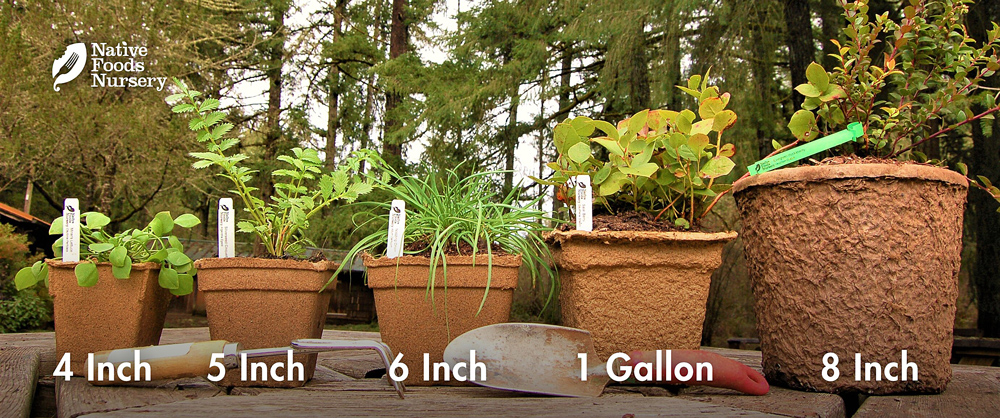
Pot Sizing Guide
Planting Guide: Cow Parsnip (Heracleum maximum)
Tip: Grow it as a bold, moisture-loving accent and butterfly host — and when you harvest the young spring stalks, wear gloves and peel them, since the sap can irritate skin in sunlight.
When Your Plant Arrives
Open the box promptly and lift your plant out gently, holding the pot rather than the stem. Leave it in its biodegradable eco-pot for now — the roots are settled and don’t need disturbing yet. Give it a slow, thorough drink until water runs through the bottom, then set it somewhere bright but sheltered, out of harsh afternoon sun, drying wind, and frost. Let it rest and acclimate there for a few days before planting, so the move from our greenhouse to your garden is a gentle one. If anything doesn’t look right, please contact customer service within 7 days of delivery and we’ll take care of you.
Choosing a Site
Light: Sun to part shade.
Soil: Rich and moist; it likes damp ground.
Space: 2–3 ft apart; it is large and self-seeds.
Planting Steps
Plant in spring or fall.
If it came in a biodegradable eco-pot, plant it pot and all — the pot is pressed from composted cow manure, so it melts into the soil and gives the young roots their first feed. No need to remove it.
Set at the depth it grew, backfill with compost, firm, water in, and mulch.
Watering & Care
Establishment: Keep moist.
After establishment: Wants steady moisture; dies back and returns each year.
Maintenance: Deadhead to limit self-sowing.
Protection
Handling (important): The sap contains compounds that, on skin exposed to sunlight, cause a burning, blistering rash (phytophotodermatitis). Wear gloves and long sleeves when handling or cutting it, keep the sap off your skin, and if you do get sap on you, wash it off promptly and keep that skin out of the sun for a day or two.
Wildlife: Flowers feed many pollinators.
Harvest Basics
Safety (essential): Cow parsnip is in the carrot family, alongside the deadly poison and water hemlocks and the dangerous giant hogweed — be certain of your ID, and handle only with gloves (see above).
Season: Young, tender leaf- and flower-stalks in spring, before flowering.
Prep: Peel every piece (gloves on) to remove the phototoxic outer skin, then eat raw or cooked — crisp and celery-like. Never eat any part unpeeled, or from a plant you cannot positively identify.
