


Blue Blossom Ceanothus
- Current Stock:
- 0
- Other Names:
- Blueblossom, California Lilac, Blue Brush
- Latin Name:
- Ceanothus thyrsiflorus
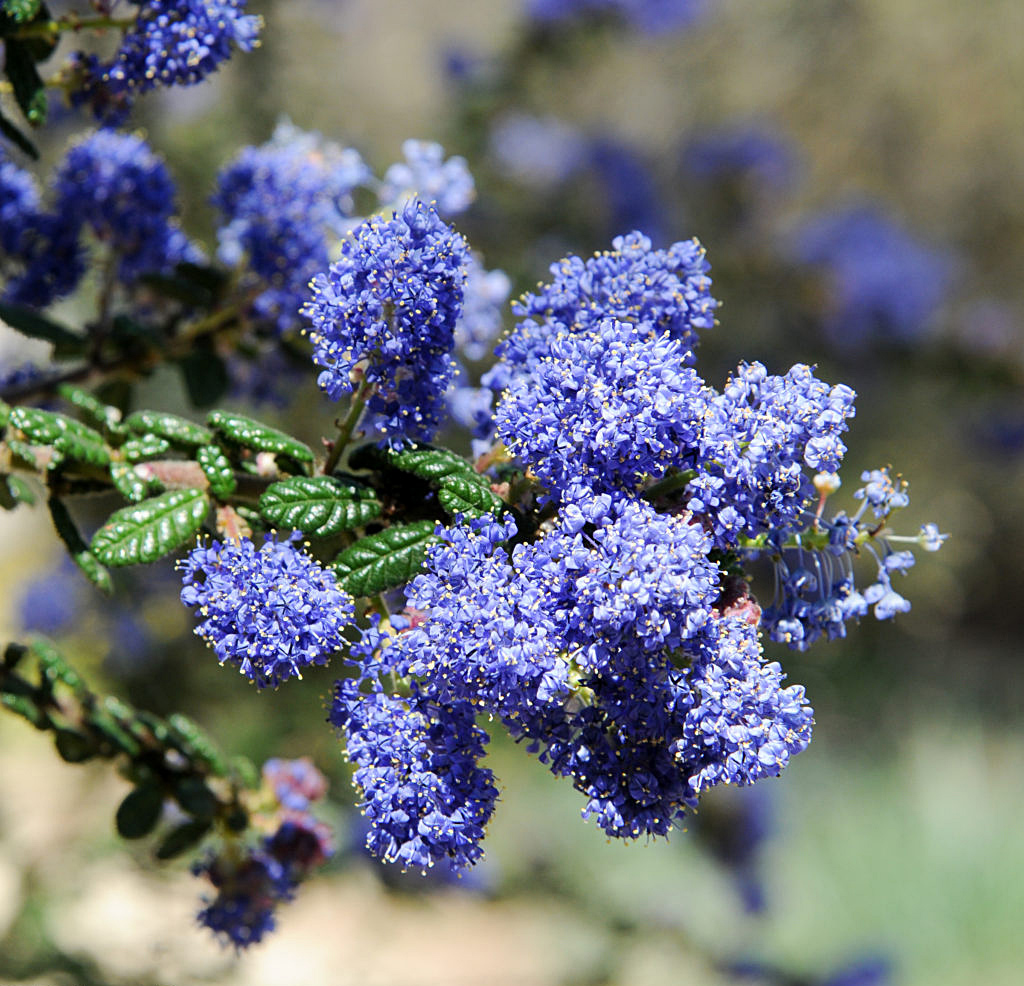
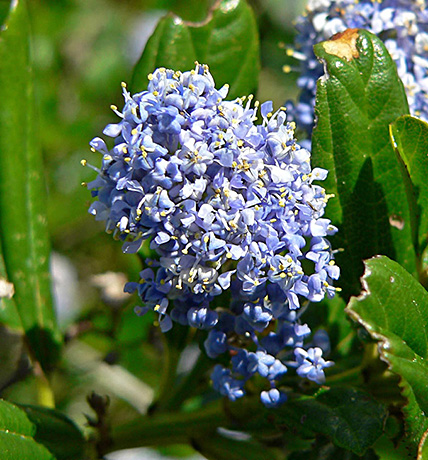
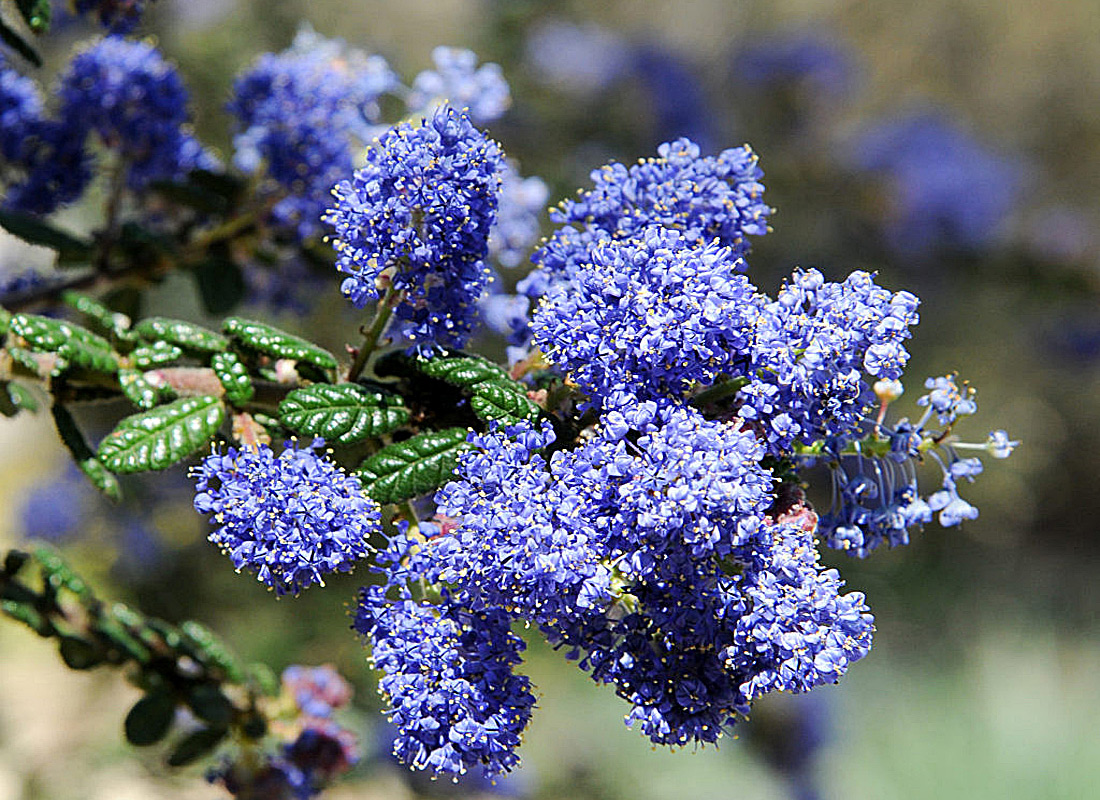
The Blue Blossom Ceanothus (Ceanothus thyrsiflorus) is a fast, glossy, nitrogen-fixing evergreen shrub crowned in early summer with abundant true-blue flowers — a rare and welcome color in the native garden.2, 4
Everyday & Traditional Uses
Like its ceanothus kin, Blue Blossom is saponin-rich: the flowers, crushed with water, foam into a gentle, fragrant lather good for washing skin, hair, or clothes, leaving a soft floral scent. Chiefly, though, this is a superb ornamental and ecological shrub — a pollinator magnet and soil-builder.1, 4
Ornamental Qualities
Gardeners treasure Blue Blossom for its profusion of bright-blue flower clusters — a rarity among shrubs — set against glossy evergreen leaves that keep their shine through summer heat and winter chill. It grows quickly into a fine privacy hedge that hums with native pollinators in midsummer, and thrives where soils are poor and conditions difficult.1
Environment & Culture
Ecology: A nitrogen-fixer, Blue Blossom enriches lean soil and, once established, is extremely drought-tolerant. Native from the California coast up into Oregon, it grows well throughout the Northwest, and its blue flowers are a rich nectar source for native bees, butterflies, and other pollinators.1, 2
Culture: The saponin-rich flowers are a traditional soap among West Coast peoples. We offer it with respect for that living knowledge and invite support for Indigenous-led restoration through our Charitable Giving page.4
In the Garden & Home
Plant it as a fast, evergreen, blue-flowering hedge for privacy and pollinators — and for a bit of fun, rub a handful of wet blossoms together for a fragrant natural lather. (Growing and harvest details are on the Planting Guide tab.)
Attributes
- Native Range: California coast into Oregon; grows across the PNW1
- USDA Zones: ~7–103
- Light: Full sun to part shade1
- Water: Low; very drought-tolerant once established1
- Soil: Lean, well-drained; fixes its own nitrogen1
- Habit: Fast evergreen shrub; bright-blue flowers; good hedge2
- Use: Flowers as soap; pollinator plant & soil-builder4
References
- Native Foods Nursery field notes; CalScape, Ceanothus thyrsiflorus.
- Pojar, J. & MacKinnon, A., Plants of the Pacific Northwest Coast, 2014.
- USDA PLANTS Database, Ceanothus thyrsiflorus.
- Moerman, D., Native American Ethnobotany, 1998.
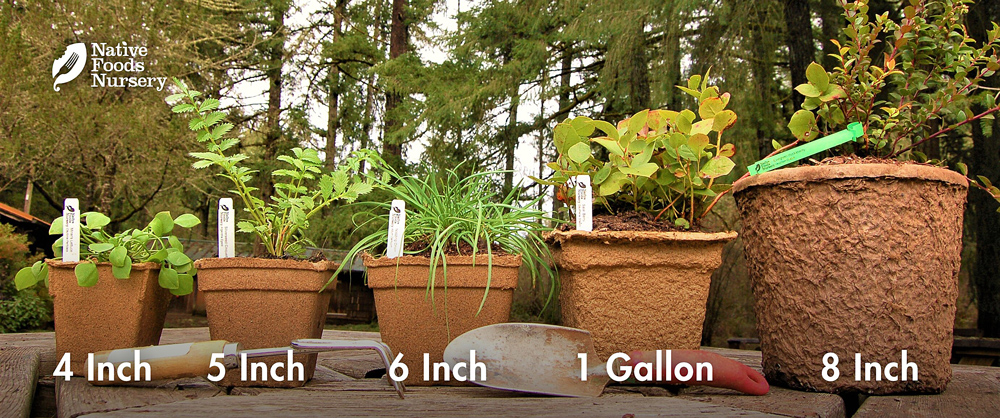
Pot Sizing Guide
Planting Guide: Blue Blossom Ceanothus (Ceanothus thyrsiflorus)
Tip: Site it in sun and lean, well-drained soil and skip the summer water once it's established — ceanothus is fast and generous but hates rich, wet ground.
When Your Plant Arrives
Open the box promptly and lift your plant out gently, holding the pot rather than the stem. Leave it in its biodegradable eco-pot for now — the roots are settled and don’t need disturbing yet. Give it a slow, thorough drink until water runs through the bottom, then set it somewhere bright but sheltered, out of harsh afternoon sun, drying wind, and frost. Let it rest and acclimate there for a few days before planting, so the move from our greenhouse to your garden is a gentle one. If anything doesn’t look right, please contact customer service within 7 days of delivery and we’ll take care of you.
Choosing a Site
Light: Full sun to part shade.
Soil: Lean, well-drained; tolerates poor ground.
Space: 6–10 ft apart for a hedge.
Planting Steps
Plant in fall or spring.
If it came in a biodegradable eco-pot, plant it pot and all — the pot is pressed from composted cow manure, so it melts into the soil and gives the young roots their first feed. No need to remove it.
Set at the depth it grew, firm, and water in once. Avoid rich beds and summer irrigation.
Watering & Care
Establishment: Light water the first season only.
After establishment: Do NOT summer-water; drought-adapted.
Protection
Wildlife: Blue flowers are a rich pollinator draw; evergreen cover.
Note: A nitrogen-fixer that builds soil; often fast-growing but relatively short-lived, so let it self-seed or plan to replace it in time.
Harvest Basics
Season: Blue flowers in early summer.
Use: Not a food plant — but the saponin-rich flowers whip into a fragrant lather soap, and the dried leaves make a mild tea.
