


Thimbleberry
- Current Stock:
- 0
- Other Names:
- Western Thimbleberry, Thimble Raspberry, White-flowering Raspberry
- Latin Name:
- Rubus Parviflorus
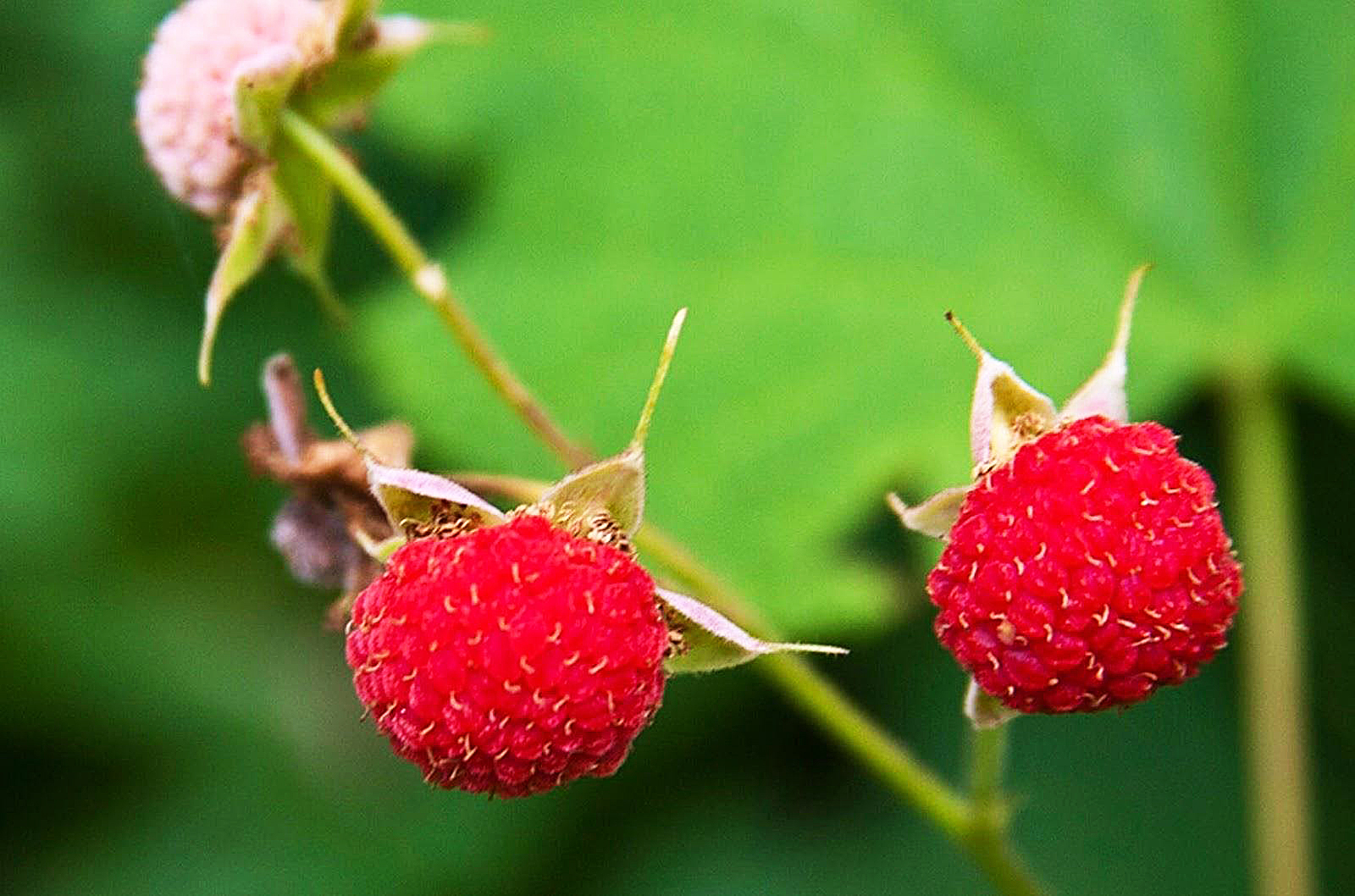
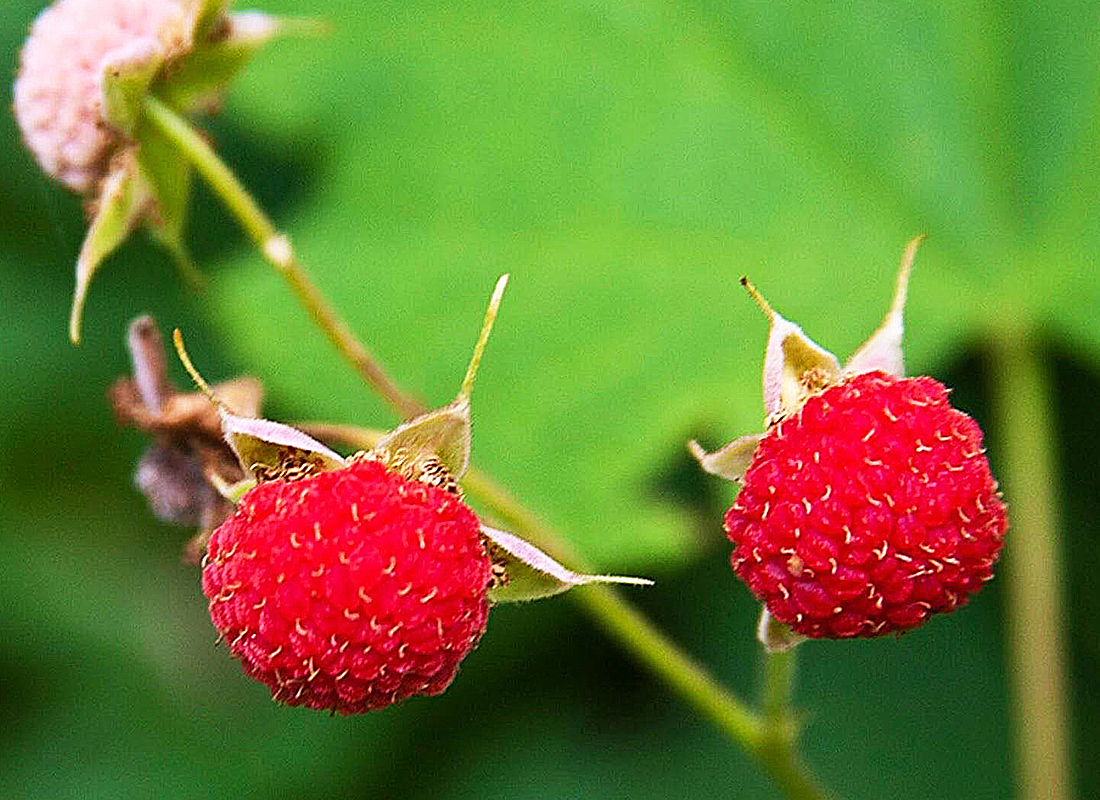
The Thimbleberry (Rubus parviflorus) is the gentle, thornless bramble of the Northwest woods — big, soft, maple-shaped leaves, papery white flowers, and delicate ruby berries that shine like little jewels and taste of pure summer.2, 4
Edible & Medicinal Uses
The bright red fruit is soft, seedy, and intensely flavored — so tender it practically melts, which is exactly why you'll never find it in a store: it's too fragile to ship, a treat you can only pick yourself. Eat it fresh off the plant, or gather enough for jam. The tender young shoots were traditionally peeled and eaten as a spring vegetable, and the large soft leaves have long served as natural wraps and a gentle poultice.1, 4
Ornamental Qualities
Thimbleberry is thornless and handsome — broad, soft, maple-like leaves, showy white flowers up to 2 inches across, and gray shredding bark. It forms a lush, spreading colony that's ideal for filling shady banks, woodland edges, and hedgerows, and it's beautiful massed with Salmonberry, Blackcap Raspberry, and Oso Berry.4
Environment & Culture
Ecology: Widespread across western and northern North America, Thimbleberry grows in forests, edges, clearings, and roadsides. Its large flowers feed bees and butterflies, its fruit feeds birds and mammals, and its thickets provide excellent cover.1, 2
Culture: One of the region's most-used native plants: berries eaten fresh and dried, young shoots peeled and eaten in spring, and the broad leaves used as containers, food wraps, and poultices by many nations. We offer it with respect for that knowledge and invite support for Indigenous-led restoration through our Charitable Giving page.4
In the Kitchen
This is a graze-in-place berry — ripe fruit slips off as a soft red thimble that's best eaten on the spot. If you can gather a bowlful before they're eaten, they cook into a fragrant, seedy jam that tastes like nothing you can buy. In spring, peel the young shoots and eat them raw or lightly steamed. (Growing and harvest details are on the Planting Guide tab.)
Attributes
- Native Range: Widespread across western & northern N. America1
- USDA Zones: ~3–93
- Light: Part shade to sun4
- Water: Moist; tolerates a range once established4
- Soil: Rich, moist, well-drained4
- Habit: Thornless, thicket-forming shrub, 3–8 ft; maple-like leaves2
- Harvest: Soft red berries in summer; young shoots in spring4
- Edible: Delicate, intensely flavored fruit — fresh or jam4
References
- Edible Wild Info / Whidbey Environment, Rubus parviflorus.
- Pojar, J. & MacKinnon, A., Plants of the Pacific Northwest Coast, 2014.
- USDA PLANTS Database, Rubus parviflorus.
- Native Plants PNW, "Thimbleberry"; Moerman, D., Native American Ethnobotany, 1998.
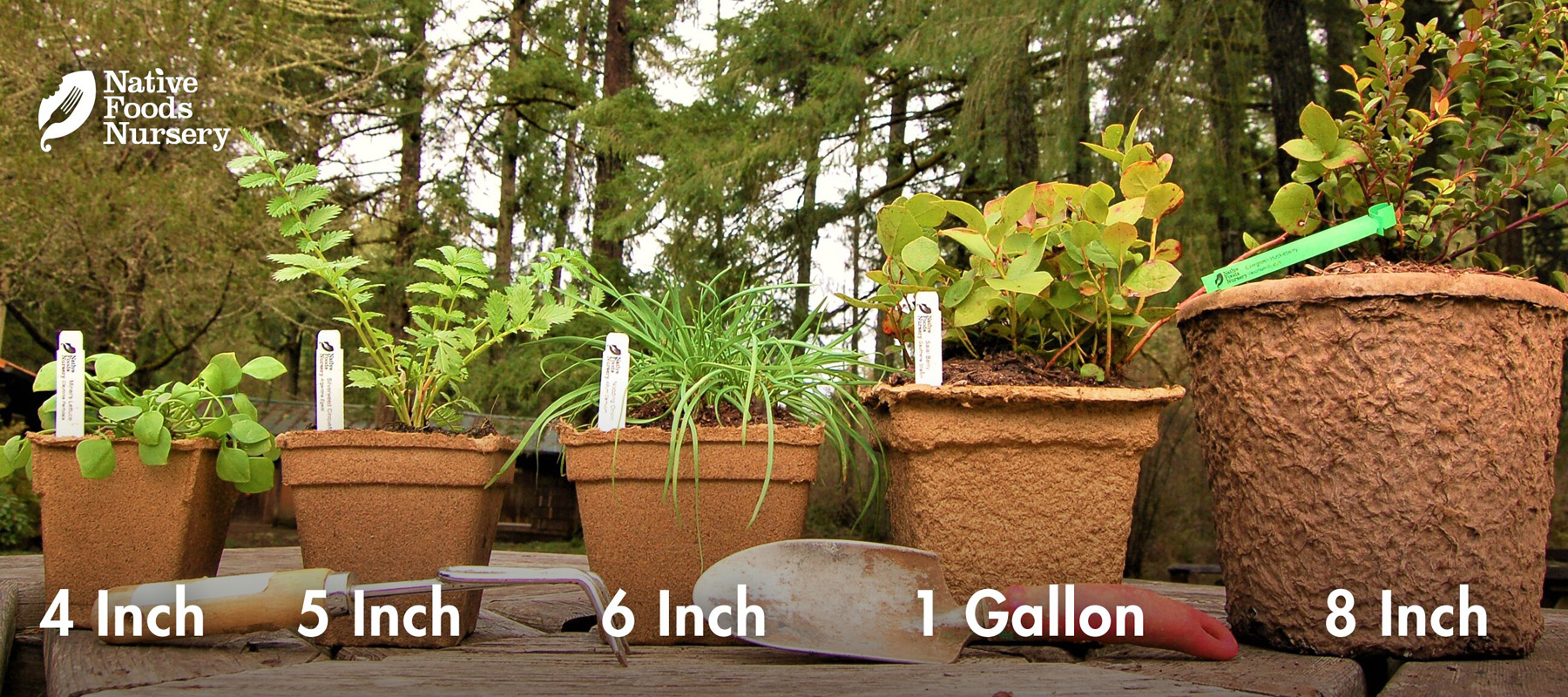
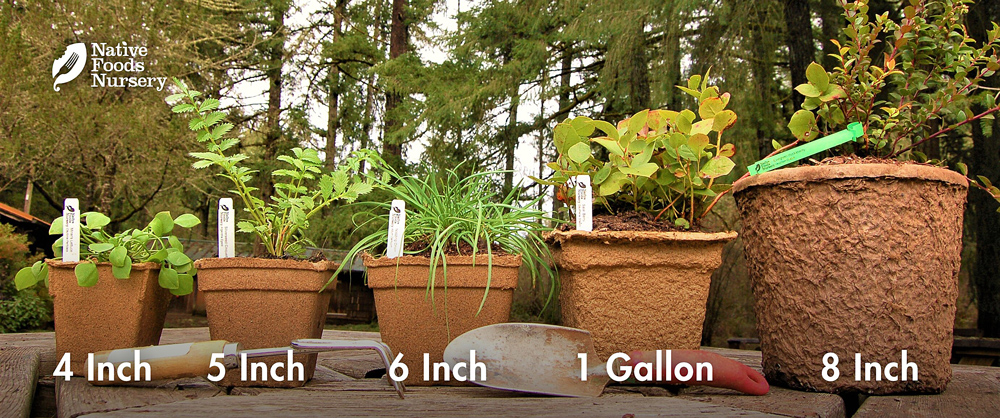
Pot Sizing Guide
Planting Guide: Thimbleberry (Rubus parviflorus)
Tip: Let it colonize a shady bank or woodland edge as a thornless, spreading groundcover-shrub — then graze the melt-in-your-mouth berries straight off the plant in summer.
When Your Plant Arrives
Open the box promptly and lift your plant out gently, holding the pot rather than the stem. Leave it in its biodegradable eco-pot for now — the roots are settled and don’t need disturbing yet. Give it a slow, thorough drink until water runs through the bottom, then set it somewhere bright but sheltered, out of harsh afternoon sun, drying wind, and frost. Let it rest and acclimate there for a few days before planting, so the move from our greenhouse to your garden is a gentle one. If anything doesn’t look right, please contact customer service within 7 days of delivery and we’ll take care of you.
Choosing a Site
Light: Part shade to sun.
Soil: Rich, moist, well-drained.
Space: 3–4 ft apart; it spreads by rhizome into thickets.
Planting Steps
Plant in fall or spring while dormant.
If it came in a biodegradable eco-pot, plant it pot and all — the pot is pressed from composted cow manure, so it melts into the soil and gives the young roots their first feed. No need to remove it.
Set at the depth it grew, backfill with compost, firm, water in, and mulch.
Watering & Care
Establishment: Keep moist the first season.
After establishment: Prefers steady moisture; tolerates sun with water.
Care & thicket: Thornless and easy to handle. It travels by underground rhizome — thin or edge to keep the patch where you want it, and cut spent canes to the ground.
Protection
Deer: Browsed.
Wildlife: Big white flowers for bees and butterflies; fruit for birds; thickets for cover.
Harvest Basics
Season: Summer; the soft, shallow red berry slips off like a little cap when ripe — delicate and quick to spoil.
Use: Best eaten fresh on the spot; cook the rest into a soft, seedy jam. Peel young spring shoots as a vegetable.
